
🏠 Home > 🗺️ Recipes > 👑🍝 Imperial Mains (Main Dishes) > 🇦🇺 Australia Imperial Mains (Main Dishes) Recipes
🇦🇺 👑🍝 Australia Imperial Mains (Main Dishes) Recipes
Published by Supakorn | Updated: September 2026
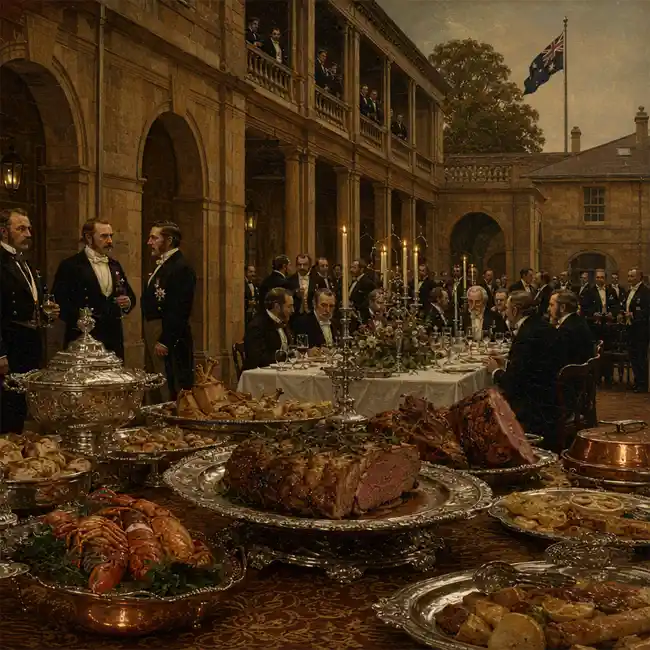
🛎️📜 The Storyteller's Intro: What the Great Houses Never Wrote Down
Alright, let's get one thing straight before we go any further — Australia never had its own crowned kings sitting on a throne in the outback. No palace, no dynasty, no emperor. So if you came here expecting a Versailles-style royal court, you're going to be pleasantly disappointed.
Because what Australia did have is honestly more interesting.
This continent ran on a different kind of aristocracy — actually, on three of them, layered on top of each other like sediment. And each one had its own idea of what a "great table" looked like. When people talk about lost royal recipes down here, what they're really talking about is a tangle of ceremonial feasting grounds, vice-regal dining rooms, and pastoral dynasties who behaved like landed lords across half a million acres of dust.
Here's how the timeline breaks down 👇
✦ The Ancient Sovereign Kitchens (1,000+ years and far, far beyond). Long before anyone drew a border on this place, First Nations peoples were running the oldest continuous food culture on Earth. Not "survival food" — engineered food systems. Eel channels cut through volcanic rock. Stone fish traps built into rivers. Seasonal feasting calendars that pulled thousands of people together across mountain ranges. This is the real imperial cuisine of the continent, and it's the layer that most food writing skips right past.
✦ The Colonial Gentry Era (roughly 1788–1840). Officers, surgeons and land-grant families setting up grand houses along the Hawkesbury and the Derwent. They desperately wanted to eat like English gentlemen, but the pantry wouldn't cooperate. So they improvised — and out of that awkward gap came some genuinely brilliant, genuinely weird dishes.
✦ The Squattocracy Golden Age (1840–1900). This is the big one. Pastoral families who'd claimed enormous runs of grazing country became rich beyond reason, built sandstone mansions in the middle of nowhere, imported French-trained cooks, and printed multi-course menus for dinners held two days' ride from the nearest town. They were nicknamed the "squattocracy" — squatters with the airs of aristocracy — and their kitchens are where most of these secret mains live.
✦ The Federation & Vice-Regal Table (1901–1940s). Government House banquets, gentlemen's club dining rooms, and the grand hotel kitchens of Sydney and Melbourne. Menus written in French, ingredients scandalously local, and a handful of dishes invented here that still haven't been properly credited.
🍖 How the Old Aristocracy Actually Lived and Ate
• Dinner was theatre, not nutrition. A station homestead dinner in the 1870s could run seven or eight courses, with silver shipped from Birmingham and linen changed between services — all while a dust storm rattled the windows.
• The kitchen was deliberately separate. Most great homesteads built the kitchen as a detached block, connected by a covered walkway. Fire risk, heat, and — let's be honest — class separation. It also meant the cook ran an independent kingdom, and cooks guarded their formulas fiercely.
• Recipes travelled as handwriting, not print. The good stuff lived in leather "receipt books" passed down through station wives, housekeepers and Aboriginal domestic staff whose knowledge was used constantly and credited almost never. That's precisely why so much of it counts as lost.
• Preservation was the whole game. No refrigeration until the 1880s. So the aristocratic pantry was a fortress of potting, salting, smoking, larding and burying things in fat. Half the flavour in these old mains comes from preservation technique, not seasoning.
• Seasonality was ruthless. You ate what the country gave you that month, and the skill of a great house was making abundance and scarcity look equally luxurious.
🗺️ The Royal Culinary Tourism: Mapping Flavors to Historic Landscapes
Here's the fun part — nearly every one of these dishes still has an address. You can literally stand where it was invented.
• Woolmers Estate & Brickendon, Tasmania. Two convict-built agricultural estates on the World Heritage list, with the original kitchens, bake houses and cool rooms still standing. Walk the service corridors and the whole logic of aristocratic cooking clicks into place.
• Camden Park House & Elizabeth Farm, NSW. The cradle of the Australian pastoral dynasty. This is where merino wool money began, and where the first "gentleman's table" in the colony took shape.
• Werribee Park Mansion, Victoria. Sixty rooms of pure squattocracy swagger, built by a pastoral family who wanted their guests to forget they were in a young colony. The kitchen wing is the real attraction.
• Martindale Hall, Clare Valley, South Australia. A Georgian-revival mansion built for a young pastoral heir with more money than restraint. Famous now as a film location, but the dining room is the story.
• Jimbour House, Darling Downs, Queensland. A French-styled sandstone palace on black-soil grazing country. Northern aristocracy at full volume.
• Government House, Sydney & Hobart. Vice-regal kitchens where the French-menu tradition met Australian produce and produced some genuinely strange, wonderful hybrids.
• Budj Bim Cultural Landscape, Victoria. UNESCO World Heritage, Gunditjmara Country, and one of the oldest aquaculture systems anywhere on the planet. Non-negotiable stop if you care about the real origins of this cuisine.
Travel tip from a friend: do these in pairs. A homestead in the morning, the landscape that fed it in the afternoon. The food only makes sense when you've seen the paddock, the river or the reef it came from.
🚣 Cradle of Royal Delicacies — The River Systems & Coastal Estates
Water made the wealth in this country, and water made the best mains.
🐟 The Murray–Darling: Australia's Inland Banquet Country
• Baked Murray Cod in Paperbark — the great freshwater fish of the interior, wrapped and steamed in bark over coals. Ancient technique, later borrowed by station cooks who plated it with cream sauces and pretended they'd invented it.
• Brewarrina Fish Traps (Baiame's Ngunnhu), NSW — stone weirs in the Barwon River, among the oldest human-built structures on Earth. These fed enormous inter-nation gatherings — the continent's original state banquets.
• Yabby & Freshwater Crayfish Mains — the pastoral version was a rich potted crayfish served hot with buttered toast, a homestead luxury dish that's almost completely vanished from menus.
• Travel base: Echuca, Mildura, Brewarrina, and the Riverina heritage towns.
🦆 The Coorong, Gippsland Lakes & Southern Wetlands
• Coorong Mullet, Smoked and Served Whole — Ngarrindjeri Country, and one of the finest smoked fish traditions in the southern hemisphere.
• Braised Wild Duck with Native Currant — a wetland-shooting-season dish from the grand estates of the Western District, finished with tart muntries or native currants to cut the fat.
• Travel base: Meningie and the Coorong National Park; Metung and Paynesville in Gippsland.
🦪 Sydney Harbour, the Hawkesbury & the Colonial Coast
• Carpetbag Steak — a thick beef fillet slit open and packed with Sydney rock oysters, then seared. Genuinely one of the boldest steak concepts anyone ever came up with, and it belonged to the club dining rooms and grand hotels of Sydney. Wildly fashionable, then almost forgotten.
• Kangaroo Steamer — an early colonial gentry dish: lean kangaroo slow-cooked with salted pork to lend it the fat it lacks. This was on the tables of the first "respectable" households in Sydney and Hobart, and it's arguably the first truly Australian invented main.
• Potted Moreton Bay Bug & Mud Crab Mains — the northern coastal aristocracy's answer to lobster, served in Brisbane's colonial houses.
• Travel base: Vaucluse House and Elizabeth Bay House in Sydney; the Hawkesbury river towns; Moreton Bay for the northern version.
🌊 Tasmania & the Bass Strait Islands
• Roast Yolla (Muttonbird) — Tasmania's most misunderstood delicacy. Deeply rich, oily, oceanic — a Palawa food tradition of enormous cultural weight that later became a colonial estate dish too. Nothing else in Australian cooking tastes remotely like it.
• Wallaby Steamer & Potted Game — the Tasmanian Highlands version of the mainland steamer, darker and more aromatic.
• Travel base: Flinders Island, Cape Barren Island, and the heritage estates of the Northern Midlands.
⛰️ Kingdom of Wild Aromatics & Heritage — The Ranges, Tablelands & Deep Forest
Up in the high country, the flavour profile changes completely. This is where Australian food gets perfumed.
🌿 The Australian Alps & Monaro High Country
• The Bogong Moth Gatherings — every summer, nations from across south-eastern Australia climbed into the alps for one of the great feasting events of the ancient world. Vast, ceremonial, socially complex. If you want a genuine "imperial banquet" from this continent's deep past, this is it.
• Snowy Mountain Braised Mutton with Mountain Pepper — the high-country grazier dish. Mountain pepperberry gives a slow, creeping heat that's unlike black pepper in every way.
• Travel base: Kosciuszko National Park, Cooma, and the historic Monaro grazing properties.
🍃 New England Tablelands & Barrington Tops, NSW
• Saltbush-Grazed Mutton, Roasted Whole — sheep raised on saltbush season themselves from the inside out. Squattocracy families genuinely believed this made their mutton superior to anything in England, and honestly, they had a point.
• Wattleseed-Crusted Roast Beef — roasted wattleseed carries coffee, chocolate and hazelnut notes. It was used as a homestead crust and gravy-darkener long before it became a fashionable native ingredient.
• Travel base: Armidale's heritage homesteads, Walcha, and the Barrington Tops rainforest drives.
🌋 Gariwerd (Grampians) & Victoria's Western District
• Budj Bim Smoked Eel — the crown jewel. The Gunditjmara built kilometres of stone channels and weirs to farm and harvest kooyang (short-finned eel), then smoked them in hollow trees. Thousands of years old, and every bit the equal of any European smokehouse tradition.
• Western District Estate Roast Lamb with Native Thyme — the volcanic plains grew some of the richest pastoral fortunes in the empire, and their Sunday roast reflected it.
• Travel base: Budj Bim National Park, Dunkeld, Hamilton, and the Western District's mansion trail.
🌴 Atherton Tablelands & Tropical North Queensland
• Barramundi Baked in Paperbark with Lemon Myrtle — the northern signature main, and one of the most elegant cooking methods on the continent.
• Native Fruit-Glazed Roasts — Kakadu plum, Davidson plum and finger lime turned into glazes and sauces for tropical estate dinners.
• Travel base: Kakadu and Arnhem Land in the NT; the Atherton Tablelands and Daintree region in Queensland.
🏰❓ Royal FAQ: Unlocking Palace Kitchen Mysteries
Q1.If Australia had no royal court, whose "imperial" recipes are these?
Three sources, honestly. First, First Nations ceremonial and feasting traditions — the true sovereign food culture here, and by far the oldest. Second, the vice-regal and Government House tables, which functioned as the continent's official court cuisine. Third, the pastoral squattocracy, whose homesteads operated like private courts with their own cooks, protocols and closely guarded receipt books. Blend those and you get something no other country has.
Q2.Why were these recipes actually kept secret?
A few very human reasons. Professional cooks protected their formulas as job security. Pastoral families used a signature dish as social currency — being the house famous for a particular roast mattered in a small, competitive elite. And a lot of Indigenous technique was absorbed into homestead kitchens without acknowledgement, which meant its true origin was quietly buried. Secrecy here was part craft, part snobbery, part erasure.
Q3.Where do these old recipes physically survive today?
In handwritten household receipt books held by state libraries and historical societies. In printed banquet and hotel menus from the 1880s to the 1930s. In agricultural show catalogues and station diaries. And most importantly, in living oral knowledge held by First Nations communities — which is not "lost" at all, just rarely asked about properly.
Q4.Can you still eat any of this on a trip to Australia?
Yes, more than you'd think. Native-ingredient fine dining has exploded across the country, several heritage properties run historic-menu dinners, and Indigenous-owned tourism operators offer on-Country food experiences that are the single best way to understand the ancient layer. The colonial-era mains are rarer — which is exactly why this series exists.
🧠 Final Thoughts: The Timeless Allure of Aristocratic Gastronomy
Here's what gets me about Australian imperial cooking — it's the least pretentious grand cuisine on Earth.
There's no thousand-year unbroken court tradition to defend. Instead there's an ancient, sophisticated Indigenous food science that predates most of human civilisation, sitting underneath a scrappy, inventive, occasionally ridiculous colonial aristocracy who were trying to be European and accidentally became something else entirely. That collision produced dishes you simply cannot find anywhere else — steak stuffed with oysters, kangaroo braised with salt pork, eels farmed in volcanic stone, fish steamed in bark.
So here's the plan from here. This piece is the map. What comes next is the treasure.
• 📌 Coming next: full method breakdowns for the flagship mains — Colonial Goose, Kangaroo Steamer, Carpetbag Steak, Budj Bim-style Smoked Eel, Paperbark Barramundi and Saltbush Roast Mutton.
• 📌 Also coming: the preservation techniques that made these kitchens work — potting, larding, smoking and salting, explained properly.
• 📌 And: a full heritage-estate travel itinerary linking every dish to a place you can actually visit.
Bookmark the page. Each recipe drops as its own deep-dive, with the history, the technique, and the honest story of where it really came from. 🔖
👑 Credit to the Keepers of the Culture (The Legacy)
This article stands on knowledge that isn't mine and never was.
First and foremost, respect and acknowledgement to Aboriginal and Torres Strait Islander peoples as the First Cooks and continuing custodians of this continent's food culture — including the Gunditjmara of Budj Bim, the Ngemba and Ngiyampaa of the Brewarrina Fish Traps, the Ngarrindjeri of the Coorong, the Palawa of lutruwita/Tasmania, the Bininj and Mungguy of Kakadu, and the many nations of the Alps whose Bogong gatherings were among the great feasts of the ancient world. Sovereignty was never ceded, and this knowledge is theirs.
Respect also to the station cooks, housekeepers and domestic workers — many of them Aboriginal women — whose skill built the reputation of famous homestead kitchens and whose names were almost never recorded. And to the historians, state libraries, National Trust properties, historical societies and heritage estates who preserve the receipt books and menus that let us reconstruct any of this at all.
A note on ethics: where a dish belongs to a living cultural tradition, the right way to experience it is through Indigenous-owned tourism operators, community-led cultural centres and chefs working in genuine partnership with Traditional Owners. Cook with curiosity, source responsibly, and always credit the origin. 🙏
👑🍝 Inside the Governor's Kitchen: Australia's Forgotten Colonial Feast
👉 Taste Iconic Australian Imperial Mains
| 🌐 👑🍝 < Back | 🇦🇺 👑🥪 < Previous | Next > 🍨👑 🇦🇺 |