
🏠 Home > 🗺️ Recipes > 🍝 Main Dishes > 🇨🇳 China Main Dishes Recipes
🇨🇳 🥪 Authentic China Main Dishes: Wok-Fired Flavors & Family Banquet Style
Published by Supakorn | Updated: November 2026
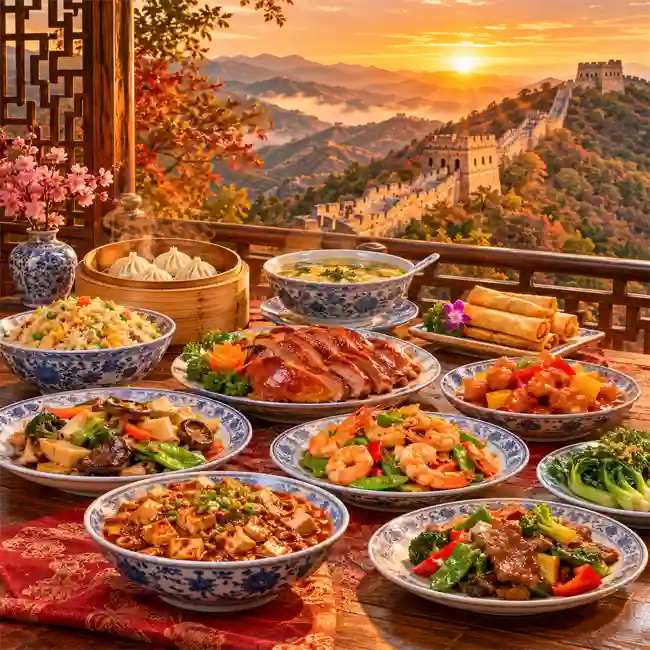
🏮 Introduction: The Cultural Heritage of China Main Dishes
Let's be honest: "Chinese food" covers a huge amount of ground. China is enormous, and its cooking is just as varied. One country holds snowy northern plains, misty southern rice terraces, spicy mountain basins and desert oasis towns along the old Silk Road. Each of those places has its own idea of what a satisfying main dish looks like.
So when we talk about authentic China main dishes, we don't mean the sweet, saucy takeout box you grab on a Friday night (though no judgment, we love that too). We mean dishes with real stories behind them. Some were once served to emperors. Some grew out of humble farmhouse kitchens. Many have been handed down through so many generations that nobody can say exactly who cooked them first.
Chinese food tradition usually splits the country into Eight Great Cuisines, and knowing them makes everything else easier to follow:
• Sichuan (Chuan): Bold, spicy, and famous for that tingly, numbing peppercorn buzz
• Cantonese (Yue): Fresh, delicate, and all about letting the ingredients shine
• Shandong (Lu): Hearty, savory, and the backbone of old imperial court cooking
• Jiangsu (Su): Elegant, slightly sweet, and carefully presented
• Zhejiang (Zhe): Light, fresh, and full of seafood and lake fish
• Fujian (Min): Brothy, umami-rich, and big on soups and seafood
• Hunan (Xiang): Fiery, smoky, and often hotter than Sichuan (yes, really)
• Anhui (Hui): Rustic mountain cooking built on wild herbs and slow braising
Those eight labels only get you started, though. Add Xinjiang, Yunnan, Dongbei (the northeast) and Shaanxi and you have more than enough to eat your way through a lifetime.
🍚 The Art of China Dining Culture & Social Eating
This is one of the things people love most about eating in China: meals are meant to be shared.
At a traditional Chinese dinner you don't get one plate that's just yours. Everyone shares everything. The dishes go in the middle of the table, often on a round lazy Susan, and the whole group digs in together. Food here is about connection as much as it's about eating.
Here's what everyday dining culture looks like:
• Family-style is the default: A table of four might order five or six dishes, usually meat, fish, a vegetable or two, tofu and a soup, all shared around.
• Balance matters: A good spread mixes hot and cold, spicy and mild, crispy and tender, meat and vegetables. That idea comes straight from traditional thinking about harmony and yin-yang.
• Rice or noodles is the anchor: In the south, a bowl of steamed rice is usually the base. In the north, wheat rules, so you'll see noodles, steamed buns and flatbreads.
• The host takes care of everyone: It's polite (and very common) for the host or an elder to put the best pieces on a guest's plate. If someone drops a juicy bit of braised pork into your bowl, that's affection.
• Round tables mean togetherness: Round tables aren't just practical. They mean nobody sits at the "head," and everyone is part of the circle.
• Tea keeps things flowing: Pots of jasmine, oolong or pu-erh tea are a standard part of the meal. If someone tops up your cup, tapping two fingers on the table is a quiet way to say thank you.
• Festivals bring out the big dishes: At Lunar New Year, a whole steamed fish is a must, because the word for fish (yú) sounds like "abundance." Dumplings shaped like old silver ingots stand for wealth in the coming year.
Food is also how people show love in China. Lots of people greet friends with "Have you eaten yet?" (Chī fàn le ma?) instead of "How are you?" That tells you a lot about how much meals matter here.
🗺️ Where Culture Meets Flavor: Iconic Food Tourism Spots
If you're planning a trip to China, honestly, you can plan the whole thing around food. These are some of the best places to taste traditional Chinese main courses in the cities they come from:
• Beijing – Qianmen & the Hutongs: This is Peking duck country. Walk the old alleyways around Qianmen and you'll find restaurants that have been roasting duck the same way for well over a century. Hutong eateries also serve hearty northern home cooking like zhajiangmian (noodles with fried bean sauce).
• Chengdu – Kuanzhai Alley & Jinli Street: Chengdu is a UNESCO City of Gastronomy and it lives up to the title. Come here for real mapo tofu, twice-cooked pork and boiled fish swimming in chili oil. Your taste buds will be shocked, in a good way.
• Chongqing – Hot Pot Central: Chongqing is the home of fiery, beef-tallow-based hot pot. Locals eat it in steamy summer heat and freezing winter alike. It's a whole social event.
• Xi'an – The Muslim Quarter: Thousands of years of Silk Road history show up in the food here: hand-pulled biang biang noodles, cumin-spiced lamb and roujiamo (often called the "Chinese burger").
• Guangzhou – Xiguan & Shangxiajiu: This is the heart of Cantonese cooking. Go for glossy char siu, crackling roast pork, steamed fish and clay pot rice.
• Hangzhou – West Lake: Lovely views and lovely food. Order West Lake fish in vinegar sauce and Longjing shrimp, cooked with the region's famous green tea.
• Shanghai – Yu Garden & the Old Town: Shanghai cooking is rich and slightly sweet. Look for red-braised pork belly and lion's head meatballs.
• Changsha – Pozi Street: Hunan's capital is for serious spice fans. Try the steamed fish head with chopped chilies.
• Urumqi – Grand Bazaar: Far out in the northwest, Xinjiang cooking means big plate chicken, hand-grabbed lamb rice and smoky lamb skewers.
🔥 Top Iconic China Main Dishes Specialties
On to the good part. These are the must-try Chinese foods that show up again and again on foodie bucket lists, and for good reason.
✦ 🦆 Peking Roast Duck (Běijīng Kǎoyā): Probably the most famous dish in Chinese food history. The duck is air-dried and roasted until the skin is thin, shiny and so crispy it practically shatters. It's carved at the table and wrapped in paper-thin pancakes with sweet bean sauce, scallion and cucumber. Its roots go back to imperial kitchens.
✦ 🌶️ Mapo Tofu (Mápó Dòufu): Silky tofu in a fiery red sauce with minced meat, fermented broad bean paste and a big hit of Sichuan peppercorn. Legend says an old woman with a pockmarked face ("mapo") created it in Chengdu more than 150 years ago. It's cheap and simple to make, and once you've had it you won't forget it.
✦ 🥜 Kung Pao Chicken (Gōngbǎo Jīdīng): Diced chicken stir-fried with dried chilies, peanuts and Sichuan peppercorns in a tangy-sweet-savory sauce. It's named after a Qing dynasty official whose title was "Gongbao," and the real version is way more exciting than most takeout ones.
✦ 🐖 Red-Braised Pork Belly (Hóngshāo Ròu): Pork belly slowly braised with soy sauce, rock sugar and spices until it's shiny, deep red and soft enough to cut with a chopstick. It's comfort food at its best and was famously a favorite of Chairman Mao, which is why it's also known as "Mao's braised pork."
✦ 🐟 Steamed Whole Fish (Qīngzhēng Yú): Cantonese cooking at its purest. A very fresh fish is gently steamed, then topped with scallions and ginger and finished with sizzling hot oil and light soy sauce. It's simple and elegant, and it brings good luck to the table.
✦ 🍖 Char Siu (Chāshāo): Cantonese barbecued pork with a sticky, caramelized honey-and-five-spice glaze. You'll see it hanging in shop windows all over Hong Kong and Guangzhou, and it's great on rice.
✦ 🐠 Sichuan Boiled Fish (Shuǐzhǔ Yú): Don't let the word "boiled" fool you. Tender fish slices are poached and then buried under dried chilies and peppercorns, and hot oil gets poured over everything at the end. It's dramatic, aromatic and seriously addictive.
✦ 🥓 Twice-Cooked Pork (Huíguō Ròu): Pork belly is boiled, thinly sliced, then stir-fried with leeks and bean paste. People in Sichuan joke that it's the home-cooked dish everyone's grandma makes best.
✦ 🍗 Big Plate Chicken (Dàpán Jī): A huge, hearty Xinjiang dish of chicken, potatoes and peppers stewed in a spicy sauce, served over wide hand-pulled noodles. It's made for sharing with a big group.
✦ 🍜 Lanzhou Beef Noodles (Lánzhōu Niúròu Miàn): Hand-pulled noodles in a clear beef broth, topped with radish, cilantro and chili oil. Locals describe it with "one clear, two white, three red, four green, five yellow," meaning clear broth, white radish, red chili, green herbs and yellow noodles.
✦ 🍥 Lion's Head Meatballs (Shīzi Tóu): Big, soft pork meatballs from Yangzhou, braised or simmered with napa cabbage. The name comes from how the meatball and cabbage are said to look like a lion's head and mane.
✦ 🐔 Beggar's Chicken (Jiàohuā Jī): A whole chicken stuffed, wrapped in lotus leaves, sealed in clay and slow-baked. Cracking the clay shell open at the table is half the fun. The folk tale says a hungry beggar came up with it.
✦ 🍲 Hot Pot (Huǒguō): Not quite a single dish, more a whole experience. A bubbling pot of broth sits in the middle of the table and everyone cooks their own meat, veggies and tofu in it. Chongqing's spicy version and Beijing's mild mutton version are the two big styles.
✦ 🍳 Yangzhou Fried Rice (Yángzhōu Chǎofàn): The original upscale fried rice, with shrimp, ham, egg and peas. Every grain should be separate, glossy and full of flavor.
👅 Flavor Profile: What Makes China Main Dishes Unique?
So what makes iconic Chinese dishes taste so different from other cuisines? A few big ideas:
• The idea of "Wok Hei": It literally means "breath of the wok." It's the smoky, slightly charred taste you only get from stir-frying over a ferociously hot flame. Cantonese chefs talk about it almost like it's sacred.
• Má là, the numbing-spicy combo: This is Sichuan's signature. Má is the tingly, lip-buzzing feeling from Sichuan peppercorns, and là is the chili heat. Together they make a sensation you won't find anywhere else.
• Balancing the five flavors: Chinese cooking tries to balance sweet, sour, bitter, spicy and salty, often in one dish. Think of the sweet-sour glaze on West Lake fish or the layered flavor of fish-fragrant eggplant.
• Texture is a big deal: Chinese cooks care about texture as much as taste. They talk about "QQ" (springy and chewy), crispy, silky and tender as qualities in their own right.
• Regional personality:
◦ Northern dishes tend to be salty, hearty and wheat-based
◦ Southern dishes lean fresh, light and subtly sweet
◦ Western dishes (Sichuan, Hunan) go bold, spicy and aromatic
◦ Eastern dishes (Jiangsu, Shanghai) are rich, glossy and slightly sweet
• Umami everywhere: Fermented soybeans, soy sauce, dried mushrooms, dried shrimp and oyster sauce give Chinese dishes a deep, savory richness long before "umami" became a trendy word.
🧂 Essential Ingredients & Traditional Cooking Techniques
To really understand regional Chinese cuisine, you need to know what goes into the wok and how it's cooked. This is where the real depth is.
🌿 Signature Spices & Local Ingredients
These are the pantry heroes behind most traditional Chinese main courses:
• Light & Dark Soy Sauce: Light soy is for seasoning and saltiness. Dark soy is thicker and slightly sweet, and it's mostly used to give braised dishes that beautiful mahogany color.
• Sichuan Peppercorns (Huājiāo): Not actually a pepper, but the dried husk of a prickly ash berry. They're behind that famous tingly-numbing feeling.
• Doubanjiang (Fermented Broad Bean Paste): Often called "the soul of Sichuan cooking." It's salty, spicy and deeply savory, and you need it for mapo tofu and twice-cooked pork.
• Ginger, Garlic & Scallion: The holy trinity of Chinese aromatics. Almost every stir-fry starts with them sizzling in hot oil.
• Star Anise & Five-Spice Powder: Warm, slightly sweet spices that are central to braises and roasts like char siu and red-braised pork.
• Chinkiang Black Vinegar: A dark, malty vinegar from Jiangsu that adds tangy depth to sauces and dipping bowls.
• Fermented Black Beans (Dòuchǐ): Little salty flavor bombs, especially loved in Cantonese and Hunan cooking.
• Oyster Sauce & Hoisin: Cantonese staples that bring sweetness, gloss and savory richness.
• Dried Chilies: Used whole, flaked or fried into chili oil. Hunan and Sichuan go through them by the mountain.
• Rock Sugar: Gives braised dishes a clean sweetness and a lovely shine.
• Toasted Sesame Oil: Used as a finishing touch rather than for cooking. A few drops go a long way.
• Dried Mushrooms & Dried Seafood: Shiitake, dried scallops and dried shrimp add deep umami to stews and fried rice.
• Cumin (in the Northwest): Thanks to Silk Road influence, Xinjiang and Xi'an food leans hard on cumin, especially with lamb.
🔥 Time-Honored Cooking Methods
Chinese cooks have been refining their techniques for thousands of years. Here are the big ones:
• Stir-Frying (Chǎo): Fast, high-heat cooking in a wok while tossing constantly. Everything is chopped into small, even pieces first so it cooks in seconds and keeps its color, crunch and nutrients.
• Red Braising (Hóngshāo): Slowly simmering meat in soy sauce, sugar and spices until the sauce reduces to a sticky, glossy glaze. It's the technique behind some of China's most comforting dishes.
• Steaming (Zhēng): A gentle method that keeps the natural flavor of the ingredients. It's huge in Cantonese cooking, especially for fish, and it's naturally lighter and healthier.
• Roasting (Kǎo): Used for showstoppers like Peking duck and char siu. Traditional roasting ovens, whether hung or closed, give an even heat that makes the skin incredibly crisp.
• Velveting (Huá): A clever restaurant trick. Meat is coated in egg white and starch, then briefly blanched in oil or water before stir-frying. That's why chicken in good Chinese restaurants is so silky.
• Double-Cooking (Huíguō): Boiling or simmering first, then stir-frying, so you get tender meat and caramelized edges in the same bite.
• Dry-Frying (Gānbiān): Stir-frying ingredients like green beans or beef shreds until they lose moisture and turn slightly crispy and wrinkled, which concentrates the flavor.
• Tea-Smoking (Zhāng Chá): A Sichuan technique where meat (classically duck) is smoked over tea leaves and rice, giving a fragrant, smoky depth.
• Clay Pot Cooking (Bāozǎi): Slow-cooking in an earthenware pot that holds heat beautifully. Clay pot rice even gets a crispy, golden crust on the bottom that everyone fights over.
• Hand-Pulling Noodles (Lāmiàn): Strictly a dough skill rather than a cooking method, but it's one of China's most impressive culinary arts. Skilled chefs stretch and fold one lump of dough into hundreds of thin strands in under a minute.
🀄❓ Frequently Asked Questions (FAQ)
Q1: What is the most famous main dish in China?
Peking Roast Duck is widely seen as China's most iconic main dish. It's known for its crispy skin and tender meat and is traditionally carved at the table. Close runners-up include Kung Pao Chicken, Mapo Tofu and Red-Braised Pork Belly, each a classic of its own region.
Q2: Is authentic Chinese food always spicy?
Not at all. Only a few regional cuisines are known for heat, mainly Sichuan, Hunan and Chongqing. Cantonese, Jiangsu and Zhejiang cooking are mild, fresh and often slightly sweet. If you don't like spice, Cantonese steamed fish, char siu or Yangzhou fried rice are great places to start.
Q3: How is real Chinese food different from Western Chinese takeout?
Authentic Chinese main dishes are usually less sweet, less heavily sauced and much more regionally specific than Western takeout. Real Chinese meals focus on balance, texture and fresh ingredients, and they're shared family-style. Many takeout favorites, like orange chicken or fortune cookies, were invented abroad and aren't common in China at all.
Q4: Which Chinese city is best for food lovers?
Chengdu is often called China's food capital and holds UNESCO City of Gastronomy status. Still, Guangzhou, Xi'an, Beijing, Chongqing and Shanghai are all amazing choices, depending on whether you're after spicy, fresh, hearty or rich flavors.
🙏 Culinary Heritage & Credit to China Traditions
The dishes we've covered aren't just recipes. They're living culture, built up over more than 5,000 years. Every glossy plate of red-braised pork and every crackling slice of Peking duck carries the knowledge of countless home cooks, street vendors, farmers and master chefs who kept these traditions going, often by word of mouth and hands-on practice in family kitchens.
A few things are worth recognizing and respecting:
• Imperial kitchen traditions: Shandong and Beijing court cooking set standards for technique and presentation that still shape Chinese chefs today.
• Folk wisdom and home cooking: Many of China's best dishes, like mapo tofu and beggar's chicken, started with ordinary people making something wonderful out of simple ingredients.
• Traditional Chinese philosophy: Ideas like yin-yang balance, eating with the seasons and food as medicine are built into how meals are planned and shared.
• Regional and ethnic diversity: Hui Muslim, Uyghur, Cantonese, Hakka and many other communities have each added distinct flavors that make Chinese cuisine so rich.
• Master artisans today: Noodle pullers, duck roasters and wok masters keep training apprentices so these skills carry on into the future.
Whenever you sit down to a shared table of authentic China main dishes, you're part of that story. So pass the dishes around, try something new and enjoy every bite. That's how it's meant to be eaten.
This article celebrates and credits the culinary traditions, regional cooks and cultural heritage of the people of China, whose knowledge and generosity made these dishes what they are today.
🍝 Easy Chinese Tomato and Egg Stir-Fry: The 15-Minute Main Dish Everyone Loves
👉 Cook Aromatic Chinese Main Dishes
| 🌐 🍝 < Back | 🇨🇳 🥪 < Previous | Next > 🍨 🇨🇳 |