
🏠 Home > 🗺️ Recipes > 🏛️🌾 Primitive Grains & Flatbreads > 🏯 Five Emperors Era: Primitive Grains & Flatbreads Recipes
🏯 🏛️🌾 Five Emperors Era: Primitive Grains & Flatbreads Recipes
Published by Supakorn | Updated: September 2026
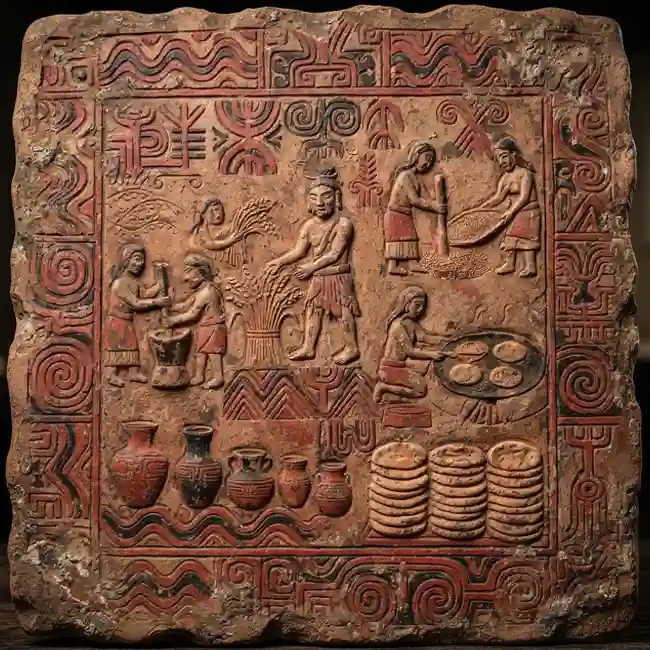
🐉📜 The Storyteller’s Intro: 5,000 Years of Ancestral Flavors
Imagine stepping into a time machine and rewinding the clock back roughly 5,000 years into the misty dawn of Eastern civilization. Long before written scriptures were meticulously carved on imperial bamboo scrolls, long before the grand dynasties raised their sprawling palaces, China was shaped by legendary figures known as the Five Emperors (Wu Di). This transformative epoch, bridging the late Neolithic period into the early Bronze Age around 2800 BCE to 2000 BCE, laid the foundational bedrock for everything from agriculture and medicine to societal structures and spiritual philosophy.
Among these legendary leaders, the Flame Emperor (Shennong) is celebrated as the divine farmer who personally tasted hundreds of wild herbs to teach humanity medicine and agriculture, while the Yellow Emperor (Huangdi) unified early tribes along the fertile valleys of the Yellow River. During this vibrant era, tribal communities gradually transitioned from nomadic hunting and gathering toward settled agricultural societies. Food was no longer just about survival; it became an art of harmony, community, and sacred offering.
The culinary landscape of the Five Emperors Era was defined by the deep connection between early humans and the rich, alluvial soils of the Central Plains. Without modern processing tools or refined ingredients, our ancestors turned to raw, primitive grains cultivated through early farming techniques. Foxtail millet, broomcorn millet, wild hemp seeds, and ancient forms of barley were harvested by hand using stone sickles and processed using crude granite mortar and pestle sets.
Flatbreads—crafted by mixing ground grain meals with spring water and baking them directly on fire-heated stones—became the quintessential staple of this ancient dawn. These humble, smoky flatbreads sustained the builders, farmers, and leaders who laid the groundwork for one of the longest continuous civilizations on Earth.
To truly understand this remarkable era, historians divide early Chinese agricultural history into three foundational developmental phases:
✦ The Age of Shennong (The Divine Farmer Era): Characterized by the discovery of wild seed cultivation, primitive slash-and-burn farming techniques, and the earliest domestication of millet species across the Yellow River basin.
✦ The Yellow Emperor's Era (The Age of Settlement): Marked by organized village farming, systematic irrigation efforts along major watercourses, and the invention of primitive stone pestles and earthenware baking hearths.
✦ The Late Five Emperors Era (Yao, Shun, and Yu): Defined by large-scale water management projects, communal grain storage facilities, and organized food rituals that elevated daily meals into sacred social ceremonies.
📜 Iconic Excavated Menus: Legendary Grains & Ancestral Breads
While written recipe books did not exist 5,000 years ago, modern archaeology and ancient literary classics like the Rites of Zhou (Zhou Li) and the Classic of Mountains and Seas (Shan Hai Jing) offer fascinating glimpses into the actual foods prepared during this legendary period. Archaeological excavations at Neolithic sites such as Yangshao and Longshan have unearthed charred grain remains, ceramic cooking tripods (li and ding), and flat stone griddles stained with ancient grain starches.
Here are the standout, archaeologically verified dishes and primitive bread formulations that nourished the people of the Five Emperors Era:
✦ Shennong’s Stone-Baked Foxtail Millet Flatbread (Shi Ban Xiao Bing): A dense, hearth-baked flatbread made from coarse-ground foxtail millet, cold spring water, and wild crushed sesame seeds, roasted directly on red-hot slate river stones.
✦ Yellow River Crushed Broomcorn Flat Cake (Huang He Su Bing): An unleavened, chewy flatbread crafted from sun-dried broomcorn millet meal, mixed with wild mountain honey and cooked over smoldering oak embers.
✦ Five Grains Ancestral Hearth Cake (Wu Gu Shen Bing): A symbolic ceremonial flatbread combining ground millet, barley, crushed acorn flour, and wild hemp seeds, traditionally prepared during autumn harvest gatherings.
✦ Emperor Yao’s Steamed Wild Grain Dumpling Cakes (Yao Di Zheng Liang Gao): Coarsely ground millet pastes formed into flat disks and cooked inside porous earthenware steamers over boiling herbal broths.
✦ Shun’s Sacred Herb & Grain Mash Cake (Shun Di Cao Ben Liang Bing): A savory, flatbread-style cake infused with crushed wild shepherd’s purse, field mustard, and coarsely crushed sprouted grains.
✦ Great Yu’s River-Dredger Flatbread (Da Yu Gan Liang Bing): A sun-dried, long-lasting travel bread engineered from toasted millet and acorn flour, built specifically to sustain workers during legendary flood-control expeditions along river basins.
✦ Earthen Pot Toasted Hemp-Seed Flatbread (Tao Fu Ma Zhi Bing): A fragrant, oil-rich flatbread utilizing ground hemp seeds and wild barley flour, baked against the inner walls of pre-heated ceramic cooking jars.
🗺️ Living, Eating & Culinary Heritage Travel in the Central Plains
To eat like a person living in the Five Emperors Era was to exist in total harmony with the natural rhythms of the Central Plains (Zhongyuan). Life revolved around tribal settlements nestled along elevated river terraces. Homes were constructed as semi-subterranean pit dwellings with thatched roofs, designed to retain heat during icy northern winters and stay cool during humid summer months.
Daily life was structured around communal labor. Men cleared forest borders, tended herds, and maintained river channels, while women harvested grains, managed earthenware pottery kilns, and operated stone grinding stations. Meals were enjoyed sitting on woven reed mats around central indoor hearths that burned day and night. Dining was a shared experience where every loaf of stone-baked bread and bowl of coarse porridge was prized as a blessing from heaven and earth.
If you are a passionate culinary traveler seeking to walk in the footsteps of the Five Emperors, the geographic heartland of Henan, Shanxi, and Shaanxi provinces offers an unforgettable journey into ancient gastronomy:
• Henan Provincial Museum (Zhengzhou, Henan): Marvel at authentic 5,000-year-old ceramic cooking vessels (Ding, Li, and Yan) and real excavated grain carbon remains that reveal how prehistoric flatbreads were baked.
• Yangshao Village Archaeological Park (Sanmenxia, Henan): Visit the birthplace of modern Chinese prehistoric archaeology to explore reconstructed Neolithic pit houses, ancient hearth pits, and primitive grain processing tools.
• Taosi Relics Site (Linfen, Shanxi): Walk through what many archaeologists identify as the legendary capital of Emperor Yao, featuring ancient palace foundations, grain storage pits, and astronomical observatories.
• The Legend of Yellow Emperor Scenic Area (Zhengzhou, Henan): Experience cultural festivals celebrating the Yellow Emperor, complete with immersive culinary demonstrations showcasing traditional, hand-crushed millet breads and hearth cooking techniques.
🚣 Life Along the Yellow River: The Cradle of Primitive Agriculture
The Yellow River (Huang He) is universally revered as the mother river of Chinese civilization. During the Five Emperors Era, this mighty river system was the vital lifeline that made primitive agriculture possible. The river swept rich, nutrient-dense loess soil down from the western plateaus, depositing soft, fertile mud along its sweeping riverbanks. This loess soil was exceptionally easy to work using primitive wooden sticks and bone hoes, allowing early agriculturalists to cultivate millet without needing iron plows.
Life along the Yellow River basin was both immensely bountiful and dangerously unpredictable. The river provided abundant water for crops, wild fish, and fertile river mud for crafting heat-resistant ceramic vessels. However, sudden seasonal floods frequently threatened to wash away entire villages and destroy seasonal grain stores.
This constant battle against the elements inspired some of humanity's earliest engineering feats, culminating in the legendary story of Great Yu, who spent decades taming the river waters through dredging and channel diversion rather than damming. The survival foods developed during these river-taming efforts—portable, moisture-resistant, sun-dried millet flatbreads—became legendary staples of early Chinese history.
For modern heritage explorers, tracking the culinary history along the Yellow River basin offers breathtaking historical vistas:
• Yellow River Scenic Area (Zhengzhou, Henan): Witness the grand sweeping expanse of the mother river where ancient tribes first established settled agricultural societies and developed millet farming.
• Hukou Waterfall (Shanxi/Shaanxi Border): Feel the thunderous power of the Yellow River and appreciate the rugged, dramatic landscapes that early river-dwelling tribes navigated daily.
• Longshan Culture Historic Sites (Shandong): Discover the advanced late-Neolithic culture famed for its eggshell-thin black pottery and refined grain-processing methods along the lower reaches of the Yellow River.
🏜️ Oasis & Plateau Frontiers: The Ancient Desert Grain Routes
While the fertile river plains served as the agricultural core, the higher western plateaus, loess hills, and arid edges leading toward the Ordos Loop played an equally critical role in shaping ancient grain foodways. In these drier, wind-swept environments, early inhabitants adapted by cultivating hardier, drought-resistant grain varieties that could thrive in sandy soils with minimal rainfall.
Travelers and nomadic traders operating along these arid frontiers required food that would not spoil over long journeys across dusty plateaus and harsh drylands. Flatbread technology truly excelled in these regions. By removing almost all moisture during the stone-baking process, early tribes created crisp, durable flatbreads that could easily be packed into leather bags and carried across desert expanses without molding.
These rugged terrain traditions established early exchange networks that predated the official Silk Road by thousands of years. Early plateau communities traded tough primitive flatbreads, dried meats, and river salt with lowland agrarian tribes in exchange for ceramic cooking vessels, polished jade, and fine craft items.
Unique travel experiences celebrating these ancient dryland grain traditions include:
• The Loess Plateau of Shanxi and Shaanxi: Explore vast, sculpted yellow-earth landscapes where primitive millet varieties are still cultivated using traditional terrace techniques.
• Ordos Bronze Age Cultural Sites (Inner Mongolia): Experience the fascinating intersection where ancient northern pastoralists met southern millet farmers, giving rise to unique hybrid hearth cooking methods.
• Ancient Pottery Kiln Sites of Gansu: Discover early Majiayao painted pottery vessels used to store grains and water across the arid western corridors 5,000 years ago.
🀄❓ Ancient Civilization FAQ: Unlocking Palace Kitchen Mysteries
Q1: How did people bake flatbreads 5,000 years ago without modern ovens or yeast?
An ancient chef during the Five Emperors Era relied entirely on high-heat ceramic hearths, heated flat river slates, or hot ceramic clay walls. They mixed coarsely ground grains with water and let natural wild yeasts in the air lightly ferment the dough over several hours. The dough was flattened into thin disks by hand and slapped directly onto hot flat stones placed over open fires or pressed inside pre-heated earthenware jars, resulting in a delightfully smoky, crispy crust with a chewy center.
Q2: Was rice eaten during the Five Emperors Era, or was it strictly a millet-based diet?
While rice was cultivated in the humid southern regions along the Yangtze River during this time, the Five Emperors Era was centered around the northern Yellow River basin. In the north, the climate and loess soil were ideal for dryland crops. Therefore, foxtail millet and broomcorn millet were the supreme main staples, while rice was treated as an exotic, imported luxury reserved for high-ranking tribal chieftains and sacred rituals.
Q3: How did primitive flatbreads taste compared to the flatbreads we eat today?
Primitive flatbreads had a far richer, grain-forward, and earthy flavor profile, though they were significantly denser and coarser in texture than modern flatbreads. Because grains were ground using crude stone pestles rather than modern steel mills, the flour contained varying particle sizes and retained all its natural germ and bran. When baked over hardwood fires, these breads possessed a nutty, aromatic crunch infused with pleasant wood smoke notes.
Q4: What seasonings were available to flavor these ancient grain breads?
Long before chili peppers, soy sauce, or refined sugar reached China, ancient cooks relied on a clever mix of wild natural seasonings. They used coarse sea or lake salt, wild Sichuan peppercorns (Huajiao), crushed wild ginger roots, native mustard seeds, and mountain honey. For herbal aromas, they folded crushed wild shepherd's purse, chives, and toasted hemp seeds directly into the dough before baking.
🧠 Final Thoughts: The Timeless Allure of Antique Gastronomy
There is something deeply moving about connecting with the foods that sustained humanity 5,000 years ago. The primitive grains and stone-baked flatbreads of the Five Emperors Era remind us that great food does not require complex modern appliances, chemical additives, or hyper-refined ingredients. At its heart, ancient gastronomy is about celebrating pure, unadulterated ingredients, elemental fire, and the warm spirit of communal gathering around a shared hearth.
When we explore the ancient culinary heritage of the Central Plains, we aren't just reading dusty history lessons; we are tasting the raw resilience, brilliant creativity, and enduring spirit of our early ancestors. Every crunch of toasted millet and every aroma of stone-baked dough carries the echoes of the Divine Farmer, the Yellow Emperor, and the brave communities who turned wild grasses into the foundation of a legendary civilization.
Stay tuned, food lovers and history enthusiasts! In our upcoming articles, we will be diving deep into step-by-step masterclass recipes, detailing exact flour-to-water ratios, traditional stone-searing techniques, and kitchen hacks so you can recreate these authentic 5,000-year-old flatbreads right in your own modern kitchen!
🏛️ Credit to the Keepers of the Culture (The Legacy)
We extend our deepest gratitude and respect to the dedicated teams of international archaeologists, historians, ethnobotanists, and museum curators who spend their lives uncovering the truth of our ancient past.
Special recognition goes to the researchers at the Institute of Archaeology at the Chinese Academy of Social Sciences (CASS), the Henan Provincial Institute of Cultural Relics and Archaeology, and the countless local conservation teams along the Yellow River basin.
Their tireless excavations of Neolithic settlements, painstaking analysis of microscopic starch grains on prehistoric tools, and preservation of ancient farming landscapes make it possible for us to honor, understand, and taste the incredible culinary legacy of the Five Emperors Era today.
🏛️🌾 Unearthing the Lost Feast: Cooking Primitive Grains of the Five Emperors
👉 Unlock Five Emperors Era: Primitive Grains & Flatbreads
| 🌐 🏛️🌾 < Back | Next > 🍖 🏯 |