
🏠 Home > 🗺️ Recipes > 🏛️🍖 Hearth-Roasted Mains > 🏯 Five Emperors Era: Hearth-Roasted Mains Recipes
🏯 🏛️🍖 Five Emperors Era: Hearth-Roasted Mains Recipes
Published by Supakorn | Updated: September 2026
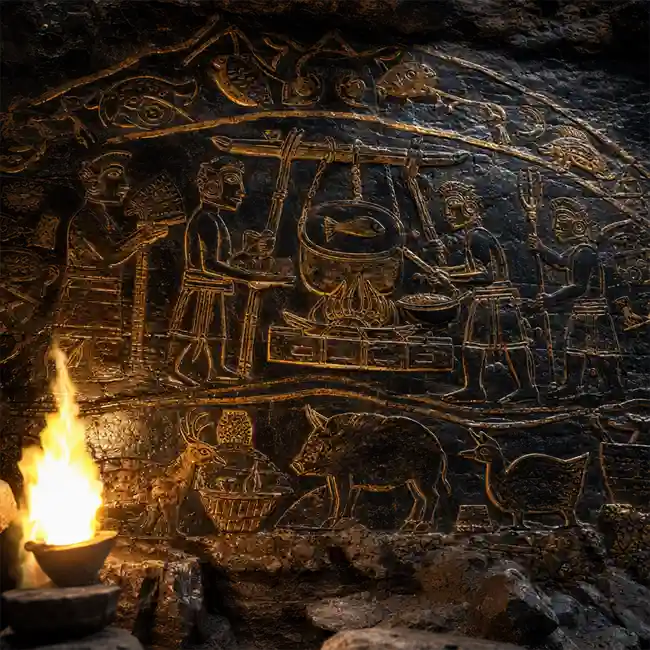
📜🐲 The Storyteller’s Intro: 5,000 Years of Ancestral Flavors
Hey friend, let's rewind the clock — way, way back. We're talking about 5,000 years ago, long before restaurants, before woks were even a thing. This is the legendary Five Emperors Era, or Wudi Era in Chinese history.
So who were these guys? If you grew up hearing stories of ancient China, you know the names — Huang Di the Yellow Emperor, Zhuanxu, Emperor Ku, Yao, and Shun. They weren't just emperors; they were culture heroes who taught people how to live.
This was a game-changing period, and here's why it matters for foodies like us:
✨ From Myth to History: This era sits right on the bridge between pure mythology and recorded history, roughly 2852 BC to 2070 BC. It's the time when the Longshan and Yangshao cultures were thriving along the Yellow River.
✨ The Three Major Phases of Ancient Chinese Food Evolution: You can think of it in three bites. First, the Fire-Taming Phase — humans learning to control fire. Second, the Hearth-Centered Phase — which is our star today — where the communal fire pit became the kitchen, the living room, and the temple. Third, the early Ritualization Phase under Yao and Shun, where food started to mean respect, hierarchy, and sacrifice.
✨ The Hearth Was Everything: Forget your fancy kitchen island. In this era, the huo tang or fire pit was the center of the universe. Archaeologists have found central hearths in every semi-subterranean dwelling from this time. It was where you stayed warm, where you told stories, and where you slow-roasted everything you had.
✨ Why Roasting Ruled: Why hearth-roasted mains and not boiled or steamed? Simple. Pottery was still fragile and precious, mostly for storing millet wine and water. Roasting directly on hot stones, in ash pits, or on wooden spits was efficient, communal, and it gave that incredible smoky flavor that we still crave today. This was the original barbecue, friend.
This wasn't just about survival. This was the moment when eating became culture.
📜 Iconic Excavated Menus: Dishes Unearthed from the Yellow River Hearth
Okay, this is the cool part. What did they actually eat around that fire? We don't have a printed cookbook from 2700 BC, but we DO have something better — archaeology, ancient texts like the Shan Hai Jing (Classic of Mountains and Seas), and oral traditions passed down for millennia. These are the legendary mains that scholars believe were the stars of the Five Emperors' palace hearths.
These names are reconstructed from ritual texts and excavation reports — think of them as the Michelin stars of the Neolithic.
🔥 Huang Di’s Yellow Earth Stone-Roasted Boar
• The Legend: Said to be the favorite of the Yellow Emperor himself after a successful hunt in the Central Plains. The story goes that after unifying tribes, Huang Di hosted a massive hearth feast to celebrate.
• What It Was: Wild boar, marinated in crushed wild ginger, Sichuan pepper ancestors, and fermented millet paste, then roasted directly on river stones heated white-hot in the hearth. The meat was wrapped in large lotus leaves or reed leaves to steam-roast in its own juices.
• Why It's Iconic: We have found charred boar bones with cut marks and heated stone beds at Longshan sites in Henan and Shaanxi. This is the earliest evidence of stone-roasting in China.
🦌 Zhuanxu’s Northern Wind-Spiced Venison Shank
• The Legend: Emperor Zhuanxu ruled the northern regions and was known for reforming the calendar and rituals. His feasts were said to be orderly and deeply connected to the seasons.
• What It Was: Venison shanks from the Taihang Mountains, rubbed with dried jujubes, wild onions, and mountain herbs, then slow-roasted on a wooden spit over low, smoky coals for hours until it fell off the bone.
• Why It's Iconic: Deer remains are one of the most common finds in elite burials of this era. The spit-roasting method shows a leap in cooking technique from just throwing meat in the fire.
🐑 Emperor Ku’s High-Plateau Salt-Crusted Lamb
• The Legend: Emperor Ku was known for traveling widely and bringing new ingredients from different tribes. He is credited with introducing salt as a sacred seasoning.
• What It Was: Whole young lamb, encased in a thick crust of Yellow River coarse salt, yellow earth clay, and fragrant mugwort, then buried in the ash pit of the hearth to roast overnight. When cracked open, the meat was unbelievably tender.
• Why It's Iconic: Salt pits and salt-making tools from 5,000 years ago have been discovered in Shanxi. This dish represents the first time salt was used not just to preserve, but to elevate.
🌾 Yao’s Millet-Stalk Smoked River Fowl
• The Legend: Emperor Yao was the benevolent ruler who was obsessed with agriculture and feeding his people. He taught people to cultivate millet.
• What It Was: Wild ducks and geese from the Yellow River wetlands, stuffed with foxtail millet and wild chives, then smoked over smoldering millet stalks rather than wood. It gave it a sweet, nutty smoke flavor you can't get anywhere else.
• Why It's Iconic: This is the ancestor of all Chinese smoked poultry dishes. Carbonized millet and waterfowl bones found together at the same hearth level tell this story.
🐂 Shun’s Benevolent Ox-Bone Marrow Hearth Roast
• The Legend: Emperor Shun was famous for his filial piety and his humble beginnings as a farmer. His food was known for being nourishing and not wasteful — using every part of the animal.
• What It Was: Large ox leg bones and joints, roasted directly in the embers until the marrow inside was bubbling and the outside meat was charred and caramelized. The marrow was then scooped out and spread on roasted millet cakes.
• Why It's Iconic: This represents the nose-to-tail philosophy that is still at the heart of Chinese cuisine. Large bovine bones with thermal fractures are a hallmark of late Neolithic banquet sites.
🗺️ Five Emperors Daily Life: How They Ate, Lived, and Where to Travel Today
So how did they actually live and eat? Picture this, friend — no chairs, no tables. Everyone sits on woven mats around a low, sunken hearth in a round house with a thatched roof. The chief or elder gets the first cut, then it’s shared according to age and status. Food was respect.
Here’s what daily life around the hearth really looked like:
• A Communal Kitchen: There were no private kitchens. One central hearth served 10-20 people. Cooking was a community event. The women would tend the millet, the men would bring the hunt, and the elders would control the fire. It was social media before social media.
• The Millet Economy: Meat was for celebrations and rituals. The everyday hero was millet — both foxtail and broomcorn millet. They would roast millet cakes on hot stones right next to the meat, so the cakes would soak up all those amazing meat drippings. That’s flavor layering from 5,000 years ago.
• Tools of the Trade: They used polished stone knives, bone spatulas, and pottery ding tripods. But for our hearth-roasted mains, the most important tool was just a sharpened wooden stick and a pair of flat stones. That was it. Pure, primal cooking.
• Eating with Ritual: Under Yao and Shun, eating became ceremony. You didn't just grab and eat. You washed your hands, you bowed to the fire, you offered the first piece to heaven and ancestors. Food was the contract between humans and the gods.
Want to Travel the Food Trail Today? Here’s Your Modern Pilgrimage:
• The Yellow Emperor’s Hometown in Xinzheng, Henan: This is ground zero. Visit during the Ancestor Worship Ceremony in spring. The local museums have incredible reconstructions of Longshan hearths.
• The Taosi Site in Linfen, Shanxi: Believed by many scholars to be Emperor Yao’s capital. It has one of the largest excavated communal hearth areas in China. You can literally stand where the 5,000-year-old barbecue happened.
• Banpo Village in Xi'an: A perfectly preserved Yangshao village where you can walk into a real semi-subterranean house and see the central fire pit. They have live demonstrations of stone-roasting.
• Pottery Workshop Experience: In many of these sites, you can try making your own Longshan black pottery and then use hot stones to roast your own millet cake. It’s the closest thing to time travel.
🚣 The Yellow River Basin: The Cradle of Chinese Hearth Cooking
You cannot talk about the Five Emperors without talking about the Yellow River. Friend, this river is not just a river — it’s the mother of Chinese food.
The ancient name was simply He — The River. Everything started here.
• Why the Yellow River Was a Food Paradise: The loess soil — that fine, yellow, wind-blown earth — was insanely fertile for millet. The river wetlands were full of fish, waterfowl, and reeds for wrapping food. The forests on its edges were full of boar and deer. It was the ultimate pantry.
• The Long-Tail Keyword You Need: Yellow River Basin Neolithic Cooking: If you search for this, you will find the core of Chinese culinary DNA. The river provided the salt, the water, the clay for ovens, and the stones for roasting. Every hearth-roasted main we talked about was born from something the river gave.
• From River to Hearth: The cooking style was directly shaped by the river. Because the soil was so good for pottery, they could make vessels to ferment seasonings. Because the river provided smooth stones, they invented stone-roasting. The river literally taught them how to cook.
• Travel Tip for Food Archaeologists: Take a boat trip near the Hukou Waterfall area in Shanxi. The local villages still practice a primitive form of ash-pit lamb roasting that local elders claim has been passed down since Emperor Ku. It’s an unbroken chain of 5,000 years.
🏜️ The Loess Plateau & Desert Oasis: The Forgotten Spice Routes of the Five Emperors
Now let's head west and north — to the rugged, beautiful Loess Plateau and the edge of the Gobi. This is where the story gets wild.
People think of this area as dry and empty today, but 5,000 years ago, it was a network of oases and grasslands, and it was crucial for our hearth-roasted mains.
• Where the Flavor Came From: The plateau was where they found wild onions, wild garlic, early forms of Sichuan pepper, and mountain herbs. These weren't just seasonings; they were medicine and magic. Emperor Ku’s explorers would bring these back from the oasis edges.
• The Oasis Trade: Even in the Five Emperors Era, there was early trade between the Yellow River settlements and the oasis cultures to the west. Dried jujubes, early salt blocks, and aromatic woods used for smoking came through these routes.
• Desert Oasis Food Tourism Today: If you want to taste the ancient wild flavors, go to the Yan'an region of Shaanxi. The local yangrou paomo culture — where they roast lamb and then tear bread into the broth — has echoes of that ancient salt-crusted technique. And in the Dunhuang oasis edge, you can still find villagers who smoke meat with desert shrubs, just like they did in Yao’s time.
• The Earth Oven Connection: The loess earth is perfect for building underground ovens. The technique of burying salt-crusted lamb in ash and clay is still alive in this region. Locals call it huang tu kao rou — yellow earth roasted meat. It’s a direct descendant.
🏮🏯 Ancient Civilization FAQ: Unlocking Palace Kitchen Mysteries
Q1: Did the Five Emperors really exist, or is this just myth for these recipes?
Great question, buddy. This is the hottest debate in Chinese archaeology. Most scholars now agree it’s a mix. Huang Di and the others may not have been single individuals like we think of kings today, but rather titles for powerful tribal chieftains or dynasties. What IS 100% real is the archaeological culture — the Longshan culture, the hearths, the bones, the tools. So while we may never prove one man named Shun ate ox marrow, we have absolute proof that people living at that time, in those places, were eating exactly that way. The recipes are a poetic reconstruction of hard evidence.
Q2: How do we know what seasonings they used 5,000 years ago if there was no writing?
We are food detectives! We have three clues. First, paleobotany — scientists find charred seeds and pollens in the hearth ash. They’ve found foxtail millet, wild ginger relatives, and Sichuan pepper seeds. Second, residue analysis — we can scrape the inside of ancient pottery and find chemical traces of fermented pastes and animal fats. Third, ancient texts like Li Ji (Book of Rites) recorded oral traditions that said Yao’s people used yi (fermented grain paste) and cong (wild onion). It’s forensic deliciousness.
Q3: What’s the difference between Five Emperors hearth-roasting and modern Chinese BBQ?
Oh, huge difference, and it’s all about patience and heat. Modern Chinese BBQ, like char siu, is fast, high-heat, and uses sugar and soy for glaze. Five Emperors hearth-roasting was low and slow, what we’d call men kao or ash-roasting today. No soy sauce yet, no refined sugar. The sweetness came from millet, jujubes, and the meat itself. The smoke came from millet stalks and mugwort, not charcoal. And there was no metal grill — just stones, ash, and wooden spits. It’s more like Native American earth oven or Polynesian imu cooking than modern BBQ. Much earthier, smokier, and deeper.
Q4: Can I actually recreate these dishes at home without a Neolithic hearth?
Absolutely, and that’s the fun part! You don’t need a time machine. For the stone-roasted boar, you can use a pizza stone heated in your oven at 500°F. For the salt-crusted lamb, use a Dutch oven buried in salt and bake it low. For the millet-stalk smoked fowl, you can use a stovetop smoker with millet or barley straw if you can find it, or applewood as a close cousin. The key is low heat, aromatic smoke, and simple seasonings — just salt, wild ginger powder, and scallion. We’ll drop the full step-by-step Five Emperors Era Hearth-Roasted Mains recipes very soon, I promise!
🧠 Final Thoughts: The Timeless Allure of Antique Gastronomy
So here we are, friend, at the end of our fire-lit tour.
What blows my mind every time is this — 5,000 years later, we still want the same thing. We still want to gather around a fire, share a piece of smoky, tender meat, and feel connected. The Five Emperors weren’t just building a civilization; they were building the very idea of a shared meal.
These hearth-roasted mains were more than food. They were diplomacy — how Huang Di united tribes. They were religion — how Yao thanked heaven for the harvest. They were family — how Shun showed respect for his elders. Every crackle of fat on hot stone was a story.
The beauty of this ancient kitchen is its simplicity. No complicated sauces, no 20-ingredient lists. Just fire, stone, salt, and respect for the ingredient. In a world of complicated cooking, that is a breath of fresh, smoky air.
This is just the appetizer, okay? We’ve explored the culture, the legends, the travel spots. Next up, we are going deep into the actual fire — the full, tested, modern-kitchen-friendly recipes for each of these five legendary mains. We’ll show you how to build your own Longshan hearth in your backyard grill.
Stay hungry for history. The fire is still burning.
🏛️ Credit to the Keepers of the Culture (The Legacy)
This content is built with deep respect for the scholars and communities who keep this 5,000-year-old flame alive. Our historical framework draws from the foundational work of the Institute of Archaeology, Chinese Academy of Social Sciences (CASS), particularly the excavation reports from the Taosi and Wangchenggang sites, and the ethnobotanical research on Yangshao and Longshan foodways.
We honor the ancient texts Shan Hai Jing, Shi Ji, and Li Ji which preserved the oral traditions of the Five Emperors, and we pay tribute to the intangible cultural heritage keepers — the village elders in Shanxi and Henan who still practice ash-pit and yellow-earth roasting methods passed down through countless generations.
All culinary reconstructions are interpretive and for educational and cultural appreciation purposes, intended to celebrate, not appropriate, the profound legacy of the Yellow River basin ancestors.
🏛️🍖 The Emperor's Forgotten Feast: Resurrecting 5000 Years of Pit-Roasted Pork
👉 Explore Five Emperors Era: Hearth-Roasted Mains
| 🌐 🏛️🍖 < Back | 🏯 🌾 < Previous | Next > 🍲 🏯 |