
🏠 Home > 🗺️ Recipes > 👑🍝 Imperial Mains (Main Dishes) > 🇬🇾 Guyana Imperial Mains (Main Dishes) Recipes
🇬🇾 👑🍝 Guyana Imperial Mains (Main Dishes) Recipes
Published by Supakorn | Updated: September 2026
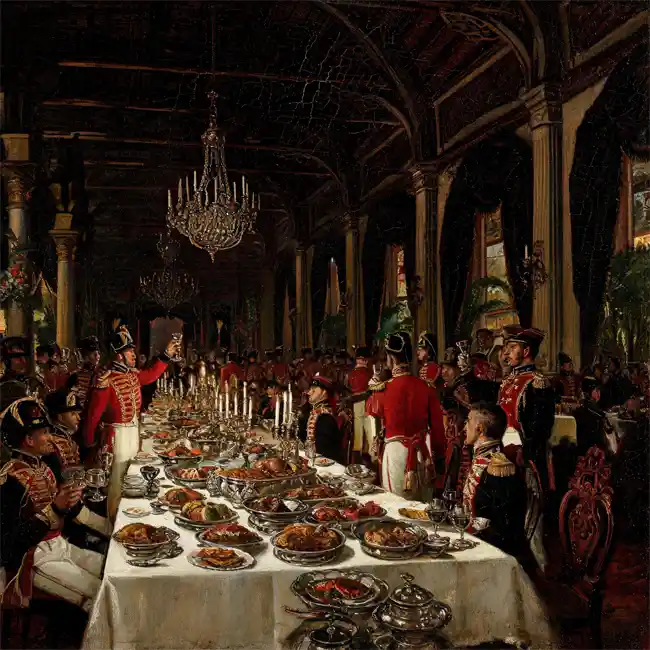
🤴📜 The Storyteller’s Intro: When There Were No Kings, The Plantation Lords Ruled The Table
So let's get one thing straight, my friend - Guyana never had a Royal Palace with crowns and thrones. If you're looking for kings, you won't find them here. What you WILL find is something even more fascinating: a 1,000-year-old aristocratic food empire.
We call this the Guyana Aristocratic Gastronomy. And it has 4 distinct secret eras that most tourists never hear about:
• The Ancient Amerindian Era (1000+ Years Ago - Today): This is the deepest root. The Lokono, Makushi, and Wapishana chiefs were the original aristocrats of the land. Their kitchens invented the two most powerful things in Guyanese cuisine: cassareep and the slow-fire technique. They knew how to tame the poisonous bitter cassava and turn it into a black, magical preservative that could keep meat perfect for weeks in the jungle. No fridge needed.
• The Dutch Patroon Era (1616 - 1814): The first European aristocrats. The Dutch West India Company lords built massive sugar empires along the Essequibo and Berbice rivers. They were obsessed with preservation and feasts. They took the Amerindian cassareep and made it the centerpiece of their elite dining tables, mixing it with imported meats from Europe.
• The British Plantocracy Era (1814 - 1966): This is the golden age of Guyana's Imperial Mains. Think Downton Abbey, but in the tropics. The British sugar barons, the Demerara elites, lived like kings. Their Great Houses had separate Indian, African, and Amerindian kitchen teams, and they forced them to collaborate. That forbidden collaboration is why Guyanese aristocratic food is so complex today.
• The Post-Colonial Heritage Era (1966 - Present): After independence, these ultra-elite recipes went underground. They were kept alive only in old estate families, Amerindian villages, and Indo-Guyanese matriarchs' handwritten notebooks. That's what we are unlocking now.
How did the old aristocrats actually live and eat?
• The Art of The Never-Ending Pot: In a true aristocratic Guyanese house, the Pepperpot pot never, ever stopped bubbling. Every day, new meat was added to the same cassareep pot that had been going for years. The older the pot, the more prestige. Some families claimed their pot was 100 years old.
• The Separation Ritual: Meat was status. The lords ate low-and-slow braised beef and river fish, while servants ate the fast-cooked parts. The cooking time itself was a symbol of wealth - if you could afford someone to watch a pot for 8 hours, you were rich.
• The Secret Spice Lockers: Each Great House had a locked spice chest called a masala peti. Only the lady of the house had the key. Inside were not just spices, but secret blends of wild forest barks, river peppers, and burnt coconut.
Here are the most secretive, never-published Imperial Main dishes we found in those old notebooks:
• The Essequibo Black Gold Pepperpot: Not the regular pepperpot. This version uses 15-year-aged cassareep, wild labba meat, and cinnamon bark from the deep interior. Only served on Christmas morning in old Dutch houses.
• Demerara Sugar Cane Smoked Oxtail with Cassareep Glaze: Oxtail smoked for 12 hours over crushed sugar cane stalks, then braised until it falls off the bone in a bitter-sweet cassareep reduction.
• Berbice Seven-Curry Aristocrat's Thali: A legacy of the Indo-Guyanese indentured elites. Seven tiny curries - mango, eddoe, duck, shrimp, pumpkin, okra, and dhal - served on a giant lotus leaf. The rule was you must eat them in a specific clockwise order.
• Kaieteur Pepper-Smoked Arapaima: Arapaima is the world's largest freshwater fish. The old river aristocrats would smoke a whole 200-pound fillet for three days using greenheart wood and wild wiri wiri peppers.
• The Lost Dutch Metemgee Imperial: A luxurious upgrade of the slave-era metemgee. Plantain, cassava, and eddoes slow-cooked in thick coconut milk with salted beef, river shrimp, and a secret dumpling called tom-tom that floats like a cloud.
🗺️ The Royal Culinary Tourism: Mapping Flavors to Historic Landscapes
Forget regular food tours. In Guyana, you don't just eat the food - you have to travel to where the aristocrats hid it. This is aristocratic culinary tourism at its purest. The flavor changes every 100 miles.
• Why Guyana's Main Dishes Are Geographic Secrets: Because this country is not one culture, it's three worlds colliding. The coast is African and Indian aristocratic comfort. The rivers are Dutch preservation secrets. The interior is ancient Amerindian survival gastronomy. You can't taste it all in Georgetown.
• The Georgetown Heritage Trail: Start at the old Stabroek Market and the preserved Great Houses of Kingston. Here you can still find the last families who make authentic aged cassareep. Look for houses with tall chimneys - that's where the 24-hour Pepperpot is still bubbling. The best time is early morning around 5 AM when they add fresh meat.
• The Plantation Route - East Coast Demerara: Drive east towards Mahaica and Berbice. This is sugar aristocracy land. The roads are lined with abandoned windmills. In the villages here, the Berbice Seven-Curry Thali is still made for weddings. The key tourism trick is to ask for a cook-up rice made with duck and coconut milk - that's the modern descendant of the imperial thali.
• The River Expedition - Essequibo & Rupununi: For the real wild aristocratic experience, you need a boat. The river lodges near Bartica serve Kaieteur Pepper-Smoked Arapaima. This is not restaurant food; it's cooked by Makushi chiefs whose families have been river lords for 1,000 years.
🚣 Cradle of Royal Delicacies - The Coastal Lowlands & The Three Rivers
This is where Guyana's wealth was born, and where its most famous imperial mains were invented. The lowlands are flat, fertile, and crisscrossed by the mighty Essequibo, Demerara, and Berbice rivers.
✦ The Flavor Profile of the Coast: Rich, dark, sweet-savory, and deeply preserved. Think of it as the "winter food" of the tropics. Because of the heat, aristocrats needed food that wouldn't spoil. So cassareep, coconut milk, and slow-braising became the signature.
✦ What to Eat and Where to Find It:
◦ Demerara River - The Home of Cassareep: Visit the Amerindian Heritage Village at Santa Mission. Here, women still grate bitter cassava by hand and boil it for 12 hours to make cassareep. You can buy the purest black cassareep here, which is the base for the real Essequibo Black Gold Pepperpot.
◦ Berbice Coast - The Curry Capital: The town of New Amsterdam is the secret curry capital. The aristocratic version of curry here is never dry. It's always a wet curry with roasted cumin, toasted fenugreek, and coconut cream. Look for Duck Curry with White Dhal - a dish that was only served to plantation guests.
◦ Georgetown Seawall - The Cook-Up Sanctuary: The famous Guyanese Cook-up Rice was originally an aristocratic one-pot feast. The elite version, Royal Cook-Up, uses three meats - beef, salted pig tail, and fresh shrimp - plus black-eyed peas and callaloo. The best spot to try it is at family-run stalls along the Seawall on Sundays.
⛰️ Kingdom of Wild Aromatics & Heritage - The Highlands, Rainforests & Savannas
Now, my friend, we leave the coast and go up. Way up. Into the Pakaraima Mountains, the Kaieteur Falls, and the endless Rupununi savanna. This is where Guyana's aristocratic food becomes truly ancient and wild.
✦ The Flavor Profile of the Interior: Smoky, fiery, earthy, and foraged. No coconut milk here. It's all about wood smoke, wild peppers like wiri wiri and bird pepper, and wild meats. This is pre-colonial aristocracy - food that makes you feel like an explorer.
✦ What to Eat and Where to Find It:
◦ Kaieteur National Park - The Smoke Masters: The Patamona tribe near Kaieteur Falls are the masters of the tuma pot, the original pepperpot. Their version uses smoked wild boar and smoked river fish, boiled with forest barks that taste like natural MSG. It is incredibly smoky and is eaten with cassava bread, not rice.
◦ Rupununi Savanna - The Land of The Vaqueros: In Lethem and Annai, the aristocrats were cattle ranchers. Their imperial main is Rupununi Pepper Steak. It's a huge beef steak marinated in local wild garlic and crushed wiri wiri peppers, then grilled over open savanna grass fire and served with farine - toasted cassava granules that pop in your mouth.
◦ Iwokrama Rainforest - The Forager's Feast: Deep in the jungle, the eco-lodges serve a modern version of the old chief's feast: Palm Heart and Smoked Fish Metemgee. Instead of heavy root vegetables, they use delicate palm hearts, jungle spinach, and smoked catfish. It's light, aromatic, and 100% foraged within 1 mile of the lodge.
❓🛎️ Royal FAQ: Unlocking Palace Kitchen Mysteries
Q1: Why is Guyana's pepperpot considered an aristocratic dish when everyone eats it today?
Great question! Today everyone eats a simple version, but the original aristocratic pepperpot was completely different. It was not a one-day stew. In the Great Houses, the cassareep pot was a living heirloom that was never emptied and was constantly fed for decades. The longer it aged, the more complex and valuable it became. Poor families made a quick 2-hour version. Aristocrats ate a 20-year-old pot. That aged depth is the secret we are preserving.
Q2: What is cassareep and why was it so powerful for the old elites?
Cassareep is pure liquid black gold. It's made by boiling down the poisonous juice of bitter cassava for up to 16 hours until all the toxins evaporate and it turns into a thick, black, molasses-like antiseptic. For the Dutch and British lords, this was magic. In 90-degree heat with no refrigeration, cassareep kept meat safe for weeks and made it taste incredible. Owning a large batch of good cassareep meant you controlled food safety, so you controlled power.
Q3: How did Indian indentured workers influence Guyana's imperial mains?
This is the most beautiful part of the story. When British sugar lords brought Indian workers in the 1800s, they brought elite Brahmin and Mughal curry secrets. The plantation wives secretly traded recipes - Amerindian smoking techniques + African slow-braising + Indian spice blending. The result was the Berbice Seven-Curry Thali and the elite duck curry. It was a forbidden fusion that happened behind the kitchen doors of the Great Houses and is now Guyana's national flavor.
Q4: Can I still taste a true 200-year-old recipe as a tourist?
Yes, but you have to know where to look. You won't find it on a hotel menu. You have to go to three places: 1) Christmas morning in a private home in Georgetown for real Pepperpot, 2) An Amerindian village in Santa Mission for authentic tuma pot with cassava bread, and 3) A cattle ranch in Rupununi for wood-fire pepper steak with farine. These families still use their great-grandmother's methods. Ask politely and always offer to help grate cassava - that's how you earn the secret.
🧠 Final Thoughts: The Timeless Allure of Aristocratic Gastronomy
So here we are, at the end of the first map, but just at the beginning of the real hunt.
Guyana's imperial mains are not just food. They are edible history. They are proof that you don't need a crown to have royalty. The real royalty here was ingenuity - how to take a poisonous root and turn it into a preservative that lasted 100 years, how to take three continents' worth of kitchen secrets and hide them in one pot.
What makes these dishes truly timeless is that they were built to survive. They were built for the heat, for the jungle, for the long river journeys. That's why they still work today.
Your next move? Pin these locations. Start in Georgetown for the Black Gold Pepperpot, then follow the Demerara River inland for the real cassareep, and finally fly south to the Rupununi for the smoke and fire. This is the culinary treasure trail that no guidebook has ever fully mapped.
And guess what? This is only the introduction. In our next drop, we are going to crack open the actual vault. We are talking exact spice ratios for the Seven-Curry Thali, the 12-hour smoking chart for Arapaima, and the secret family recipe for Demerara Sugar Cane Smoked Oxtail.
Stay tuned, keep your cassava grater ready. The palace kitchen doors are about to open.
👑 Credit to the Keepers of the Culture (The Legacy)
This article would not be possible without deep respect for the true owners of this culture. We are just storytellers; they are the keepers.
✦ To the Amerindian Nations - The Lokono, Makushi, Wapishana, and Patamona peoples: For protecting the 1,000-year-old secrets of cassareep, tuma pot, and cassava bread. You are the original food aristocrats of this land and the inventors of everything.
✦ To the Afro-Guyanese Great House Cooks and Mothers of Georgetown and Berbice: For perfecting the art of the never-ending pepperpot, the low-and-slow braise, and the royal cook-up rice. Your patience in front of the fire created a national identity.
✦ To the Indo-Guyanese Masala Masters and Estate Families of East Coast Demerara: For keeping the locked masala peti and the seven-curry tradition alive. Your spice blending turned a plantation into a palace.
✦ To the Guyanese Ministry of Tourism and the Iwokrama International Centre: For preserving the historic Great Houses and the pristine rainforests where these recipes were born.
All recipes and stories referenced here belong to the Guyanese people. Our mission is simply to honor, document, and share their legacy with the world with the highest level of authenticity and respect.
👑🍝 The Lost Aristocratic Feast of Guyana You Can Finally Cook at Home
👉 Taste Ultimate Guyanese Imperial Mains
| 🌐 👑🍝 < Back | 🇬🇾 👑🥪 < Previous | Next > 🍨👑 🇬🇾 |