
🏠 Home > 🗺️ Recipes > 👑🥪 Royal Starters (Appetizers) > 🇬🇾 Guyana Royal Starters (Appetizers) Recipes
🇬🇾 👑🥪 Guyana Royal Starters (Appetizers) Recipes
Published by Supakorn | Updated: September 2026
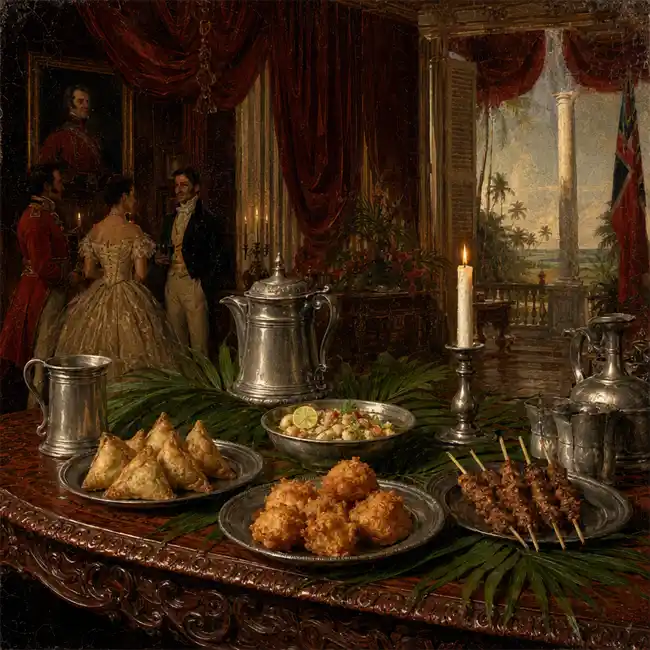
👑📜 The Storyteller's Intro: Whispers From the Planter's Table and the Chieftain's Fire
✦ Guyana's "aristocratic" food story doesn't come from a single palace — it comes from two very different worlds that collided on the same soil, and both left behind starters worth whispering about.
✦ The first world belongs to the Amerindian peoples — the Arawak, Carib, Wapishana, and others — whose caciques (chieftains) and senior elders held the kind of authority and ceremony you'd expect from nobility, long before Europeans ever land landed on the coast. Their food wisdom — cassava processing, wild pepper use, smoking and fermenting techniques — is genuinely centuries deep, some of it predating written history in the region entirely.
✦ The second world is the colonial plantation elite — Dutch and later British planters and merchants who built enormous wealth off Guyana's sugar, coffee, and cotton estates from the 1600s onward. Their tables borrowed heavily from enslaved and indentured cooks — African, and later Indian and Portuguese — creating a strange, layered "high table" cuisine that was aristocratic in wealth but deeply working-class in origin.
✦ So when we talk about 200-year-old "hidden starter secrets" in Guyana, we're really talking about this collision: humble, ancestral techniques dressed up for wealthy tables, then quietly passed down through generations of home cooks long after the plantations disappeared.
✦ There isn't one single era here — think of it in three loose waves. First, the deep Amerindian foundation (cassava, peppers, smoked fish, centuries before colonization). Second, the Dutch and British plantation period (1600s–1800s), where starters became a display of status at planter gatherings. Third, the post-emancipation and indentureship period (mid-1800s onward), when Indian, African, Portuguese, and Chinese influences fused into the multicultural starter culture Guyana is quietly famous for today.
✦ The "aristocracy" of Guyanese starters, then, isn't about gold-plated plates — it's about dishes that took real skill, rare ingredients, or long labor to prepare, and were reserved for feast days, important guests, or the tables of people who could afford the time and spice it took to make them right.
🗺️ The Aristocratic Culinary Tourism: Mapping Flavors to Historic Landscapes
✦ If you ever travel through Guyana chasing food history, you're really tracing a map between three landscapes: the coastal sugar belt, the river deltas, and the deep interior rainforest — and each one guarded its own version of "fancy" starters.
✦ The coastal plantations around Demerara and Berbice are where the colonial-elite food story lives loudest. Old estate houses, some still standing as heritage sites, hint at a world where imported spices met local ingredients to create dishes meant to impress visiting merchants and officials.
✦ Georgetown itself, with its wooden colonial architecture, is practically an open-air museum of this fusion — walking its old streets, you can almost picture the verandas where cheese straws and fish cakes were served on special evenings.
✦ Further inland, along the rivers, you brush up against Amerindian food heritage — communities where cassava bread is still made using traditional matapee sieves, a technique passed down with almost ceremonial respect, the kind of "recipe secrecy" that has nothing to do with hiding it and everything to do with mastering it.
✦ For food-curious travelers, this means Guyana rewards a slower, layered trip: start on the coast to taste the colonial-fusion starters, then head toward the interior to taste the older, more ancestral roots those starters borrowed from.
🚣 Cradle of Aristocratic Delicacies — The River & Coastal Belt
✦ The Demerara and Essequibo coastal belt is Guyana's culinary "old money" region — this is where sugar wealth concentrated, and where starter dishes evolved into something closer to performance food.
✦ Pholourie is the coastal belt's crown jewel — golden, spiced split-pea fritters, dropped by hand into hot oil and served with a tangy mango sour. It's humble street food today, but its spicing (cumin, turmeric, garlic, hot pepper) reflects the indentured Indian cooks who quietly elevated plantation kitchens after the 1830s.
✦ Fish cakes tell a similar story — saltfish, potato, wiri wiri pepper, and thyme, fried into golden bites. Saltfish itself was a colonial trade staple, so a "fancy" fish cake was really a clever transformation of a preserved, practical ingredient into something guest-worthy.
✦ Cheese straws are the most overtly "high table" of the bunch — piped through a star tip, baked until crisp, and clearly borrowed from British baking tradition, then adapted with local cheese and seasoning. These were the kind of nibble you'd expect at a planter's evening gathering, not a roadside stall.
✦ The rivers that cut through this region weren't just transport routes for sugar — they carried spice, salted fish, and cooking techniques between communities, which is exactly why coastal Guyanese starters taste like nowhere else in the Caribbean.
⛰️ Kingdom of Wild Aromatics & Heritage — The Interior & Rainforest
✦ Head away from the coast and the story shifts from colonial elegance to something older and, in its own way, more genuinely "noble" — Amerindian food heritage, shaped by generations of forest and river knowledge.
✦ Cassava bread is the interior's signature starter-adjacent staple — grated cassava, painstakingly squeezed dry using a woven matapee sieve to remove its natural toxins, then baked into a crisp, nutty flatbread. The process itself is a guarded skill, taught hands-on rather than written down.
✦ Wild peppers and forest herbs, used sparingly but precisely, gave interior dishes a heat and aroma that coastal, colonial-influenced cooking often diluted for European palates — a reminder that the "original" spice mastery in Guyana belongs to its indigenous communities.
✦ Smoked and cured fish and game, prepared using techniques passed down for generations, functioned almost like a status food within Amerindian communities — reserved for important gatherings, much the way a planter might reserve cheese straws for guests.
✦ This region is where Guyana's food tourism gets genuinely rare — small interior communities still hold onto techniques you won't find written in any cookbook, which is part of why travelers describe reaching them as feeling like stepping into a different century.
⚔️❓ Aristocratic FAQ: Unlocking Guyana's Kitchen Mysteries
Q1.Did Guyana actually have royalty?
Not in the European sense — Guyana was never a kingdom. Its closest equivalent to nobility was the Amerindian cacique/chieftain system and, later, the wealthy Dutch and British plantation-owning class during the colonial era.
Q2.Why does Guyanese "elite" food taste so Indian and African?
Because after the 1830s, plantation kitchens were run almost entirely by formerly enslaved Africans and newly arrived Indian indentured laborers — their techniques and spicing quietly became the backbone of what got served at even the wealthiest tables.
Q3.Is pholourie really an "old" dish, or just street food?
Both — it's humble street food today, but its roots trace back over a century to indentured Indian cooks adapting split-pea fritters (similar to pakora) to Guyanese ingredients, making it one of the country's most historically layered starters.
Q4.What makes cassava bread historically significant?
It represents pre-colonial Amerindian food technology — the process of detoxifying and preparing cassava predates European contact entirely, making it arguably Guyana's oldest surviving "starter" tradition.
🧠 Final Thoughts: The Timeless Allure of Guyana's Aristocratic Gastronomy
Guyana's starter culture isn't aristocratic because it came from a palace kitchen — it's aristocratic because it survived. Every fritter, flatbread, and fish cake carries the fingerprints of people who turned scarcity, labor, and displacement into dishes worth remembering.
What makes this story worth chasing isn't gold-rimmed plates — it's the quiet mastery behind a perfectly fried pholourie or a properly pressed cassava bread, skills sharpened over generations rather than bought.
If this taste of Guyana's layered food history has you curious, keep an eye out — the full recipe breakdowns behind these very starters are coming next, so you can bring a little piece of this history into your own kitchen.
👑 Credit to the Keepers of the Culture (The Legacy)
Deep respect and credit go to the Amerindian peoples of Guyana — the Arawak, Carib, Wapishana, and other nations — whose cassava-processing knowledge and forest wisdom form the true ancestral foundation of Guyanese cuisine.
Equal respect goes to the Afro-Guyanese and Indo-Guyanese communities whose resilience, under the harshest circumstances, transformed plantation kitchens into the birthplace of the flavors the world now associates with Guyana.
And credit to the home cooks, grandmothers, and street vendors across Guyana today who keep these techniques alive — not in museums, but in daily, living practice, one pot of pholourie at a time.
👑🥪 Inside Guyana's Forgotten Aristocratic Kitchens: The Ancient Recipes Almost Lost to Time
👉 Unlock Iconic Guyanese Royal Starters
| 🌐 👑🥪 < Back | Next > 🍝👑 🇬🇾 |