
🏠 Home > 🗺️ Recipes > 🏛️🌾 Primitive Grains & Flatbreads > 🏝️ Lapita Culture: Primitive Grains & Flatbreads Recipes
🏝️ 🏛️🌾 Lapita Culture: Primitive Grains & Flatbreads Recipes
Published by Supakorn | Updated: October 2026
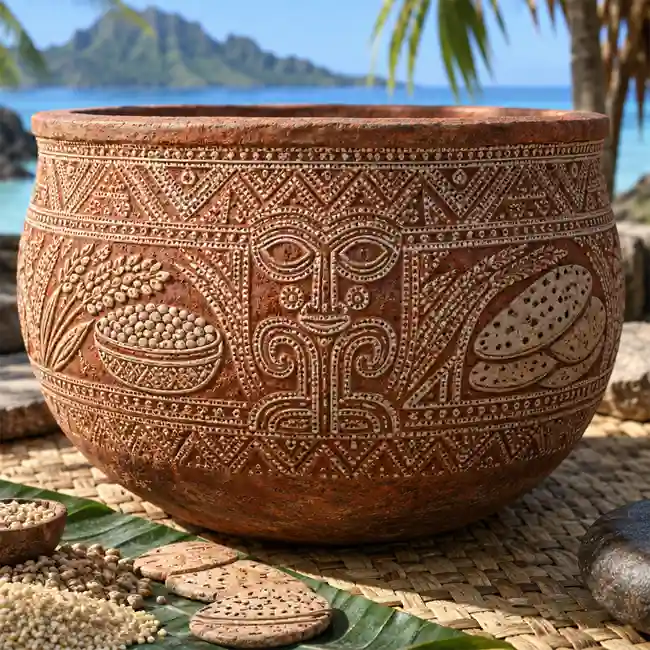
🛎️📜 The Storyteller’s Intro: 5,000 Years of Ancestral Flavors
Let me tell you a secret. Long before rice paddies covered Southeast Asia or wheat fields swayed in Mesopotamia, there was a group of master navigators who were baking history into every flatbread they made. We are talking about the Lapita Culture.
If you love that feeling of touching something truly ancient, this is it.
⭐ So, how old are we really talking? Most archaeologists place the classic Lapita expansion between 3,500 to 2,800 years ago, but their ancestral roots, the story of the Austronesian peoples who became Lapita, stretch back over 5,000 years. It did not just appear overnight. It was a slow, incredible evolution of flavor and survival.
⭐ The three distinct eras that shaped their food: Think of it as a trilogy. First, the Early Austronesian Roots Era (around 3000-1600 BCE) in Taiwan and the Philippines, where the first experiments with primitive taro and wild millet-like grains began. Second, the Classic Lapita Expansion Era (1600-500 BCE), the golden age. This is when their iconic dentate-stamped pottery spread from the Bismarck Archipelago in Papua New Guinea all the way to Samoa and Tonga. This pottery was literally their ancient oven. And third, the Polynesian Transformation Era (500 BCE onwards), where Lapita evolved into the cultures we know today, and their grain traditions became the sacred earth-oven feasts of the Pacific.
⭐ Why grains and flatbreads in the middle of the ocean? This is the coolest part. The Lapita were not just fishermen. They were farmers who carried their world with them. They were the first true food transporters. In their canoes, they carried live plants, tubers, and primitive grains. They had to invent a way to make bread without wheat fields, using what the islands gave them.
⭐ Their kitchen was a canoe and a fire pit. They did not have metal. They had fire-cracked stones, shell scrapers, and their famous Lapita pots with intricate geometric faces. Food was survival, identity, and spirituality all in one. Every flatbread was a map of where they had been.
🌾 Why Primitive Grains Mattered So Much to Ocean Voyagers
• Primitive grains were light, storable, and sacred. Unlike fresh fish that spoils, a dried taro flatbread could survive a 3-week voyage.
• Grinding was a community ritual. It was not just cooking, it was storytelling time. Elders would grind while teaching navigation by stars.
• The flatbread was the original passport. Each island had a slightly different version, so you could taste where a visitor came from.
📜 Iconic Excavated Menus: The Stone and Shell Archive of Lapita Grains
This is where it gets properly archaeological and deliciously mysterious. We are not guessing here. We know what they ate because of starch grain analysis on their pottery and tools. Here are the star dishes archaeologists have actually found evidence for in Lapita sites like Teouma in Vanuatu and Watom Island.
🍞 The Sacred Tuber Flatbreads
◦ Pita Kalo - The Ancestral Taro Leaf Flatbread: This is the most famous one. Not made from wheat at all. Evidence shows they pounded ancient varieties of taro and giant swamp taro, mixed it with grated coconut flesh, and flattened it onto hot stones. The result was a smoky, chewy, slightly purple flatbread. Pottery shards from the Bismarck Archipelago show burned taro starch residues directly on the flat interior bases.
◦ Ufi Lava - The Purple Yam Stone Bread: Excavated from sites in New Caledonia. Made from wild purple yams, Dioscorea alata, which they domesticated. They would roast the yams in earth ovens, pound them into a sticky dough with a wooden pestle, and press it into large leaves to bake. It was dense, sweet, and kept for days.
◦ Pulaka Pillow Bread - The Atoll Survival Loaf: Found in the outer Lapita reaches of Micronesia. Made from swamp taro grown in dug-out pits. This one was thicker, almost like a pillow, baked under ash. It was designed to resist salt and humidity.
🌰 The Wild Grain and Nut Harvest Breads
◦ Coix and Canarium Flatcake - The Jungle Grain Bread: Before true rice, they used Job's tears, a wild primitive grain called Coix lacryma-jobi. Archaeologists found grinding stones with Coix starch mixed with crushed Canarium nuts. They made a fragrant, nutty, gluten-free flatbread that was pressed and toasted on pottery sherds.
◦ Breadfruit Bark Flatbread - The Tree of Life Bread: This was genius. They used both the fruit and the fermented paste of breadfruit. The paste, called ma or masi in later Polynesian cultures, was pounded and sun-dried into flat sheets that could last for years. It was their ancient energy bar.
◦ Arrowroot Whisper Cakes - The Ceremonial Thin Bread: Made from Polynesian arrowroot, Tacca leontopetaloides. This was a very fine, white, almost translucent flatbread. Residue analysis shows it was reserved for ceremonies and for chiefs, because the process of washing the starch was so labor-intensive.
🥥 The Earth Oven Companion Breads
◦ Lovo Leaf-Wrapped Taro Mash Bread: Not all bread was dry. Some were steamed. Taro paste mixed with coconut cream, wrapped in taro leaves or banana leaves, and baked in a lovo or umu earth oven with hot stones. Soft, creamy, and smoky.
◦ Fermented Taro Sour Flatbread: This is the most surprising find. At the Teouma burial site, pots contained fermented taro starch. They intentionally let the dough sour slightly before baking, creating a tangy, probiotic-rich flatbread that aided digestion on long voyages.
🗺️ Island to Table: Daily Life, Feasting, and Following the Lapita Trail Today
So what was it actually like to eat like a Lapita person? It was nothing like a quick restaurant meal.
• Daily life was a grind, literally. Every morning, women and elders would use large basalt grinding stones and shell scrapers to process tubers and wild grains. Children would gather firewood and fresh leaves for wrapping. Men would tend the taro gardens and fish to complement the breads. The kitchen was outdoors, communal, and always smoking.
• Food was social currency. A family who could produce a large, perfectly round flatbread was seen as skilled and blessed. Feasts were held to mark canoe launches, marriages, and new island arrivals. Flatbreads were stacked high as a show of abundance.
• The earth oven was their secret weapon. They did not have ovens. They had the earth. They would heat volcanic stones in a fire, dig a pit, layer the stones with leaves, place the wrapped breads and tubers inside, cover it all with earth, and let it slow-cook for hours. The result is incredibly moist and smoky.
📍 Where You Can Travel to Taste the Lapita Legacy Today
• The Bismarck Archipelago, Papua New Guinea: This is ground zero. Visit the Watom Island archaeological sites. Local communities still make taro flatbreads using nearly identical methods. You can join a village cooking class and learn the stone-grinding technique.
• Vanuatu - Teouma and Efate Island: Home to the largest Lapita cemetery ever found. The Vanuatu Cultural Centre in Port Vila has incredible Lapita pottery. Nearby villages on Efate still cook laplap, a direct descendant of Lapita flatbread, every single day.
• New Caledonia - Koné and Foué: The Lapita site of Foué is UNESCO-listed. Stay in a tribal homestay and taste bougna, a taro and yam parcel cooked in an earth oven. It is the closest living link to Lapita bread.
• Tonga and Samoa - The Polynesian End of the Trail: Here, the tradition becomes umu-cooked fa'ausi taro bread and palusami. Visit the ancient Tongan burial mounds and then head to a local market where women sell fresh taro flatbreads wrapped in banana leaves.
🚣 The Bismarck and Beyond: Voyaging Corridors Where Lapita Bread Was Born
If you want to understand Lapita food, you have to understand their ocean highways. They did not invent their bread in one place. They invented it along the way.
• The Bismarck Archipelago Corridor was the original test kitchen. This is where Melanesian taro met Southeast Asian wild grains. The rich volcanic soil here allowed them to experiment with growing Coix and early taro varieties side by side. This is where the first mixed-grain flatbreads were born.
• The Santa Cruz and Vanuatu Corridor was the fermentation lab. As they moved further east, fresh water became scarcer. They had to learn preservation. This is where they perfected fermenting breadfruit and taro paste into storable flatbreads that could survive months at sea. The salty, humid air forced innovation.
• The New Caledonia to Fiji Corridor was the earth oven perfection zone. Here, they encountered huge, non-volcanic islands with different stones. They learned that different stones hold heat differently. They perfected the lovo, the earth oven that makes Lapita bread so unique and tender.
• The Tonga-Samoa Gateway was the sacred transformation. By the time they reached the Polynesian gateway, flatbread was no longer just food. It was ceremonial. The recipes became more refined, thinner, more sacred, reserved for chiefs and voyagers. This is where food became mythology.
🏜️ From Reef to Ridge: Where to Taste the Ancient Pacific Today
You might think of desert, but for Lapita people, the atoll was their desert and the volcanic ridge was their oasis.
• The Atoll Oasis Experience - The Outer Islands of Vanuatu and Kiribati: These tiny, sandy islands are like deserts in the middle of the ocean. Almost no soil, intense sun, salty water. Here you can still see the incredible ancient pit gardens where Lapita descendants grow swamp taro, called pulaka. These pits are dug down to the freshwater lens, a true oasis in a salt desert. Tasting bread made from this taro is like tasting pure survival and ingenuity.
• The Volcanic Ridge Gardens - The Highlands of New Caledonia and Papua New Guinea: The opposite of an atoll. Lush, misty, fertile volcanic ridges. This is where wild yams and primitive grains grew wild. Hike to traditional Kanak tribal gardens where they still grow 20 different varieties of yam, each with a different bread-making purpose. The contrast between the harsh atoll and the rich ridge is exactly why Lapita cuisine is so diverse.
⛵❓ Ancient Civilization FAQ: Unlocking Palace Kitchen Mysteries
Q1: Did the Lapita people really eat bread if they did not have wheat?
Absolutely, and this is a common misconception. They had no wheat, no rice, no barley as we know it. Their concept of bread was completely different and arguably more creative. Their bread was a pounded, flattened, and baked paste of starchy roots like taro, yam, and breadfruit, plus wild grains like Job's tears and nuts. It functioned exactly like bread, as a storable, portable, daily staple carbohydrate, but it was naturally gluten-free and made without flour milling as we know it. Think of it as root-to-bread instead of grain-to-bread.
Q2: How do we actually know what a 3,000-year-old flatbread looked like?
We have three incredible lines of evidence that make archaeologists very confident. First, starch grain analysis. Microscopic starch from taro, yam, and Coix gets trapped in the pores of Lapita pottery and grinding stones, and we can identify it under a microscope. Second, charred residues. Burned bits of flatbread have been found stuck to the inside of pottery. Third, experimental archaeology. Communities in Vanuatu, Tonga, and Papua New Guinea have never stopped making these breads, so we have a living, unbroken chain of knowledge to compare with the ancient tools.
Q3: What made Lapita flatbreads different from other ancient breads like Egyptian or Mesopotamian bread?
Three things make them totally unique. First, the ingredients were tropical tubers, not temperate grains. Second, the cooking technology was the earth oven and hot stones, not a clay oven or open hearth. This gives a steamed and smoked flavor, not a baked crust. Third, the purpose was voyaging. Egyptian bread was for a settled empire. Lapita bread was designed to be lightweight, long-lasting, and preservable for ocean exploration. It was the first astronaut food, but for ancient Pacific astronauts.
Q4: Can I still try an authentic Lapita-style flatbread today without being an archaeologist?
Yes, and you absolutely should. You do not need a time machine. Go to a local market in Port Vila in Vanuatu and ask for laplap or nalot. Go to a market in Suva, Fiji, and ask for madrai ni via. In Tonga, ask for lupulu. These are all direct, living descendants of the Lapita primitive flatbreads. They are still made by pounding taro and yam, mixing with coconut cream, wrapping in leaves, and baking in an earth oven. The taste is smoky, chewy, earthy, and utterly ancient. It is the closest you will get to eating 3,000 years ago.
🧠 Final Thoughts: The Timeless Allure of Antique Gastronomy
When I think about Lapita Culture, I do not just think about old pots and ancient canoes. I think about resilience.
These people crossed half the planet with no compass, carrying their gardens in their boats. Their primitive grains and flatbreads were not just recipes. They were hope, flattened into a circle and baked on a hot stone. They were a promise that no matter how far you sail into the unknown, you can still carry home with you.
• What we can learn from them today is profound. They used every part of the plant, wasted nothing, and farmed in a way that enriched the islands instead of depleting them. Their breads were naturally sustainable, gluten-free, and community-made.
• This is not the end of the story. What I have shared today is just the appetizer, just the cultural intro. The real magic, the full, step-by-step ancient techniques for grinding, fermenting, and earth-baking these breads, is coming next.
• So stay curious and stay hungry for history. Because the next time you hold a piece of warm flatbread, remember, you are holding one of humanity's oldest and most incredible inventions, born not in a palace, but on a tiny canoe in the middle of the vast Pacific.
🏛️ Credit to the Keepers of the Culture (The Legacy)
This content is written with deep respect and gratitude to the source communities and scholars who keep this history alive.
• Our deepest respect goes to the Indigenous Ni-Vanuatu, Kanak of New Caledonia, and iTaukei Fijian communities, who are the direct living descendants of the Lapita people and who have preserved these earth oven and taro bread traditions for over 3,000 years without interruption. Their living kitchens are the true museums.
• Special acknowledgment to the archaeologists and researchers of the Teouma Archaeological Project in Vanuatu, the Watom Island research teams, and the Lapita Homeland Project. Their painstaking starch grain and pottery analysis gave us the ability to taste the past.
• Honor to the traditional navigators and master gardeners of the Pacific, from the Bismarck Archipelago to Samoa, whose oral histories about canoe plants and sacred breads are just as valuable as any excavated artifact. This story belongs to them first, and to all of us second.
🏛️🌾 How the Lapita Voyagers Baked Survival Into Sacred Root and Seed Cakes
👉 Revive Lapita Culture's Primitive Grains & Flatbreads
| 🌐 🏛️🌾 < Back | Next > 🍖 🏝️ |