
🏠 Home > 🗺️ Recipes > 👑🥗 Aristocratic Garden Greens (Salads) > 🇲🇽 Mexico Aristocratic Garden Greens (Salads) Recipes
🇲🇽 👑🥗 Mexico Aristocratic Garden Greens (Salads) Recipes
Published by Supakorn | Updated: August 2026
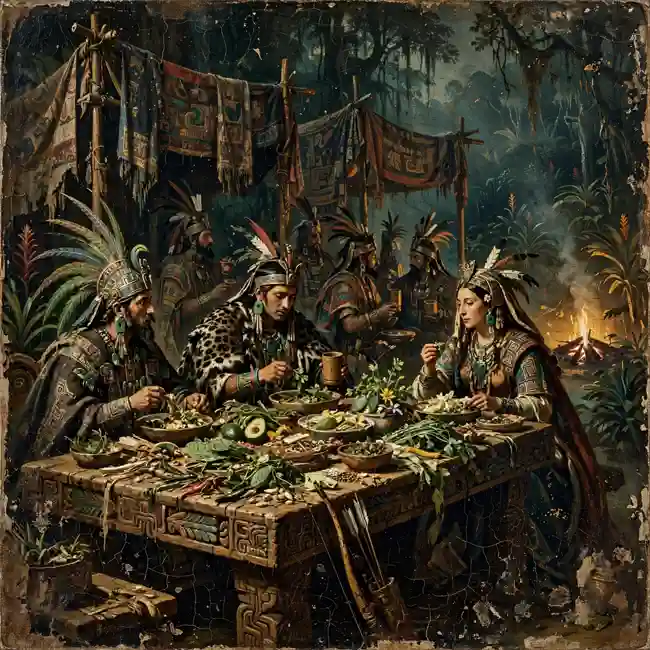
🛕📜 The Storyteller’s Intro: The Forgotten Garden Secrets of Mexico’s Old Elite
Imagine walking through an old Mexican courtyard just before the evening meal.
The stone walls are warm from the afternoon sun. Clay vessels sit near the kitchen. Fresh herbs have just been gathered. Somewhere nearby, corn is being prepared, beans are simmering, and bright chiles, tomatoes, squash, herbs, flowers, and greens are waiting to become part of a meal.
Now imagine that scene not today, but hundreds of years ago.
This is where the story of Mexico Aristocratic Garden Greens (Salads) becomes much more interesting.
Mexico did not have a continuous European-style royal court tradition comparable to the monarchies of Europe. For that reason, “Aristocratic” is the more historically appropriate lens for this culinary story. The people who shaped elite food culture included Indigenous rulers and noble households, colonial officials, wealthy landowners, hacendados, criollo families, convent communities, and influential urban households.
And behind those grand tables was something surprisingly humble: the garden.
Long before colonial palaces and haciendas appeared, sophisticated agricultural systems were already feeding powerful communities throughout Mesoamerica. Mexican cuisine grew from an enormous cultural system built around corn, beans, chile, squash, tomatoes, herbs, fruits, flowers, and other native foods. UNESCO recognizes traditional Mexican cuisine as a cultural model connecting agriculture, ritual, culinary techniques, community knowledge, and eating practices.
So when we talk about ancient “garden greens,” we should not imagine a modern restaurant salad bowl.
The older tradition was broader.
Fresh greens could appear beside other foods, become part of a seasonal preparation, provide aromatic contrast to richer dishes, or be gathered directly from cultivated plots and surrounding landscapes. The important idea was freshness, seasonality, balance, and connection to the land.
🏺 The First Era: Indigenous Agricultural Sophistication
The first chapter reaches back well beyond the colonial period.
Across Mesoamerica, agriculture was not simply about growing enough food to survive. It was deeply connected to community organization, ceremony, trade, landscape management, and social status.
The milpa system became one of the great foundations of Mexican food culture, with corn, beans, squash, and other crops working together within an agricultural environment. In lake regions, chinampas created another remarkable form of intensive cultivation.
Xochimilco offers one of the clearest historical examples.
According to Mexico’s National Institute of Anthropology and History, the Xochimilco, Tláhuac, and Milpa Alta area developed around lakes and had a long agricultural tradition. Chinampa cultivation continued across centuries, linking canals, farming, settlements, and food production.
This matters because the story of Mexican garden food begins with landscape intelligence, not aristocratic luxury.
Elite households could enjoy impressive meals, but the knowledge underneath those meals came from farmers, gardeners, cooks, gatherers, and communities who understood the seasons.
🏛️ The Second Era: Indigenous Noble Households
Before Spanish colonization, powerful Indigenous societies had their own hierarchies, courts, tribute systems, ceremonial centers, and elite households.
The food culture surrounding these communities was far more sophisticated than the simplistic image of “ancient food” sometimes presented today.
Markets brought together an extraordinary range of ingredients. Agricultural communities supplied produce, while specialists prepared foods for households of different social levels.
For the upper classes, food could communicate status through variety, presentation, rarity, freshness, and access.
Garden greens therefore belonged to a much larger culinary world.
Fresh herbs could transform an ordinary dish. Edible flowers could add color. Tender leaves could provide contrast. Aromatic plants could make a meal feel more refined without requiring imported ingredients.
The true luxury was often access to freshness and variety.
🕯️ The Third Era: New Spain and the Aristocratic Kitchen
The Spanish conquest changed the culinary landscape dramatically.
During roughly three centuries of colonial rule, Indigenous and European food traditions interacted and transformed one another. Mexico’s Ministry of Agriculture describes this period as a major process of culinary mestizaje, with Indigenous staples such as corn, beans, and chile continuing alongside introduced foods such as wheat, rice, and European livestock.
This is where the idea of an aristocratic Mexican garden becomes especially fascinating.
Colonial estates, urban mansions, haciendas, convents, and prosperous households created spaces where local ingredients could meet European culinary techniques.
The garden could supply herbs, vegetables, fruits, flowers, and aromatics.
The pantry could contain ingredients arriving through colonial trade networks.
And the kitchen became the place where these worlds collided.
🥬 The Fourth Era: Baroque Mexico and the Art of Refinement
By the seventeenth and eighteenth centuries, some Mexican culinary traditions had developed an elaborate baroque character.
Puebla is particularly important.
Government cultural sources describe Puebla’s cuisine as a fusion of Indigenous and European traditions, shaped partly by its position on the major route between Mexico City and Veracruz. This helped make Puebla an important political, economic, and cultural center during the colonial period.
Convent kitchens became especially influential.
They were places where ingredients, culinary knowledge, preservation techniques, gardening, and written culinary traditions could intersect. Research published by Mexico’s INAH documents convent food systems and the purchasing and production of ingredients in colonial religious communities.
This is one reason Mexico’s “secret kitchen” story cannot be reduced to royal palaces.
Some of the most fascinating culinary knowledge was preserved in convents, aristocratic homes, haciendas, Indigenous communities, and family kitchens.
And that makes the phrase “forgotten aristocratic recipes” more intriguing—not because every dish was literally served at a royal table, but because elite and institutional kitchens helped preserve sophisticated culinary traditions that later moved into broader Mexican culture.
🗺️ The Royal Culinary Tourism: Mapping Flavors to Historic Landscapes
If you want to understand Mexico’s historic garden greens, don't begin with a modern restaurant.
Begin with the landscape.
Mexico's culinary geography is so diverse that the flavor of a traditional green preparation can tell you something about climate, altitude, agriculture, trade, and local history.
Think of the country as a gigantic culinary map.
🌺 Mexico City & Xochimilco: The Garden on Water
For travelers interested in ancient agricultural traditions, Xochimilco is one of the most evocative places to begin.
The historic landscape of canals and chinampas offers a living connection to agricultural practices developed centuries ago. INAH notes that produce from Xochimilco historically moved through waterways toward Mexico City, with the area serving as an important agricultural source for the capital.
Today, visiting the canals is not simply about sightseeing.
It is an opportunity to understand how water, soil, farming, transportation, and food were once woven together.
Look beyond the colorful boats.
Think about the chinampa itself.
A cultivated plot surrounded by water represents a completely different relationship between people and food. It reminds us that Mexican cuisine was built not only in kitchens, but also through ingenious agricultural landscapes.
🏘️ Puebla: The Baroque Culinary Heart
Puebla is another essential stop for anyone exploring historic Mexican elite cuisine.
The city's colonial architecture, convent traditions, markets, tiled buildings, and historic kitchens create an ideal setting for understanding how Indigenous ingredients became part of sophisticated colonial food culture.
Puebla's famous culinary identity includes dishes such as mole poblano, pipián verde, chalupas, and chile en nogada, among many others. Mexico's cultural authorities specifically identify convent kitchens as important to Puebla's culinary history.
Even when these foods are not salads in the modern sense, they reveal something important about aristocratic garden greens.
A refined meal was rarely about one isolated ingredient.
It was about contrast.
Fresh against rich.
Green against dark.
Herbal against earthy.
Bright against deep.
That philosophy is still useful when thinking about Mexico's historical garden cuisine.
🌿 Oaxaca: Where Landscape Becomes Flavor
Oaxaca offers another fascinating culinary journey.
Its mountains, valleys, Indigenous communities, markets, herbs, chiles, fruits, vegetables, and extraordinary biodiversity create an environment where food traditions remain closely connected to place.
For travelers, Oaxaca is not simply a destination for tasting famous dishes.
It is a place to observe how local food knowledge survives through communities.
Traditional ingredients are not merely “exotic ingredients” to be collected by tourists. They belong to living culinary systems.
That distinction matters.
The best culinary tourism experience is not about pretending to enter a fictional palace.
It is about respectfully discovering the people and landscapes that kept the knowledge alive.
🚣 Cradle of Royal Delicacies — The Lakes, Valleys & Agricultural Lowlands
Mexico's historic food story becomes especially vivid wherever water and agriculture meet.
The Valley of Mexico provides one of the clearest examples.
Before the modern city transformed the landscape, lakes and wetlands shaped settlement patterns, transportation, agriculture, and food supply.
The historical center of Mexico City developed over the former Mexica capital of Tenochtitlan, where canals, markets, ceremonial spaces, and elite residences formed part of a highly organized urban environment. INAH notes that palaces, noble residences, ceremonial centers, and major markets occupied central areas of the Mexica city.
Imagine the garden greens moving through that system.
A vegetable or herb was not simply “an ingredient.”
It represented a chain:
• Cultivation in a productive landscape
• Harvesting at the right season
• Transport through markets or waterways
• Preparation by skilled cooks
• Presentation within a household
• Sharing at the table
That chain is one of the hidden stories behind Mexican food.
And it is precisely why a modern traveler can learn so much by visiting historic agricultural areas instead of only famous restaurants.
⛰️ Kingdom of Wild Aromatics & Heritage — Mountains, Forests & Indigenous Foodways
Mexico's mountains tell a different story.
In elevated regions, food traditions often reflect what the landscape naturally provides: aromatic plants, wild greens, herbs, fruits, mushrooms, seeds, chiles, and other seasonal ingredients.
These environments encourage a different understanding of luxury.
A wealthy colonial household might display imported goods as symbols of status, but a knowledgeable local cook could recognize that a freshly gathered aromatic plant from the surrounding landscape was equally valuable in another sense.
It carried place.
It carried season.
It carried memory.
And it carried knowledge that could not easily be purchased.
This is one reason Mexican culinary heritage should never be described simply as a collection of old aristocratic dishes.
The deeper story belongs to many groups.
Indigenous farmers.
Traditional cooks.
Gardeners.
Market vendors.
Convent cooks.
Household cooks.
Hacienda kitchens.
Family matriarchs.
Community elders.
All contributed to the culinary landscape that exists today.
🌿 The Secret Garden Greens: Dishes & Culinary Traditions Worth Remembering
Since this chapter is intentionally about culinary history rather than recipes, we are not opening the detailed ingredient formulas yet.
Instead, consider these names as historical signposts for the wider Mexican garden and vegetable tradition:
• Pipían Verde — a deeply rooted green preparation associated with Mexican culinary traditions and the sophisticated use of seeds, herbs, chiles, and green ingredients.
• Ensalada de Nopales — a modernly recognizable expression of Mexico's long relationship with cactus as food, showing how humble native plants can become elegant table fare.
• Quelites — an important family of edible greens that reveals how Mexican food culture values seasonal plants beyond the limited idea of a conventional Western salad.
• Verdolagas — purslane, traditionally used in Mexican cooking and valued for its distinctive texture and fresh character.
• Pápalo — an aromatic herb whose powerful flavor makes it a wonderful example of how Mexican greens can function as seasoning as much as vegetable.
• Garden Tomato and Herb Preparations — combinations of tomato, herbs, chile, and fresh vegetables that demonstrate the Mexican preference for vibrant contrasts.
• Milpa Greens — seasonal ingredients connected to the broader agricultural world surrounding corn, beans, squash, and native plants.
• Xochimilco Chinampa Greens — a historical category rather than one fixed recipe, representing produce associated with the extraordinary agricultural system of the Valley of Mexico.
These are not being presented as one standardized “ancient aristocratic salad menu.”
That would oversimplify history.
Instead, they are clues.
They point toward a much bigger culinary story.
🏡 How Did Mexico’s Old Aristocratic Households Eat?
One of the biggest mistakes people make when imagining historic elite dining is picturing every meal as a gigantic banquet.
Real food culture was more complicated.
Daily eating depended on household status, region, season, occupation, religious calendar, available ingredients, and economic circumstances.
Colonial food records reveal structured meals and a mixture of Indigenous and European ingredients. Government historical material describes corn, beans, and chile remaining central while wheat, rice, and different meats entered the culinary system.
For affluent households, presentation and variety could become important.
But even an elegant meal remained connected to ordinary agricultural life.
A garden supplied something.
A market supplied something else.
A cook transformed them.
And the household turned the meal into a social experience.
That is the fascinating part.
Food was not simply nourishment.
It could communicate hospitality, refinement, family identity, wealth, regional pride, and cultural belonging.
🧺 The Aristocratic Garden Was More Than Decoration
A historical garden in Mexico could serve several purposes at once.
It could provide:
• Fresh herbs and vegetables
• Seasonal fruits
• Aromatic plants
• Medicinal plants
• Edible flowers
• Shade and beauty
• Ingredients for household kitchens
• A place for household labor
• A visible expression of refinement
This is where garden culture and aristocratic food culture meet.
A beautifully maintained garden was not only something to admire.
It could also be part of the household's food infrastructure.
In colonial settings, agricultural estates and haciendas became important economic units, while gardens and cultivated spaces supplied food and other useful plants.
Mexico's cultural tourism materials specifically describe historical gastronomic routes involving farmers, monks, hacendados, convents, milpas, and agricultural landscapes.
So the “secret garden” was never completely separate from the countryside.
It was connected to it.
🏰🤴 Royal FAQ: Unlocking Palace Kitchen Mysteries
Q1.Did Mexico have a royal salad tradition like European monarchies?
Not in the continuous European-monarchy sense implied by the word “royal.”
Mexico had powerful Indigenous rulers and noble households before Spanish conquest, followed by a long colonial period and later republican government. Therefore, “Aristocratic Garden Greens” is a more historically careful phrase for discussing elite and high-status culinary traditions across Mexican history.
The important point is that elite food existed, but its historical setting was different from that of European royal courts.
Q2.Were ancient Mexican salads the same as modern salads?
No.
The modern idea of a salad—raw leafy vegetables assembled in a bowl—is only one way of thinking about garden foods.
Historical Mexican cuisine included edible greens, herbs, cactus, vegetables, flowers, fruits, seeds, and fresh plants used in many different culinary contexts.
UNESCO describes traditional Mexican cuisine as a broad cultural system involving agriculture, ancient techniques, ingredients, rituals, and community customs rather than a narrow collection of recipes.
Q3.Why are Puebla and convent kitchens so important to elite Mexican cuisine?
Because colonial Puebla became a major political and commercial center, while convent kitchens helped develop and preserve sophisticated culinary traditions.
The fusion of Indigenous ingredients with European ingredients and techniques created some of Mexico's most famous historical foods. Government cultural sources specifically identify Puebla's convents and colonial kitchens as important places in this culinary development.
Q4.What makes Mexican garden cuisine historically special?
Its greatest strength is the relationship between land, agriculture, seasonality, community knowledge, and cooking.
Instead of treating vegetables as anonymous ingredients, Mexican food traditions often connect them to specific landscapes and agricultural systems.
That is why a green herb, cactus paddle, wild plant, or vegetable can carry a surprisingly deep cultural story.
🧠 Final Thoughts: The Timeless Allure of Aristocratic Gastronomy
The real mystery behind Mexico Aristocratic Garden Greens is not a locked palace cupboard containing one forgotten salad recipe.
It is something much bigger.
It is the story of how food moved through civilizations.
From Indigenous agricultural landscapes to noble households.
From chinampas to markets.
From markets to kitchens.
From convent gardens to colonial tables.
From haciendas to family kitchens.
And finally, from those kitchens into the diverse Mexican food culture the world knows today.
The phrase “forgotten aristocratic recipes” is tempting because it creates mystery.
But the deeper truth is even more fascinating.
Mexico's culinary heritage was never created by one social class alone.
The elite could influence presentation, dining culture, and household kitchens, but farmers and traditional cooks preserved the agricultural knowledge that made those meals possible.
That is why the next chapter of this journey should not simply ask, “What did the aristocrats eat?”
A better question is:
What ingredients, techniques, gardens, landscapes, and people made those aristocratic tables possible?
If you're planning a culinary journey through Mexico, start building your map around historic food landscapes:
• Xochimilco for chinampas and ancient agricultural heritage.
• Mexico City for the layered history of Tenochtitlan and colonial New Spain.
• Puebla for convent cuisine and Mexican baroque culinary traditions.
• Oaxaca for Indigenous foodways, mountain landscapes, herbs, markets, and living culinary knowledge.
• Historic hacienda regions for understanding the relationship between agriculture, social hierarchy, and household food culture.
And keep one idea in mind while traveling:
The garden is often where the palace story begins.
The detailed recipes can wait.
The next page will be where the locked kitchen doors finally open.
👑 Credit to the Keepers of the Culture (The Legacy)
Any serious exploration of Mexico's historic cuisine should begin with respect.
The culinary traditions described here do not belong to a fictional aristocratic court.
They belong to living communities and to generations of people who cultivated, cooked, preserved, taught, adapted, and protected their food knowledge.
Mexico's traditional cuisine has been recognized by UNESCO as an intangible cultural heritage built upon collective participation—from planting and harvesting to preparation and eating.
That recognition matters because it changes how we understand culinary history.
A recipe is not just a recipe.
A garden is not just a garden.
A market is not just a market.
A traditional dish can contain geography, memory, agriculture, migration, religion, family history, Indigenous knowledge, colonial transformation, and modern identity all at once.
The people who continue these traditions today are therefore not simply “keepers of old recipes.”
They are keepers of cultural memory.
From the chinampa farmers of the Valley of Mexico to traditional cooks in Puebla and Oaxaca, from market vendors to family kitchens, these communities have helped ensure that Mexico's culinary heritage remains alive rather than becoming a museum artifact.
So when we use a dramatic phrase like “Ancient Palace Recipes” or “Exclusive Aristocratic Kitchen Secrets,” it should be understood as a storytelling doorway—not a claim that every dish belonged exclusively to nobles.
The real treasure is the cultural continuity behind the story.
Mexico's garden greens, herbs, vegetables, cactus, flowers, and seasonal plants remind us that some of the most powerful culinary traditions begin with something incredibly simple:
someone knowing exactly what to grow, exactly when to harvest it, and exactly how to make it belong on the table.
That knowledge has survived for generations.
And that is the secret worth preserving.
The next culinary chapter can go deeper—into the individual historic dishes, their ingredients, their aristocratic connections, and the carefully reconstructed kitchen traditions behind them.
👑🥗 The Lost Aristocratic Salad of Mexico's Silver Palaces
👉 Savor Irresistible Mexican Aristocratic Garden Salads
| 🌐 👑🥗 < Back | 🇲🇽 👑🍲 < Previous | Next > 🍞👑 🇲🇽 |