
🏠 Home > 🗺️ Recipes > 👑🍲 Royal Court Broths (Soups) > 🇲🇽 Mexico Royal Court Broths (Soups) Recipes
🇲🇽 👑🍲 Mexico Royal Court Broths (Soups) Recipes
Published by Supakorn | Updated: August 2026
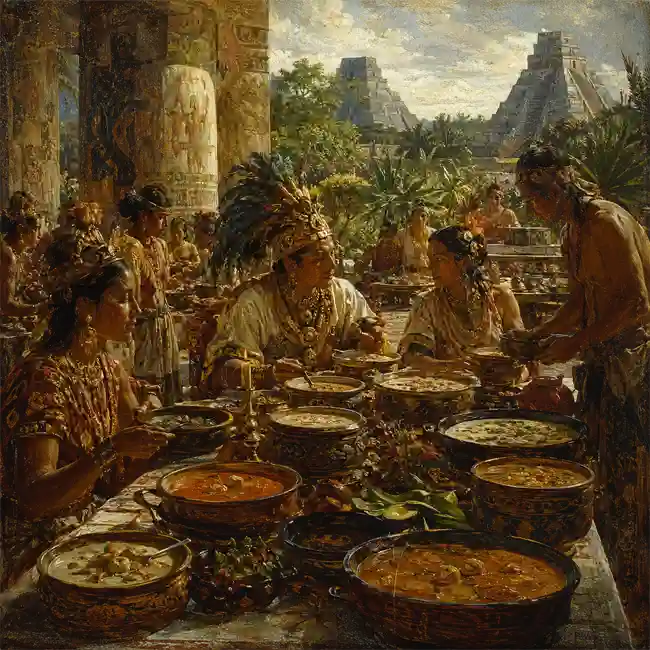
This is the secret scripture revealing 200 - 1,000 year old upper-class and old aristocratic food recipes of Mexico Royal Court Broths (Soups).
🏯📜 The Storyteller’s Intro: Whispers from the Molcajete of Emperors
Have you ever wondered what the rulers of Anahuac sipped when the palace walls went quiet? We are not talking about street-corner soup. We are talking about the broths that were never written down for commoners.
Mexico never had a European-style king for long, but oh, it had aristocracy. A deep, powerful, and incredibly sophisticated one that spanned over 1,000 years. If you want to understand Mexico Royal Court Broths, you have to understand three golden ages of its high-born dining culture.
• The Toltec & Maya Classic Courts (c. 250 - 900 AD): This is the oldest root. The ajaw, the divine lords of the Maya cities like Palenque and Calakmul, did not eat to survive, they ate to communicate with gods. Their palace broths were smoky, sacred, and built around wild turkey, sacred cacao, and chilies that were cultivated in royal gardens only. The broth was a ritual purifier.
• The Aztec Imperial Court of Tenochtitlan (c. 1325 - 1521 AD): This is the heart of the legend. The huey tlatoani, the great speaker like Moctezuma II, had a kitchen that ran like an empire. Chroniclers said he had over 300 dishes prepared daily by noble women called the cihuapipiltin. His broths were the ultimate status symbol. While commoners ate simple corn gruels, the palace served elaborate, labor-intensive soups that required ingredients brought by runners from all corners of the empire.
• The Two Imperial Eras of Mexico (1821-1823 & 1864-1867): This is the final, fascinating fusion. First, Emperor Agustin de Iturbide and then Emperor Maximilian of Habsburg and Empress Carlotta in Chapultepec Castle. Here, the ancient indigenous palace broth met French aristocratic technique. The consommé became clarified with ancient methods, the mole de olla was served in Limoges porcelain. This is where the "Royal Court" idea becomes literal.
How did the old nobility live and eat? Think seclusion, symbolism, and seasonality.
• Eating was governance: In Tenochtitlan, the emperor never ate alone, but no one could look him directly in the eye while he ate. The broth was presented in painted gourds, and its heat, spice, and depth signaled the wealth of the provinces that supplied it.
• The secret women’s knowledge: The most secret broth recipes were guarded by the high-born elder women of the calmecac, the noble school. They controlled the nixtamalization secrets, the fermentation of pozol, and the exact roasting point for chilies that could change a broth from daily food to imperial medicine.
• The language of the bowl: Aristocrats never just "ate soup." They drank the broth first to judge its clarity, a sign of the cook's purity and skill. Then they ate the solids. A cloudy broth in a royal court could be seen as an insult.
Today, we are unlocking the names that were never on any menu. These are the phantom broths of the Mexican aristocracy.
• Pozole Real Blanco de Cuitlacoche Imperial: Not the red party pozole you know. This was the original white pozole, reserved for Aztec warriors and nobles, made with cacahuazintle corn, wild turkey breast, and a whisper of huitlacoche for an earthy, truffle-like depth. The hominy had to be "flowered" perfectly.
• Sopa de Piedra de los Señores Mixtecos (The Lords' Stone Soup): A pre-Hispanic aristocratic miracle from Oaxaca. Raw river tomatoes, raw onion, raw chili, and raw river shrimp or fish are placed in a dried gourd. A white-hot volcanic stone from the royal fire is dropped in, cooking the broth instantly in front of the lord. No pot, only stone, fire, and magic.
• Chilpachole de Jaiba de la Corte de Veracruz: The aristocratic coastal broth that the Totonac nobles served to Aztec tribute collectors. A deep, brick-red crab broth thickened not with flour, but with toasted corn masa and seasoned with anchos and chipotle meco, a smoky chili that was worth more than gold.
• Mole de Olla de Cadera de Tehuacán - The Marrow Broth of Nobles: Before it was a humble peasant stew, it was a Mixtec court broth made from the leg of the wild mountain goat, with chewy, savory bone marrow, and the rare, wild huajes and guaje seeds that only nobles could harvest.
• Sopa Azteca de Tortilla Negra con Flor de Calabaza Imperial: The tortilla soup you love is a faded copy. The palace version used black corn tortillas fried in turkey fat, a broth infused with toasted cacao and pasilla de Oaxaca chilies, and was finished with hand-picked squash blossoms that were only allowed to bloom for the emperor’s table.
• Consomé de Barbarie de Chapultepec: The ultimate imperial fusion soup from Maximilian’s court. A crystal-clear, French-style lamb barbacoa consommé, double-clarified using the ancient Aztec method with egg whites and crushed eggshells, infused with wild mint, maguey leaves, and served with handmade liver quenelles.
🗺️ The Royal Culinary Tourism: Mapping Flavors to Historic Landscapes
You cannot truly taste a royal broth without standing where its ingredients were born. This is not just food tourism, it is aristocratic time travel. Every bowl is a map.
• Mexico City - The Floating Palace of Tenochtitlan: Start your journey where it all began. Take a sunrise tour of the chinampas in Xochimilco, the floating gardens that fed the Aztec emperors. The same heirloom tomatoes, epazote, and chilies used in palace broths are still grown here. Then, visit Chapultepec Castle. Stand on the terrace where Maximilian and Carlotta sipped their consomé and look over the city. You can almost smell the kitchens below.
• Puebla - The City of Tile and Imperial Mole: Puebla was the Spanish aristocracy’s kitchen. The Talavera-tiled kitchens of the old convents and mansions here were where indigenous broth masters and Spanish nuns created the mestizo aristocratic broths. A food walk in Puebla’s historic center lets you taste the evolution from Aztec turkey broth to the baroque Sopa Poblana.
• Oaxaca City - The Kitchen of the Mixtec Lords: If one city guards the secret of the stone soup, it is Oaxaca. The markets of Oaxaca, like Benito Juarez, still sell the white-hot river stones used for Sopa de Piedra. In the nearby Mixtec ruins of Mitla, local noble families still prepare the ancient broths for festivals. It is the closest you will get to eating like a pre-Hispanic lord.
• San Miguel de Allende & The Bajío - The Hacienda Broth Trail: After the conquest, the creole aristocracy moved to the highlands. Their haciendas were self-contained kingdoms. In San Miguel, you can visit preserved hacienda kitchens where massive copper cauldrons simmered all day making rich chicken and beef broths for the patrones, using techniques that blended Spanish olla podrida with indigenous nixtamal.
• Veracruz Coast - The Totonac Noble Coast: The Gulf Coast was the spice cupboard of the Aztec empire. The aristocratic broths from here, like the Chilpachole, are smoky, seafood-driven, and intense. A culinary trip to the ancient city of El Tajin connects you to the vanilla, allspice, and dried chilies that made royal broths so fragrant.
🚣 Cradle of Royal Delicacies - Lake Texcoco & The Gulf Waters
The most powerful broths of Mexico did not come from the land, they came from the water. The aristocracy was obsessed with controlling water sources because water meant purity.
• Lake Texcoco was the original royal pantry: Before it was drained, this lake system was a brackish wonderland. The Aztec palace had exclusive rights to certain fish, axolotls, algae spirulina, and the tiny freshwater shrimp called acociles. The broths made from these were incredibly delicate, light, and mineral-rich, meant to cleanse the emperor’s palate between richer dishes.
• The secret of the gourd and the hot stone: Because the nobility believed that metal altered the taste of sacred water, many of the oldest palace broths were never boiled in a pot. They were made in large, dried guaje gourds. The Sopa de Piedra technique is the most famous survival of this. The violent sizzle when the hot stone hits the raw broth is not just cooking, it is a 1,000-year-old ritual performance reserved for lords.
• Veracruz and the tribute broth: Every year, the coastal provinces had to send dried shrimp, smoked crab, dried chilies, and sea salt as tribute to Tenochtitlan. The palace cooks turned this tribute into thick, complex broths that tasted like the ocean and smoke at once. This is the origin of the Chilpachole and the royal shrimp broths. To taste it today on the beaches of Alvarado is to taste tribute.
• Travel tip for the water-broth hunter: If you want the real aristocratic coastal broth, skip the tourist restaurants. Look for the small, family-run palapas near the mangroves where the women still grind their own chilpotle on a metate. Ask for "chilpachole de jaiba de casa, con masa". That is the code for the old noble recipe.
⛰️ Kingdom of Wild Aromatics & Heritage - Highlands, Volcanoes, and Cloud Forests
If the lakes gave Mexico its delicate broths, the mountains gave it its powerful, soulful ones. The aristocratic broths of the highlands are about smoke, earth, and survival turned into luxury.
• The volcanic hearth: The highland noble kitchens were built around the tlecuil, the three-stone fire pit. Broths like Mole de Olla were not quick soups, they were all-day affairs. Bones were roasted directly in the embers until charred, then simmered for hours with wild herbs like hoja santa, pitiona, and pipicha that only grew above 2,000 meters and were foraged by specialists for the palace.
• The maguey and the cactus nobles: In the arid aristocratic world of the Otomi and Toltec lords, water was scarce, so broth was made from what the land gave. The heart of maguey, xoconostle cactus fruit, and the thick pods of mezquite were used to create sour, savory, deeply aromatic broths. The legendary Sopa de Xoconostle, a tart cactus fruit broth with toasted chilies, was a favorite of highland nobility for its restorative power.
• The mushroom forests of the emperor: Moctezuma had a dedicated forest for mushrooms. During the rainy season, runners would bring dozens of varieties of wild forest mushrooms, like morels, porcini-like cemitas, and huitlacoche, to the palace. These were made into dark, umami-rich broths that were almost meat-like, served in tiny bowls as a prelude to the main feast. The best place to experience this today is in the pine forests around Puebla and Tlaxcala in July and August.
• Travel tip for the mountain-broth hunter: Go to the high-altitude markets of Ozumba or Chalco on a Wednesday or Saturday. Look for the old women selling bundles of wild herbs you have never seen before and bags of dried xoconostle. Those are the ingredients of the aristocratic highland broths. Buy them and ask them how their grandmother made sopa. They will tell you the palace secret.
👸 Royal FAQ: Unlocking Palace Kitchen Mysteries
Q1: Why are these Mexican broths considered "royal" or "aristocratic" when pozole and sopa azteca are now street foods?
That is the most fascinating part of the story. After the fall of Tenochtitlan and later the fall of the Mexican Empire, the palace cooks dispersed. They took their highly complex techniques and simplified them for common ingredients. The pozole you eat today with pork is a commoner's adaptation of the noble turkey and white corn version. The street sopa azteca is a simplified, fried-tortilla version of a much more elaborate, black-corn and cacao-infused imperial broth. The street food is the echo, the original palace version is the source. We are chasing the source.
Q2: What made an Aztec broth different from a Mayan aristocratic broth?
It comes down to power and geography. Mayan ajaw broths were more ritualistic and forest-based. They used more wild game like deer and peccary, more bitter herbs, and sacred ingredients like copal incense was sometimes even infused into the broth as a blessing. Aztec imperial broths were about imperial control and abundance. They were designed to showcase the empire's reach, so a single bowl might contain chilies from Oaxaca, tomatoes from Veracruz, turkey from the north, and lake herbs from the capital. It was a political statement in a bowl.
Q3: Are any of these secret aristocratic broth recipes still cooked by families today?
Yes, but you have to know where to look. The knowledge did not disappear, it went underground. In Oaxaca, certain Mixtec families are the designated keepers of the Sopa de Piedra and only make it for weddings of high-standing families. In Puebla, a handful of old creole families still have handwritten manuscripts, called recetarios, from the 1800s that contain the exact recipe for the Chapultepec Consomé de Barbarie. They do not share it publicly. The broth is served only at private family gatherings. That is why we call them lost royal recipes, they are guarded by lineage, not by restaurants.
Q4: What is the one technique that instantly makes a Mexican broth taste aristocratic?
It is the toasting, or tatemar. Common broths boil everything raw. Aristocratic broths almost never did. The palace cooks would char, toast, and blacken everything before it went into the water. Tomatoes were blackened on the comal, chilies were toasted until fragrant but not burnt, onions were roasted in embers, and even the corn for pozole was lightly toasted. This toasting creates a smoky, complex, deep flavor base that you cannot get from boiling alone. If you want to upgrade any Mexican soup to royal status, start by toasting all your vegetables first.
🧠 Final Thoughts: The Timeless Allure of Aristocratic Gastronomy
So what have we learned from this deep dive into the steaming gourds and copper cauldrons of Mexico’s old nobility?
We learned that Mexican broth was never just food. For over 1,000 years, from the misty cloud forests of the Maya ajaw to the opulent dining room of Chapultepec Castle, a bowl of broth was a map, a medicine, a prayer, and a power play.
The beauty of Mexico Royal Court Broths is that they tell the entire story of Mexico in one sip. You taste the ancient sacredness of the lake, the smoky tribute from the coast, the wild aromatic soul of the volcanoes, and the final elegant French flourish of the empire. No other cuisine in the Americas has such a long, unbroken aristocratic broth tradition.
This is just the prologue, my friend. The cultural bible, the opening of the palace door.
In our upcoming single-recipe deep dives, we will stop talking about the history and we will start cooking it. We will reconstruct, step-by-step, the forbidden Pozole Real Blanco, the theatrical Sopa de Piedra de los Señores, and the crystal-clear Consomé de Barbarie de Chapultepec with exact heirloom measurements and ancient techniques adapted for your modern kitchen.
Pin this page. Follow the broth trail from Xochimilco to Oaxaca in your mind. The real secrets, the exact proportions guarded by the noble cooks, are coming next. And when they drop, you will be one of the few outside the old families to ever taste true Mexican aristocracy.
👑 Credit to the Keepers of the Culture (The Legacy)
This culinary scripture would not exist without the true guardians of Mexico’s flavor memory. Our deepest respect goes to them.
• The Cihuapipiltin and the Calmecac Cooks: The unnamed noble women and palace cooks of Tenochtitlan who carried thousands of recipes in their memory when codices were burned. Their oral tradition is the root of everything.
• The Mayordomos of Oaxaca and the Totonac Smokers of Veracruz: The Mixtec and Totonac families who have kept the pre-Hispanic stone-soup and chilpachole techniques alive, not in restaurants, but in their homes, for over 500 years after the conquest.
• The Recetario Keepers of Puebla: The old creole and mestizo families whose handwritten, leather-bound recipe manuscripts from the 18th and 19th centuries preserve the imperial fusion era. They are the bridge between the Aztec molcajete and the French casserole.
• The Chinamperos of Xochimilco: The lake farmers who still grow the heirloom corn, chilies, and herbs exactly as they were grown for Moctezuma’s table. Without them, the taste of the royal court would be truly lost.
This article is written in honor of their resilience, their secrecy, and their generosity. We are merely storytellers, they are the keepers.
👑🍲 Unlocking Mesoamerica’s 500-Year-Old Aristocratic Broth Recipe
👉 Explore Rare Mexican Royal Court Broths
| 🌐 👑🍲 < Back | 🇲🇽 👑🍷 < Previous | Next > 🥗👑 🇲🇽 |