
🏠 Home > 🗺️ Recipes > 👑🍨 Grand Finales (Desserts) > 🇲🇽 Mexico Grand Finales (Desserts) Recipes
🇲🇽 👑🍨 Mexico Grand Finales (Desserts) Recipes
Published by Supakorn | Updated: August 2026
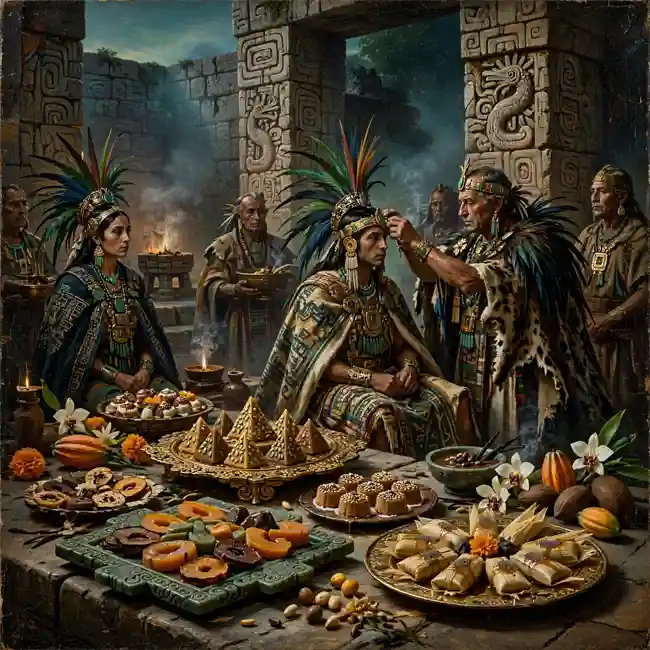
👑📜 The Storyteller’s Intro: Forgotten Aristocratic Sweets Behind Mexico’s Grand Tables
Imagine walking into an old Mexican courtyard just as the afternoon sun begins to soften.
The stone walls are warm. Clay vessels sit near the kitchen hearth. Cinnamon, vanilla, cacao, toasted seeds, fruit, and warm corn aromas drift through the air. Somewhere beyond the kitchen, a long table is being prepared for an important gathering.
And then comes the final course.
Not simply something sweet to finish a meal, but a small piece of history.
That is the spirit behind Mexico Grand Finales (Desserts): a journey into the desserts, sweets, ingredients, and culinary customs associated with Mexico’s historic elite, noble households, religious institutions, wealthy families, and colonial-era kitchens.
There is an important historical detail to understand from the beginning. Mexico does not have a single continuous royal culinary tradition comparable to European monarchies. Its history is much more layered. Before Spanish colonization, Mesoamerican societies included powerful rulers, nobles, priests, elite households, and ceremonial communities. Later, New Spain developed a colonial hierarchy influenced by Spanish institutions, wealthy landowners, religious communities, convent kitchens, and urban households. Mexico briefly became an empire in the nineteenth century as well, but that period was short-lived.
So rather than pretending that every historic Mexican dessert came from a royal palace, it is more accurate—and arguably more fascinating—to explore Mexican aristocratic and elite culinary traditions.
The story stretches across several major periods:
• Pre-Hispanic Mesoamerica: cacao, maize, honey, fruits, seeds, flowers, and native plants formed important parts of food culture.
• The early colonial period: Spanish ingredients and techniques encountered established Indigenous foodways.
• The mature colonial era: convents, estates, wealthy urban homes, and institutional kitchens became important places for culinary experimentation.
• The nineteenth century: Mexican households developed increasingly recognizable regional sweet traditions while European influences continued to appear in elite cuisine.
• The modern heritage era: historic sweets became part of regional identity, markets, festivals, family traditions, and culinary tourism.
The fascinating part is the exchange between these worlds.
Sugarcane, wheat, dairy, and European pastry techniques arrived through colonial contact. Indigenous ingredients such as maize, cacao, vanilla, amaranth, pumpkin, fruits, and numerous seeds remained deeply important. The result was not simply European food placed into Mexico.
It became something new.
That transformation is one reason Mexican desserts are so interesting for anyone researching historic Mexican desserts and forgotten aristocratic recipes.
Some sweets feel almost ceremonial. Others are humble but carry centuries of memory. Some are associated with convent traditions. Others belong to regional kitchens, family celebrations, markets, or historic towns.
And the phrase “hidden recipes” should be understood in the spirit of culinary storytelling rather than as a claim that one secret manuscript contains every authentic recipe.
The real secret is often simpler:
the ingredients, techniques, geography, and cultural encounters that allowed these desserts to exist in the first place.
🗺️ The Aristocratic Culinary Tourism: Mapping Flavors to Historic Landscapes
One of the best ways to understand Mexican dessert history is to stop thinking of food as something separate from geography.
Mexico's landscapes helped determine what appeared on historic tables.
The country's enormous variety of climates created an equally impressive variety of ingredients. Tropical regions supplied fruits and aromatic plants. Highland areas supported different crops and dairy traditions. Central Mexico became a major meeting point of Indigenous and colonial culinary practices. Oaxaca developed an extraordinary culture around cacao, maize, seeds, fruits, and regional sweets.
For travelers interested in Mexican culinary history and food tourism, this makes the country feel almost like an enormous open-air cookbook.
Instead of asking only, “What dessert did people eat?”
A better question is:
“Where did the ingredients come from, who prepared them, and why did that particular landscape produce this flavor?”
That question leads travelers toward historic markets, colonial towns, former convent cities, traditional bakeries, artisan sweet shops, agricultural regions, and food-centered festivals.
🏛️ Historic Cities and the Convent-Kitchen Tradition
Colonial cities are particularly important to the story.
Places such as Puebla, Oaxaca, Morelia, Querétaro, and Mexico City became centers where Indigenous ingredients, Spanish culinary traditions, imported products, and local creativity interacted.
Convent kitchens are especially famous in Mexican culinary history because religious institutions became important centers of food production and culinary knowledge.
This does not mean every dessert traditionally associated with a convent can be confidently attributed to one particular nun or one precise year. Many popular stories have been embellished over time.
But the broader historical pattern is meaningful.
Large institutional kitchens had access to ingredients, labor, specialized equipment, and culinary knowledge. They could preserve techniques and adapt recipes over generations.
That environment helped create the kind of refined sweets that later became associated with celebrations, special occasions, and prestigious tables.
🍬 The Sweet Language of Mexican Celebration
Historic Mexican sweets were not necessarily “luxury” because they contained expensive ingredients in enormous quantities.
Sometimes refinement came from patience.
A dessert might require:
• Long simmering.
• Careful grinding.
• Slow caramelization.
• Precise shaping.
• Decorative presentation.
• Seasonal fruit.
• Carefully prepared seeds or nuts.
• A combination of Indigenous and European techniques.
That sense of craftsmanship is an important part of the aristocratic culinary story.
🚣 Cradle of Grand Finales: Central Valleys, Colonial Cities & Historic Trade Routes
Central Mexico deserves special attention because it became one of the great meeting grounds of culinary traditions.
The Valley of Mexico and surrounding highland regions had already supported sophisticated food cultures long before Spanish arrival.
Maize was foundational. Cacao was highly valued. Fruits, seeds, flowers, herbs, and other native ingredients contributed different textures and aromas.
After colonization, new ingredients entered the culinary landscape.
Sugar became especially transformative.
Once sugar production expanded, cooks had a new tool for creating preserves, candies, syrups, crystallized fruits, and other sweets. Dairy also opened another culinary pathway.
The resulting desserts became part of a broader Mexican food tradition rather than belonging exclusively to one social class.
🍮 Historic Desserts Worth Knowing
For anyone exploring Mexico Grand Finales desserts, several names deserve a place on the culinary map.
• Arroz con leche: became one of the most recognizable sweet rice traditions in Mexico, combining rice, milk, sugar, and aromatic spices in a dessert that could move comfortably between everyday kitchens and celebratory tables.
• Flan: represents another important example of an old European dessert tradition that became deeply rooted in Mexican cuisine. Over generations, Mexican cooks developed their own familiar interpretations.
• Chongos zamoranos: associated particularly with Michoacán, demonstrate the importance of dairy-based sweets in regional Mexican cuisine.
• Camote poblano: associated with Puebla, reflects the long tradition of molded and flavored sweet preparations found in Mexican confectionery.
• Alegrías: traditionally made with amaranth and sweeteners, connect modern Mexican sweets with an ingredient that has extremely deep Indigenous roots.
• Ate: a firm fruit paste traditionally associated with several Mexican regions, demonstrates how fruit preservation became an important part of the country's sweet-making heritage.
• Dulce de calabaza: prepared from pumpkin or squash with sweetening ingredients and aromatic spices, connects seasonal produce with long-standing preservation traditions.
• Cocadas: made primarily from coconut and sweetening ingredients, illustrate the importance of tropical and coastal influences within Mexican confectionery.
These foods should not all be labeled “royal desserts.” That would flatten their history.
Their real importance comes from how different social groups adopted, transformed, preserved, and passed them forward.
🕯️ The Aristocratic Table Was About More Than Dessert
In wealthy historic households, food presentation could communicate hospitality and social position.
The final course could provide an opportunity to display:
• Fine ceramics.
• Decorative serving pieces.
• Carefully prepared fruit sweets.
• Molded desserts.
• Candied ingredients.
• Refined pastry techniques.
• Seasonal specialties.
• Regional delicacies brought from distant areas.
Dessert therefore became part of the social theater of the meal.
A beautifully presented sweet could signal generosity without needing to be extravagant.
That is one reason historic dessert culture is so useful when studying the eating and living habits of Mexico's old elite households.
⛰️ Kingdom of Wild Aromatics & Heritage: Oaxaca, Puebla, Michoacán and the Mountain Regions
Travel away from the major colonial centers and another side of Mexican dessert history appears.
Mountain landscapes and fertile valleys created their own culinary identities.
Oaxaca is especially fascinating because its food culture reflects centuries of Indigenous continuity alongside later influences.
Cacao, vanilla, maize, fruits, seeds, and aromatic plants contribute to a culinary world that feels remarkably different from the dessert traditions of northern Mexico.
🌿 Oaxaca: Cacao, Vanilla and Deep Culinary Memory
Oaxaca is an essential destination for anyone interested in ancient Mexican food culture.
The relationship between cacao and Mesoamerican civilization reaches deep into history. Cacao was valued long before modern chocolate became a global confection.
Vanilla also has important Indigenous roots in Mesoamerica, particularly among peoples of the Gulf Coast region.
Today, travelers can explore markets and food traditions where cacao, maize, spices, fruits, and handmade sweets remain part of everyday culinary life.
The lesson here is simple:
A historic ingredient does not need to survive in exactly the same recipe to preserve cultural memory.
Sometimes the ingredient itself is the thread connecting generations.
🏺 Puebla: Convent Traditions and Refined Sweets
Puebla offers another fascinating chapter.
The city is strongly associated with colonial architecture, convent history, traditional confectionery, and culinary traditions that developed through cultural exchange.
Its famous sweet shops and traditional candy culture make it particularly interesting for travelers searching for historic Mexican desserts and colonial culinary experiences.
Puebla's sweets often demonstrate how sugar, nuts, seeds, fruit, dairy, spices, and local ingredients could be transformed into attractive confections.
For a traveler, this creates an enjoyable route:
• Explore historic architecture.
• Visit traditional markets.
• Learn about convent-era food culture.
• Sample regional sweets.
• Look for artisan confectionery.
• Connect the food with the history of the city.
The dessert becomes much more meaningful when you know the landscape behind it.
🌄 Michoacán: Dairy, Fruit and Regional Craft
Michoacán provides another important perspective.
Its traditional food culture includes dairy-based sweets, fruit preparations, preserved foods, and regional confectionery.
Chongos zamoranos are particularly notable as a historic-style dairy sweet associated with Zamora.
The dessert's identity is inseparable from the region's dairy tradition.
This is a useful reminder that aristocratic culinary history was never created entirely inside grand houses.
It was supported by farmers, milk producers, fruit growers, millers, market vendors, cooks, artisans, and countless families whose names rarely appeared in historical records.
The “palace kitchen” was connected to an enormous network of people beyond its walls.
🏜️ Northern Landscapes: Preserved Fruits, Seeds and Practical Sweet-Making
Northern Mexico tells a somewhat different story.
The environment encouraged culinary traditions based on preservation, portability, seasonal availability, and local agricultural products.
Dried fruits, nuts, seeds, and fruit-based sweets became useful ways to extend the life of ingredients.
This practical knowledge could eventually become part of celebratory cuisine.
That contrast is worth remembering.
Not every historic sweet began as a luxury.
Some became special because people learned how to transform ordinary seasonal ingredients into something memorable.
This is one of the strongest themes running through Mexican dessert history:
ingenuity often mattered more than extravagance.
🏰 Royal FAQ: Unlocking Aristocratic Kitchen Mysteries
Q1.Were Mexican desserts really created in royal palaces?
Not in the same way that many European royal cuisines developed.
Mexico's history includes pre-Hispanic rulers and elite societies, a long colonial period, and a brief nineteenth-century imperial period. However, there was no uninterrupted Mexican royal court tradition lasting for centuries.
It is therefore more historically responsible to use terms such as aristocratic, elite, colonial, noble, convent, ceremonial, or historic cuisine, depending on the specific context.
Q2.What ingredients connect modern Mexican desserts to ancient food culture?
Several ingredients have especially deep historical importance.
Cacao, maize, amaranth, vanilla, squash, fruits, seeds, and honey or other traditional sweetening ingredients can help connect modern culinary traditions with older Mesoamerican foodways.
However, today's desserts should not automatically be described as unchanged ancient recipes. Many modern Mexican sweets developed through centuries of cultural exchange.
Q3.Why are convents important in Mexican dessert history?
Convent kitchens became important culinary environments during the colonial period.
They provided places where ingredients, techniques, recipes, preservation methods, and culinary knowledge could be developed and passed between generations.
Popular stories sometimes attribute specific desserts to individual convents without strong documentary evidence, so those stories should be treated carefully.
Q4. Where should travelers go to explore historic Mexican sweets?
A strong culinary-history journey could include:
• Puebla for colonial architecture and traditional confectionery.
• Oaxaca for Indigenous food traditions, cacao, markets, and regional sweets.
• Michoacán for dairy and regional culinary heritage.
• Mexico City for museums, historic neighborhoods, markets, and the convergence of regional cuisines.
• Other historic towns and regional markets where traditional sweets remain part of everyday life.
The most rewarding approach is to combine food with history rather than treating dessert as an isolated attraction.
🧠 Final Thoughts: The Timeless Allure of Aristocratic Gastronomy
Mexico's grand desserts are not fascinating because every sweet supposedly came from a secret palace.
They are fascinating because the real story is much bigger.
It is the story of Indigenous ingredients meeting new ingredients.
It is the story of colonial kitchens adapting to local landscapes.
It is the story of convents, estates, markets, family kitchens, artisans, farmers, and cooks.
It is the story of cacao and vanilla, maize and amaranth, fruit and sugar, milk and spices.
And most importantly, it is the story of cultural continuity.
If you are building a culinary travel map around Mexico Grand Finales (Desserts), think beyond a simple list of sweets.
Put Puebla on the map for its colonial atmosphere and confectionery traditions.
Put Oaxaca on the map for its extraordinary Indigenous culinary heritage.
Put Michoacán on the map for its regional dairy and fruit-based traditions.
Put Mexico City on the map for its enormous convergence of historic and contemporary Mexican cuisine.
Then follow the ingredients outward.
Where did the cacao grow?
Where did the fruit come from?
Who cultivated the maize?
Who made the sweets?
Which techniques survived?
Which traditions changed?
Those questions reveal far more than a romantic palace legend ever could.
And this is only the beginning.
The next stage of the journey can go deeper into individual historic desserts, examining their ingredients, cultural context, regional identity, preparation traditions, and the stories that surrounded them.
For now, consider this your invitation to stand outside the old kitchen door.
The hearth is warm.
The table is waiting.
And somewhere inside are the forgotten sweet traditions of Mexico, ready to be explored one dessert at a time.
👑 Credit to the Keepers of the Culture (The Legacy)
Any exploration of Mexican culinary history deserves respect for the people who preserved these traditions.
The survival of historic Mexican desserts is not the achievement of aristocrats alone.
It belongs to generations of Indigenous communities, cooks, farmers, bakers, confectioners, market vendors, religious communities, household cooks, artisans, food historians, and families who continued preparing regional specialties long after the original historical circumstances had disappeared.
Many recipes survived because someone taught a child how to make them.
Many techniques survived because a family refused to abandon them.
Many ingredients remained important because communities continued cultivating and using them.
And many desserts became cultural treasures because local people kept telling their stories.
That is why the most respectful way to explore Mexico's forgotten aristocratic recipes and historic desserts is not to claim ownership of the culture.
It is to listen.
Listen to regional traditions.
Listen to the communities who maintain them.
Listen to food historians.
Listen to cooks who learned from parents and grandparents.
And recognize that a dessert can be both delicious and deeply historical without needing a royal legend attached to it.
Mexico's culinary heritage belongs first and foremost to the people and communities who created, adapted, protected, and continue to share it.
So when we speak of Mexico Grand Finales, we are really speaking about a living culinary legacy.
A legacy shaped by ancient civilizations, colonial encounters, regional landscapes, family kitchens, artisan traditions, and generations of culinary memory.
The final course may arrive at the end of the meal.
But in Mexican food culture, the story is never really finished.
👑🍨 The Lost Sweets of Chapultepec: Rare Aristocratic Desserts from Mexico's Imperial Palace
👉 Discover Iconic Mexican Grand Finales
| 🌐 👑🍨 < Back | 🇲🇽 👑🍝 < Previous | Next > 🍷👑 🇲🇽 |