
🏠 Home > 🗺️ Recipes > 🏛️🍲 Clay-Pot Broths & Stews > 🏰 Ancient Celts: Clay-Pot Broths & Stews Recipes
🏰 🏛️🍲 Ancient Celts: Clay-Pot Broths & Stews Recipes
Published by Supakorn | Updated: October 2026
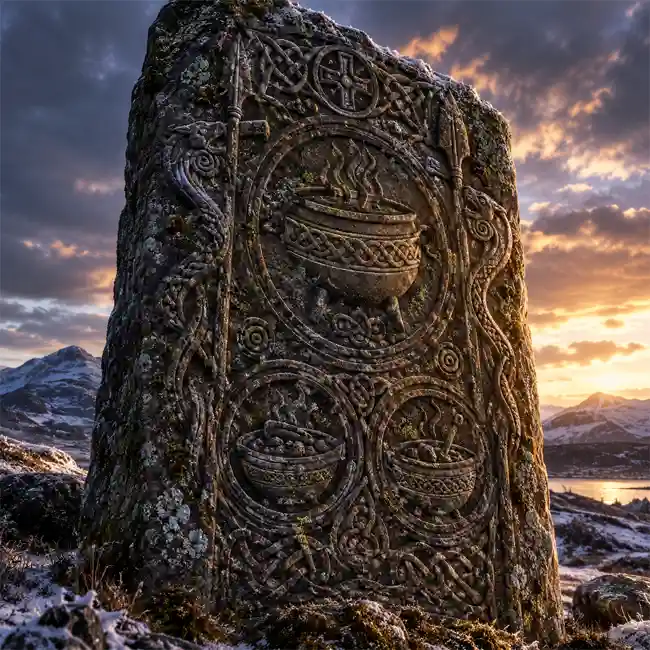
🗡️📜 The Storyteller’s Intro: 5,000 Years of Ancestral Flavors
Welcome to the misty hearths of ancient Europe, where the story of the Celts simmers slowly inside a heavy clay pot. If you think Celtic food is just modern pub fare, you are about to uncover something much older, wilder, and deeply sacred.
We are talking about a culinary tradition that stretches back nearly 5,000 years, long before the Romans wrote about fierce warriors with torques around their necks. This is not one single moment in time, but a long, continuous lineage of flavor.
⭐ The Early Whisper (c. 3000 - 1200 BCE): Proto-Celtic Roots: This is where it all begins. In the late Neolithic and early Bronze Age, ancestral communities across Central Europe began mastering the art of pit-firing clay. The earliest clay-pot cooking was not about fancy presentation. It was about survival and transformation. Tough wild grains, foraged roots, and game meat were placed into coarse, thick-walled pots and left to bubble for hours over a low hearth fire. This slow extraction is the true origin of the Celtic broth.
⭐ The Golden Cauldron Age (c. 1200 - 450 BCE): Hallstatt Culture: Named after the salt mines of Hallstatt in Austria, this era is where Celtic identity truly crystallizes. Here, archaeologists found not just tools, but massive communal feasting cauldrons and beautifully burnished clay cooking jars. The Celts became masters of salt, and salt changed everything. It allowed them to preserve pork, to ferment wild herbs, and to create deeply savory, layered broths that could feed an entire hillfort.
⭐ The Heroic Feast Age (c. 450 BCE - 100 CE): La Tène Culture: This is the classic Iron Age Celt most people imagine. Highly artistic, fiercely tribal, and obsessed with hospitality. The Greek writer Athenaeus was shocked to report how Celts would serve huge chunks of roasted meat but also constantly simmering stews from the center of the house. The clay pot never left the fire. It was the eternal heart of the roundhouse.
For the Celts, a clay pot was never just cookware. It was a symbol of the earth mother, of transformation, of community. To keep the pot simmering was to keep the family and the tribe alive through the brutal winter.
🌿 Why Clay-Pot Cooking Defined Celtic Soul
Earth to Earth Philosophy: Celts believed food cooked in earth (clay) held the strength of the land itself. The pot was made from river clay and fired in earth pits, creating a spiritual loop.
◦ The Eternal Stew Concept: In many roundhouses, the central hearth fire never went out. The clay pot stayed there, always warm. Each day, new water, foraged greens, barley, and bones were added. Some broths technically simmered for weeks.
◦ Communal Magic: You did not eat from your own plate. You ate from the shared pot. The chieftain might get the best cut of meat, but everyone shared the same broth. It was equality and hierarchy in one delicious bowl.
◦ Seasonal Intelligence: The Celtic calendar was deeply agricultural. Their broths changed completely with Imbolc (early spring greens), Beltane (summer herbs and fresh milk), Lughnasadh (first grains and berries), and Samhain (hearty roots and preserved meats).
📜 Iconic Excavated Menus: Unearthed Clay-Pot Treasures from the Celtic World
Archaeologists don't find written recipe books for the Celts. They find charred residues inside pots, animal bones with butchery marks, pollen grains, and ancient cooking pits. From these clues, we have reconstructed the legendary menus that once filled the great feasting halls. Here are the most documented and awe-inspiring ones.
🥣 The Hallstatt Salt-Miner's Broth
◦ What it is: Found via residue analysis in clay pots near the Hallstatt salt mines. This was the everyday superfood of the miners who powered the Celtic economy.
◦ The archaeological clue: Pots contained traces of barley, broad beans, pork fat, and wild garlic mustard seeds, all preserved with rock salt.
◦ Why it was legendary: Incredibly calorie-dense and mineral-rich. It kept miners working in freezing, damp salt tunnels for 10+ hours. This was ancient meal prep at its finest.
🐗 The Boar and Forest Root Stew of La Tène
◦ What it is: The ultimate chieftain's feast, described indirectly by Roman observers and confirmed by massive faunal remains at sites like Manching in Germany.
◦ The archaeological clue: Large, black-burnished cooking jars with thick residues of wild boar collagen, charred parsnip, burdock root, and hazelnuts. The pots were big enough to serve 20 people.
◦ Why it was legendary: Wild boar was sacred to the Celts, associated with strength and the otherworld. Eating this stew before battle was both nutrition and ritual.
🌾 The Danubian Barley and Herb Pottage
◦ What it is: The most common, most ancient Celtic staple, dating back almost 5,000 years. A humble but deeply nourishing daily pottage.
◦ The archaeological clue: Found across the entire Celtic world from the Danube to the British Isles. Pottery analysis shows emmer and spelt barley, nettles, fat hen, and linseed.
◦ Why it was legendary: This was the original slow food. Barley was toasted first for a nutty aroma, then simmered for hours until it broke down into a creamy, porridge-like broth. It was the foundation upon which all other flavors were built.
🍄 The Misty Isle Forager's Broth
◦ What it is: The signature broth of the Atlantic Celts, from Brittany to Scotland and Ireland.
◦ The archaeological clue: Coastal and highland sites show clay pots with residues of seaweed (dulse and carrageen), wild mushrooms (chanterelles and porcini), sorrel, and mutton or seabird bones.
◦ Why it was legendary: It perfectly shows the Celtic principle of using everything the landscape gives you. The natural glutamates from mushrooms and seaweed created an ancient form of umami, long before the word existed.
🥕 The Samhain Harvest Keeper Stew
◦ What it is: The ultimate winter survival stew, cooked during the Samhain festival to prepare for the dark months.
◦ The archaeological clue: Storage pits from late autumn show a sudden concentration of preserved pork, smoked bacon, dried peas, crab apples, and hardy roots like turnips and carrots in cooking pots.
◦ Why it was legendary: This was not just food, it was food security. Cooking and sealing this thick stew in large clay jars underground was how a whole village survived winter. It was hope in a pot.
🗺️ Celtic Hearth & Home: How They Lived, Ate, and Traveled Today
To understand Celtic broths, you have to understand the roundhouse. There was no kitchen as we know it. The entire home was the kitchen.
• The Roundhouse Living: The Celts lived in large circular houses made of wattle and daub with thatched roofs. In the exact center was the hearth. No chimney. Smoke simply rose through the thatch, which in turn preserved meat hanging above. The clay pot sat directly on the hearth stones or suspended by an iron chain. Everyone sat around it on low benches or furs. The chief sat with his back to the north wall, facing the door. The pot was literally the center of the universe.
• The Art of Eating: Celts ate with iron knives, wooden spoons, and their hands. They were famous for their manners and their boasting. A feast was theatre. Bards would tell stories while the broth was ladled from the central pot into smaller wooden bowls. The best piece of meat, the curad-mir or champion's portion, was always fought over verbally. It was social media, dinner theatre, and parliament all at once.
• Following the Celtic Culinary Trail Today: You can still taste this legacy if you know where to look.
◦ Hallstatt, Austria: Visit the world's oldest salt mine and the Hallstatt Museum. They have reconstructed clay pots you can see. Local restaurants still serve slow-cooked barley stews in earthenware in honor of the miners.
◦ The Isle of Skye and Outer Hebrides, Scotland: Seek out traditional blackhouse ruins. Local crofters still make nettle and barley broths and seaweed-infused stews. Look for community feasts during Celtic festivals.
◦ Brittany, France: The heartland of continental Celtic culture. Visit the hillfort of Menez Dregan and explore markets selling buckwheat, salted pork, and foraged herbs that are direct descendants of ancient ingredients.
◦ Brú na Bóinne, Ireland: While older than the Celts, it was sacred to them. The landscape is filled with wild sorrel, fat hen, and ancient barley fields. Many heritage farms offer experimental archaeology cooking workshops.
🚣 Rivers of the Celts: The Danube and Rhine Lifelines of Flavor
If you want to find the Celts, follow the rivers. Their entire civilization flowed along waterways, and their clay-pot cuisine flowed with it.
• The Danube - The Mother River: The Danube was the first great highway of the early Celts. It carried not just people, but ideas, salt, and cooking techniques. Barley cultivation and the earliest thick-walled cooking pottery spread upstream and downstream along its banks. A broth cooked in Bavaria would have tasted remarkably similar to one cooked in Hungary because the river connected them. Today, a Danube river culinary cruise from Regensburg to Budapest is a journey through the heart of Celtic flavor origins.
• The Rhine and Moselle - The Feast Network: In the later La Tène period, the Rhine became the superhighway of chieftains and feasting. Hillforts like the Heuneburg and later oppida (large fortified towns) controlled river trade. Clay pots filled with smoked meats, fermented herbs, and grains were traded by boat. The rivers provided endless fresh water for broths and abundant watercress, wild mint, and fish to enrich them.
• The Atlantic Seaways: For the Insular Celts of Britain and Ireland, the sea was their river. Small currachs carried dried broth ingredients, salted meats, and precious clay cooking vessels between islands. The broth culture adapted, adding dulse, kelp, and seabirds.
The keyword here is connectivity. The Celts were never isolated. Their pots simmered with ingredients from hundreds of miles away, brought by river and sea.
🏔️ Misty Moors, Highlands, and Sacred Groves: The Celtic Landscape Pantry
The Celts did not have a desert, but they had something equally powerful and mysterious: the vast, misty highlands, peat bogs, ancient oak groves, and windswept moors. This was their sacred pantry.
• The Oak Grove Sanctuary: The very word Druid is linked to the oak. Oak forests were temples. These groves provided acorns, which were leached and ground into flour for thickening stews, wild garlic that carpeted the forest floor in spring, and pigs that fattened on fallen acorns.
• The Peat Bog Larder: Bogs were not wastelands. They were natural refrigerators. Celts famously preserved butter and meats in bogs for months. The acidic, cold environment also preserved clay pots perfectly, which is why archaeologists find them so intact. The bogs also gave them sphagnum moss for filtering water and bog myrtle for flavoring.
• The Highland Forager's Paradise: The rugged Scottish and Welsh highlands offered heather, juniper berries, wild thyme, meadowsweet, and countless mushrooms. Every Celtic child learned which greens could go straight into the broth and which needed to be boiled twice.
• Why This Matters for the Modern Traveler: When you hike through Glen Coe in Scotland or the Wicklow Mountains in Ireland, you are walking through a 5,000-year-old grocery store. The same wild garlic, nettles, and sorrel that flavored Iron Age clay pots are still there. Foraging tours in these regions are the most authentic way to connect with Ancient Celtic culinary secrets.
🕍❓ Ancient Civilization FAQ: Unlocking Palace Kitchen Mysteries
Q1:How do we actually know what was inside a 5,000-year-old clay pot if there are no written recipes?
We use incredible science. Archaeologists use a technique called lipid residue analysis, which detects fats absorbed into the unglazed clay walls. We also find charred plant remains, pollen, and phytoliths (tiny silica structures from plants) inside. At sites like Must Farm in England, entire roundhouses burned down and collapsed into a bog, perfectly preserving cooking pots with food still inside. It is culinary forensics.
Q2:Were Celtic clay-pot stews vegetarian? What was the main protein?
They were flexitarian long before the word existed. The daily base was almost always vegetarian, made of barley, beans, and foraged greens. Meat was precious and celebratory. Pork was by far the most important meat for the continental Celts, while mutton and goat were more common for the Atlantic Celts. Beef was rare and reserved for huge communal feasts because cows were wealth. Fish was eaten near rivers and coasts, but surprisingly less than you would expect.
Q3:What made Celtic clay-pot cooking different from Roman or Greek cooking?
Three things. First, the pot itself. Celts preferred large, round-bottomed, thick-walled earthenware that held heat for hours, while Romans moved toward bronze and more refined pottery. Second, the philosophy. Romans liked to separate flavors and use complex sauces, Celts believed in one-pot synergy where everything melds. Third, the hearth. Roman kitchens were separate and utilitarian. The Celtic hearth was the sacred, central, never-ending fire in the living room. The food never stopped cooking.
Q4:Can I recreate an authentic Celtic broth at home without a real clay pit fire?
Absolutely, and that is the beauty of this tradition. Use a heavy Dutch oven or a modern unglazed clay tagine as your roundhouse pot. The key is low and slow. Toast your barley first, use bone-in pork or mutton, add bitter greens like nettles or kale, wild herbs like thyme and wood sorrel, and finish with toasted hazelnuts. Keep the heat incredibly low for at least 3 hours. You are not just cooking dinner, you are reviving a 5,000-year-old ritual.
🧠 Final Thoughts: The Timeless Allure of Antique Gastronomy
The magic of Ancient Celts: Clay-Pot Broths & Stews is not just in the ingredients. It is in the patience. In a world that moves fast, the Celts teach us the power of slow.
Their broths were more than calories. They were memory, medicine, mythology, and map all in one pot. The clay absorbed the smoke of a thousand fires. The broth carried the taste of the river, the forest, and the moor. Every bowl told you where you were, what season it was, and who your people were.
This is the lost art we are bringing back. It is rustic, it is soulful, it is deeply nourishing, and it is shockingly relevant to how we want to eat today: seasonal, local, sustainable, and communal.
We have only opened the lid of the clay pot. The full, detailed ancient recipes, with modern kitchen adaptations and experimental archaeology techniques, are coming next. Prepare your hearth.
🏛️ Credit to the Keepers of the Culture (The Legacy)
This content is written with deep respect and gratitude to the archaeologists, experimental historians, and indigenous knowledge keepers who protect Celtic heritage. Thanks to the research teams at the Hallstatt Museum in Austria, the Must Farm excavations in Cambridgeshire, the Celtic Hillfort Centre at Butser Ancient Farm in England, and the countless Celtic language and folklore scholars in Ireland, Scotland, Wales, Brittany, and Galicia.
Special honor to the Celtic peoples themselves, from the Hallstatt chieftains to the Atlantic islanders, whose unbroken relationship with the land created these timeless flavors. We are merely storytellers reheating their ancient fire. May their hearths never go cold.
🏛️🍲 The Druid's Earth Pot: How Celtic Ancestors Slow-Cooked Mutton in Clay
👉 Master Ancient Celts' Clay-Pot Broths & Stews
| 🌐 🏛️🍲 < Back | 🏰 🍖 < Previous | Next > 🍯 🏰 |