
🏠 Home > 🗺️ Recipes > 🏛️🍯 Wild Earth Sweets & Foraged Bites > 🏰 Ancient Celts: Wild Earth Sweets & Foraged Bites Recipes
🏰 🏛️🍯 Ancient Celts: Wild Earth Sweets & Foraged Bites Recipes
Published by Supakorn | Updated: October 2026
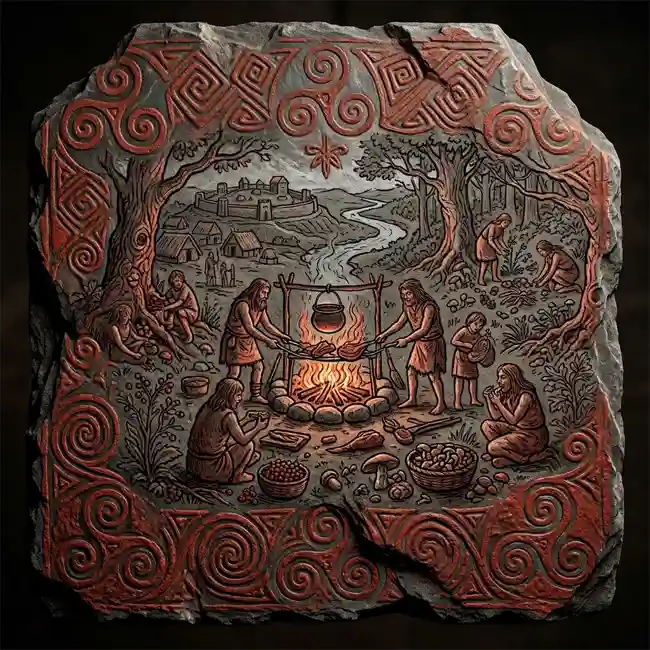
⚔️📜 The Storyteller’s Intro: 5,000 Years of Ancestral Flavors
Hey there, fellow history explorer and foodie adventurer! Have you ever wondered what hit the palate thousands of years ago before modern grocery stores, refined sugar, and synthetic flavorings existed? If you close your eyes and listen closely, you can almost hear the crackle of ancient bonfires echoing across mist-shrouded hills. Today, we are taking an incredible deep dive back through time to explore the culinary heritage of the Ancient Celts—a culture renowned for its deep, sacred relationship with the wild earth, dense woodlands, and natural cycles.
When we talk about the Celtic world, we are stepping into a rich timeline stretching back roughly 5,000 years, moving through crucial archaeological ages that transformed how humans cooked, gathered, and dined.
🔸 The Late Neolithic to Early Bronze Age (c. 3000 BCE – 1200 BCE): This pioneer era marks the early foundation of Celtic ancestral roots in Western Europe. Communities relied heavily on foraging wild flora, gathering hazelnuts, forest berries, and crab apples, alongside early farming attempts with ancient grains like emmer wheat and einkorn. Fires were lit outdoors, and cooking involved heated stones immersed in water-filled animal hides or wood troughs.
🔸 The High Bronze Age (c. 1200 BCE – 750 BCE): As metalworking advanced, cooking hearths evolved rapidly. Bronze cauldrons became prized tribal treasures, symbolizing community, hospitality, and divine abundance. Diets expanded with domesticated cereals, wild honey harvesting, and complex porridge creations combined with native herbs.
🔸 The Iron Age & The Hallstatt Culture (c. 750 BCE – 450 BCE): Named after the iconic salt-mining region of Austria, this era saw the Celts master iron forge tools, enabling superior agricultural yields. Roasting spits, heavy iron cauldrons, and sophisticated salt-curing techniques flourished across Central Europe.
🔸 The La Tène Period (c. 450 BCE – 1st Century BCE): The peak of pre-Roman Celtic artistic and culinary expression! Spread across modern-day Ireland, Britain, France, Spain, and Central Europe, La Tène communities held magnificent feast gatherings. Earthy sweets made with raw heather honey, dried orchard fruits, crushed acorns, and native herbs reached their highest cultural sophistication.
For the Ancient Celts, food was far more than mere biological fuel. Eating was a sacred act of communion with Mother Nature (AnDandú). Every seed gathered, every wild berry plucked, and every bowl of honey-sweetened mash shared under the stars carried spiritual gratitude to the earth deities who governed seasons, soil fertility, and forest harvests.
📜 Iconic Excavated Menus: The Foraged & The Sacred
Archaeological digs across Europe—ranging from preserved peat bogs in Ireland and Denmark to rich waterlogged settlements in Great Britain and rich chieftain burial mounds in Hallstatt and La Tène sites—have yielded fascinating bio-archaeological evidence. Archaeobotanists analyzing ancient pottery sherds, charred hearth residue, and preserved coprolites have unlocked real, historical food preparations enjoyed by Celtic tribes. Here is a curated list of iconic menu items documented through archaeological finds and ancient historical records!
🌲 Wild Earth Sweets & Forest Confections
• Heather Honey & Crushed Hazelnut Energy Patties: A dense, energy-rich travel morsel crafted from roasted hazelnut meal, raw forest honey, and ground dried plums, frequently identified through burnt hearth crusts in Atlantic Celtic settlements.
• Clay-Baked Crab Apple & Wild Berry Compote Tartlets: Hand-formed unleavened barley dough disks topped with sour forest crab apples, elderberries, and wild blackberries, sweetened with heather honey glaze and baked on flat hearthstones.
• Acorn Flour & Bee Pollen Hearth Cakes: Nutrient-dense flatbreads made from painstakingly leached acorn flour mixed with wild oats, raw bee pollen, and dried rowan berries, providing essential sustenance during cold winters.
• Spiced Elderberry & Dried Pear Stew: A warm pot cookery staple discovered in European hillfort excavations, featuring wild pears, dark elderberries, coriander seeds, and honey simmered gently over slow ember hearths.
🌾 Foraged Earth Bites & Savory Hearth Fare
• Earthy St. John’s Wort & Wild Herb Porridge: A thick, restorative morning pottage made of coarse-cracked spelt, nettle tops, dandelion leaves, and wild garlic blossom, designed to clear the body and honor spring renewal.
• Smoked Forest Mushroom & Emmer Wheat Hash: A hearth favorite featuring field-gathered penny buns (porcini), chanterelles, and roasted emmer grain tossed with rendered rendered goose fats and wild thyme.
• Peat-Ash Baked Root Mash: Whole wild carrots, burdock roots, and turnip tubers wrapped in dock leaves and buried beneath glowing peat embers until caramelized to absolute earthy perfection.
• Wild Sorrel & Roasted Seed Crumble: Sharp, lemon-flavored wild sorrel leaves wilted over hearth embers, dusted with toasted flaxseeds, hemp seeds, and crushed beech nuts for a rich, crunchy contrast.
• Nettle & Forest Plant Stew: A classic spring vitality bowl brimming with fresh stinging nettle tips, watercress, wild leeks, and coarse oat meal, cooked in communal bronze cauldrons during seasonal gatherings.
🗺️ Living like a Celt: Everyday Sustenance & Ancestral Trails
To understand how the Celts ate, you have to understand how they lived. They were not primitive wanderers living in chaos; they were highly organized, deeply intuitive stewards of the land who operated in complete harmony with the changing seasons.
📋 Daily Life & The Rhythm of the Celtic Hearth
• Seasonal Eating as a Sacred Religion: The Celtic calendar was split into four major seasonal markers—Samhain (winter’s start), Imbolc (spring awakening), Beltaine (summer blooming), and Lughnasadh (autumn harvest). Food choices strictly followed these shifts. Winter meant preserved meats, dried berries, root crops, and hard nut cakes, while spring and summer brought a explosion of fresh green shoots, wild herbs, soft berries, and goat curds.
• Communal Feasting Culture: Eating was rarely an isolated event. Celtic roundhouses featured a massive central hearth—the heart of the domestic home. Large communal cauldrons hung over open flames, perpetually simmering seasonal stews. Sharing food with travelers and neighboring tribes was an unwritten holy law of hospitality.
• Zero-Waste Earth Wisdom: Long before sustainability became a modern buzzword, the Celts practiced complete food respect. Nothing was thrown away. Fruit peels were dried for winter teas, nut shells served as hearth fuel, and root scraps nourished domestic stock.
🗺️ Trail of the Celts: Unforgettable Destinations for the Ancient Food Traveler
If you are dreaming of walking in the footsteps of ancient Celtic foragers and tasting history firsthand, these breathtaking European travel destinations offer immersive historic experiences and preserved archaeological landscapes!
• The Boyne Valley & Wicklow Mountains (Ireland): Home to ancient passage tombs and lush Celtic forests. Visitors can take guided wild foraging tours through oak and hazel woodlands, learning to identify the exact plants, roots, and berries Celtic ancestors gathered 5,000 years ago.
• Hallstatt & the Austrian Salt Mine Region (Austria): Step into the iron age cradle of Celtic culture! Explore world-famous salt mine museums where ancient food preservation tools, wooden backpacks, and culinary artifacts have been preserved in salt chambers for millennia.
• Cruachan & The Highlands (Scotland): Journey through mysterious glens and ancient crannogs (reconstructed timber roundhouses built over lochs). Experience living history demonstrations showcasing prehistoric hearth cooking, grain quern grinding, and open-fire bread baking.
• Brittany & Carnac (France): Discover Armorican Celtic heritage along rugged coastal lines and ancient megalithic sites. Enjoy traditional buckwheat regional dishes and wild coastal herb gatherings inspired by ancient Atlantic tribes.
• Wales & The Snowdonia National Park (United Kingdom): Explore historical Celtic hillforts nestled among wild heather hills. Local heritage centers offer traditional wild foraging workshops and fireside Celtic storytelling dinners under pristine night skies.
🚣 River Valleys of the Celtic Realm: Life Along Sacred Waters
Waterways were the absolute lifelines of ancient Celtic civilization. Rivers were viewed as sacred channels ruled by divine river goddesses—such as Danu, Boann (River Boyne), and Sequana (River Seine). These historic river basins provided fertile riverbank soil, abundant freshwater fish, and natural trade routes for exchanging salt, tin, and wild honey across tribes.
• The River Shannon Basin (Ireland): The longest river in the British Isles was an absolute haven for early Celtic settlements. The fertile floodplains yielded abundant wild garlic, meadowsweet, watercress, and river mint. Archaeologists have discovered submerged timber fishing traps and lakeside hearth remnants dating back thousands of years.
• The Danube River Headwaters (Central Europe): Originating in the Black Forest, the Danube served as the main highway for Early Iron Age Celtic tribes (Hallstatt culture). Along its lush banks, ancient Celts foraged wild crab apples, gathered sweet river reeds, and cultivated robust plots of emmer wheat and barley in enriched alluvial soil.
• The River Seine & Loire Valleys (Gaul / France): In ancient Gaul, these winding river systems nourished vast oak forests filled with wild swine, edible chestnuts, acorns, and wild grapevines. Celtic river settlements utilized these waters to transport hand-carved oak barrels of local hazelnut oils and wild floral honeys between regional trading posts.
• The River Severn & Thames Estuaries (Britain): These tidal river networks provided rich mudflats packed with edible coastal greens like sea beet, glasswort, and salt-marsh herbs. Celtic communities along these waters mastered open-pit smoking and stone-grilling, pairing river herbs with wild grains.
🏜️ The Mist-Shrouded Boglands & Wild Moors: Nature’s Ancient Pantry
While the Celts did not inhabit desert oases, they mastered one of the most mysterious and extreme landscapes on Earth: the ancient peat bogs, mist-covered moors, and dense ancient oak forests of Northwestern Europe. Far from barren, these wild environments were rich natural pantries offering rare delicacies found nowhere else.
• Peat Bogs as Natural Ancestral Refrigerators: Celtic tribes discovered that cool, oxygen-poor peat bogs acted as incredible natural preservers. They frequently buried large wooden containers filled with "bog butter" (rich preserved dairy curds) and rendered animal fats inside the peat to age and stay fresh for months—a fascinating practice proven by dozens of bog-excavated discoveries!
• The Sacred Heather Moors: The vast highland moors covered in purple heather blooms were prized gathering grounds. Celts harvested wild heather blossoms not only to create floral infusions and herbal remedies, but also to extract rich, dark heather honey—the primary natural sweetener of the ancient Celtic world.
• Dense Oak & Beech Forest Canopy: The majestic temperate rainforests of ancient Europe yielded vast harvests of wild acorns, beech nuts, and hazel timber. Celtic foragers understood the delicate art of leaching bitter tannins out of wild acorns using river water currents, transforming raw forest nuts into sweet, nut-flavored flour for hearth breads.
• Wild Bog Myrtle & Cranberry Swamps: In the acidic wetland marshes, Celtic gatherers harvested wild bog cranberries, cloudberries, and aromatic bog myrtle (Gale). These tart, vitamin-rich wild fruits provided vital winter nutrients and aromatic spices for savory hearth stews.
⚒️❓ Ancient Civilization FAQ: Unlocking Palace & Roundhouse Kitchen Mysteries
Q1:How did the Ancient Celts sweeten their food without refined sugar?
The Celts relied completely on nature's golden gift: raw wild honey! They harvested honey from wild bee nests in hollow oak trees and maintained early beekeeping skeps. Additionally, they concentrated natural sweetness by sun-drying wild fruits (like plums, crab apples, elderberries, and rowan berries) and reducing wild fruit juices down into thick, sticky fruit syrups over slow hearth fires.
Q2:Is it true that the Celts ate acorns, and how did they make them edible?
Yes, absolutely! Acorns were a massive staple across Celtic Europe, especially during years when grain harvests fell short. Raw acorns contain high levels of bitter, toxic tannins. Celtic cooks placed crushed acorn meats into woven baskets and submerged them in running cold river streams for several days to leach out the bitterness. Once dried and stone-ground into flour, acorn meal made incredible, earthy, nut-flavored hearth cakes rich in healthy fats and complex carbs.
Q3:Did Ancient Celtic diets include modern vegetables like potatoes, tomatoes, or corn?
Not at all! None of those crops existed in ancient Europe during the Celtic era. Potatoes, tomatoes, maize (corn), and peppers are native to the Americas and were only introduced to Europe thousands of years later during the Columbian Exchange in the 16th century. Celtic "vegetables" consisted of wild-gathered greens (nettles, fat-hen, sorrel, dandelion), roots (wild carrot, burdock, turnip), and pulses (broad beans, peas).
Q4:How do archaeologists actually know what Celts ate 5,000 years ago?
Archaeological science is incredible! Archaeobotanists examine charred food crusts stuck to the inside of excavated pottery sherds using microscopic and lipid-residue analysis. They also study preserved plant seeds in waterlogged sites, analyze human tooth wear and bone isotope signatures, and study rare, preserved organic remains recovered from acidic peat bogs across Ireland, Britain, and Scandinavia.
🧠 Final Thoughts: The Timeless Allure of Antique Gastronomy
Stepping back into the culinary world of the Ancient Celts reminds us of something deeply profound that modern fast-paced life often forgets: food is a direct, living connection to the earth beneath our feet.
The Celts did not view cooking as a chore or an automated task; it was a rhythmic, seasonal ritual of survival, gratitude, and community bonding. Every handful of wild berries gathered along a forest trail, every basket of hazelnuts cracked by the fireside, and every honey-sweetened oat disc baked on a glowing stone connected them directly to the natural world around them.
Reconnecting with these ancient foodways isn't just about historical curiosity—it's an invitation to slow down, look at the wild plants growing around us, and appreciate the raw, unrefined flavors that sustained our ancestors for thousands of years.
Stay tuned! In our upcoming dedicated recipe release, we will be sharing fully tested, modern-kitchen-adapted step-by-step recipes so you can recreate authentic Ancient Celtic Wild Earth Sweets and Foraged Bites right in your own home kitchen! 🌾🍯 hearthside magic awaits!
🏛️ Credit to the Keepers of the Culture (The Legacy)
We extend our deepest respect, admiration, and gratitude to the dedicated historical institutions, experimental archaeologists, archaeobotanists, and living history practitioners who tirelessly preserve and reconstruct the tangible heritage of the Celtic world:
◦ The National Museum of Ireland (Dublin, Ireland): For preserving invaluable bog finds, ancient hearth artifacts, and prehistoric cooking cauldrons that reveal daily Celtic life.
◦ The Celtic Museum Hallstatt (Hallstatt, Austria): For safeguarding world-renowned Iron Age archaeological treasures, salt-preserved organic artifacts, and prehistoric culinary tools.
◦ The Irish National Heritage Park (Wexford, Ireland) & The Scottish Crannog Centre (Loch Tay, Scotland): For their pioneering work in experimental archaeology, recreating authentic roundhouse cooking, open-hearth baking, and prehistoric culinary techniques for modern generations to witness.
◦ The British Museum (London, UK) & Musée d'Archéologie Nationale (Saint-Germain-en-Laye, France): For showcasing exquisite Bronze and Iron Age La Tène artifacts, bronze cauldrons, and agricultural implements.
◦ Independent Ethnobotanists & Foraging Historians: Who continue to catalog native flora, ancestral seed lines, and traditional wild plant uses, ensuring that ancient earth wisdom remains alive and thriving today.
🏛️🍯 Unearthing the Forgotten Sweets of the Ancient Celtic Hearth
👉 Taste Ancient Celts' Wild Earth Sweets & Foraged Bites
| 🌐 🏛️🍯 < Back | 🏰 🍲 < Previous | Next > 🧪 🏰 |