
🏠 Home > 🗺️ Recipes > 👑🍷 Noble Elixirs & Teas (Drinks) > 🇬🇾 Guyana Noble Elixirs & Teas (Drinks) Recipes
🇬🇾 👑🍷 Guyana Noble Elixirs & Teas (Drinks) Recipes
Published by Supakorn | Updated: September 2026
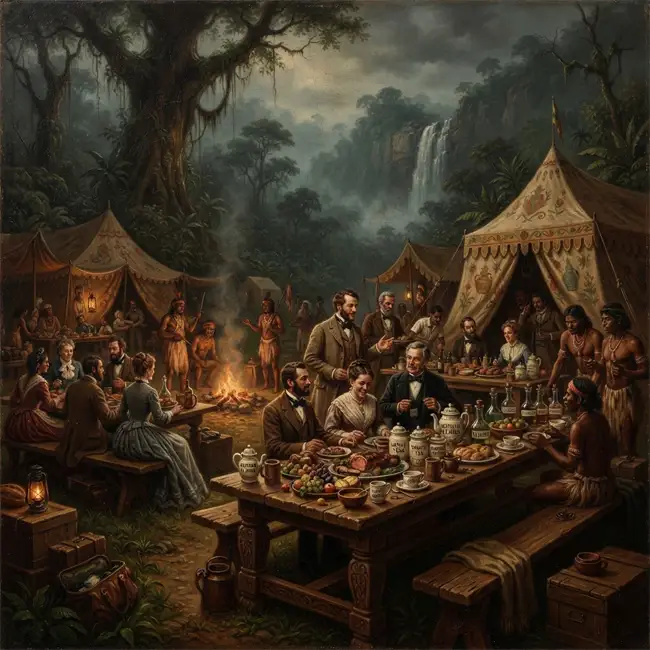
👑📜 The Storyteller’s Intro: Secrets from the Veranda, River House, and Great Hall
Guyana does not possess a continuous royal-court tradition like the palace cultures found in some parts of Europe, Asia, or Africa. Its story is more layered—and perhaps more intriguing. Here, the idea of “noble elixirs” belongs to Indigenous leadership, respected community elders, prosperous colonial households, influential merchants, formal civic hosts, and families who preserved exceptional hospitality customs across generations.
This is not a tale of one palace or a single ruling dynasty. It is a living collection of drink traditions shaped by rainforest knowledge, river travel, coastal agriculture, migration, trade, ceremony, and the social art of welcoming a guest.
The recipes themselves often remained unwritten. Measurements lived in the hand, eye, memory, and taste of the person preparing them. One household might guard the exact amount of spice placed in its sorrel infusion. Another might insist that its ginger be crushed rather than grated. A respected tea maker could identify the correct strength of a bush infusion simply by its color beneath the afternoon sun.
That is where Guyana’s hidden culinary secrets truly reside: not inside sealed palace manuscripts, but in inherited methods, private family proportions, regional ingredients, and quiet rituals of presentation.
🕰️ Four Great Eras of Guyana’s Noble Drink Heritage
✦ The Ancestral Indigenous Era—more than 1,000 years: Long before European settlement, Indigenous peoples understood the waters, fruits, roots, leaves, palms, and seasonal rhythms of the Guiana Shield. Their knowledge established the oldest foundation of Guyana’s beverage culture.
✦ The Dutch Colonial Era—seventeenth to early nineteenth century: River settlements, plantations, imported goods, and expanding Atlantic trade introduced new ingredients and formal European serving customs. Locally available fruits, sugar, spices, and water transformed those customs into something distinctly Guianese.
✦ The British Colonial Era—nineteenth century to 1966: Tea service, drawing-room refreshments, veranda hospitality, civic receptions, merchant gatherings, and ceremonial entertaining became increasingly visible. African, Indian, Portuguese, Chinese, Indigenous, and European influences met within a deeply unequal colonial society, creating new flavors while preserving older traditions.
✦ The Independent Guyanese Era—from 1966 onward: Family drinks became expressions of national identity. Sorrel, ginger drinks, fruit coolers, bush teas, punches, and fresh juices crossed social boundaries and appeared at holidays, community events, restaurants, hotels, and family tables.
The grandest Guyanese table was never defined by imported luxury alone. True distinction came from knowing what to serve, when to serve it, and how to balance sweetness, aroma, temperature, color, and hospitality.
🌿 The Unwritten Rules of Refined Guyanese Hospitality
• A guest should be refreshed quickly: In Guyana’s tropical climate, offering a cool drink is both practical and gracious.
• The vessel matters: Fine glasses, polished cups, enamelware, carved calabashes, or treasured family pitchers can each express a different kind of dignity.
• Aroma arrives before flavor: Citrus peel, ginger, cinnamon, clove, nutmeg, lemongrass, and fresh herbs announce the drink before the first sip.
• Sweetness should support the ingredient: Demerara sugar may deepen a beverage, but the fruit, herb, bark, or spice should remain recognizable.
• Season determines prestige: The most admired drink is often the one prepared when its principal ingredient is at its freshest and most fragrant.
• Knowledge is part of the service: A host may explain where the fruit was grown, who supplied the herbs, or why a particular infusion belongs to a holiday or family gathering.
🔐 The Distinguished Drinks Hidden in Plain Sight
Several celebrated names belong in any future collection of Guyana noble elixirs and teas:
• Guyanese sorrel drink: A brilliant ruby infusion valued for its tartness, spice, festive color, and ceremonial presence.
• Traditional ginger drink: Bright, warming, and intensely aromatic, with family variations built around ginger strength, citrus, sweetness, and resting time.
• Swank: A refreshing Guyanese lime drink whose apparent simplicity hides the importance of balance.
• Mauby infusion: A dark, bittersweet botanical drink prepared with bark and spices, admired by those who appreciate complex flavors.
• Fever-grass tea: A fragrant lemongrass infusion associated with home gardens, everyday comfort, and traditional household knowledge.
• Cocoa tea: A rich, soothing drink connecting Caribbean cocoa traditions with spice, warmth, and domestic hospitality.
• Peanut punch: A smooth, nourishing favorite whose texture and seasoning can vary from one household to another.
• Tamarind cooler: A tangy drink with deep fruit character and a refreshing sweet-sour finish.
• Golden apple juice: A vivid tropical beverage with enough acidity to remain lively even when sweetened.
• Soursop drink: Creamy, perfumed, and naturally luxurious in character.
• Guava and passion-fruit coolers: Fragrant drinks suited to elegant lunches, garden gatherings, and warm afternoons.
• Fresh coconut water: One of the country’s purest refreshments, especially memorable when enjoyed close to its source.
These are real cultural foundations, not invented palace relics. Their “secret” character comes from the guarded choices surrounding ingredient maturity, spice combinations, steeping order, straining, chilling, and presentation.
🗺️ Aristocratic Culinary Tourism: Mapping Flavors to Historic Landscapes
To understand Guyanese drinks, you have to travel beyond the glass. Every infusion points toward a landscape: a drainage canal beside a coastal village, a fruit tree in a family yard, a market stall in Georgetown, a riverside settlement, a savannah ranch, or a rainforest community surrounded by ancient botanical knowledge.
Guyana’s culinary tourism is especially rewarding because its food and drink traditions reveal the country’s geography. The Atlantic coast, major rivers, rainforest interior, wetlands, savannahs, and highland regions each shape what can be grown, gathered, transported, and served.
🏛️ Georgetown: Civic Elegance and Veranda Refreshments
Georgetown offers an ideal starting point for a journey into Guyanese tea and refreshment culture.
• Historic atmosphere: Wooden architecture, shaded verandas, canals, markets, gardens, civic buildings, and old residential districts evoke the social world in which formal refreshments once accompanied business, conversation, and public ceremony.
• Market exploration: Bourda Market and Stabroek Market can introduce travelers to seasonal fruits, spices, roots, herbs, sugar, and household ingredients used in Guyanese drinks.
• Afternoon culture: A modern heritage experience might pair bush tea or fruit coolers with pastries, cassava-based foods, coconut treats, or delicate savory bites.
• Storytelling potential: Hotels, guesthouses, cafés, and cultural guides can connect each drink with migration, agriculture, family memory, and neighborhood life.
Georgetown’s refinement should not be reduced to colonial nostalgia. The city’s true culinary character comes from the communities that adapted, challenged, and transformed inherited customs. A cup served on a veranda may carry Indigenous botanical knowledge, African memory, Indian spice traditions, European tea rituals, Chinese commercial influence, Portuguese enterprise, and Caribbean creativity all at once.
🌾 Demerara: The Sweet Name Known Around the World
Demerara is internationally associated with sugar, but its importance to Guyanese drinks goes beyond sweetness.
• Flavor depth: Demerara sugar is prized for warm notes that can complement cocoa, ginger, tamarind, citrus, and aromatic spices.
• Historic identity: The name links a globally recognized ingredient to Guyana’s rivers, plantations, labor history, and coastal economy.
• Modern interpretation: Thoughtful beverage makers can use Demerara sweetness carefully, allowing the original fruit or botanical ingredient to remain the star.
• Tourism connection: Travelers interested in culinary history can explore how sugar influenced settlement, trade, architecture, migration, labor, and the development of Guyanese hospitality.
The refined secret is restraint. A distinguished host does not simply make a drink sweeter; the host uses sweetness to reveal fragrance, soften acidity, and lengthen the finish.
🚣 Cradle of Noble Delicacies: Coastlands, Estuaries, and River Corridors
Most of Guyana’s population lives along the low Atlantic coastal plain. This region contains markets, farms, kitchen gardens, canals, historic estates, villages, and urban neighborhoods that have contributed enormously to the national table.
The coast is also where sea breezes, tropical heat, fertile soils, and multicultural communities meet. Drinks prepared here tend to reflect abundance, seasonality, and the practical need for refreshment.
🌊 The Essequibo Experience
The Essequibo River and its islands offer one of the most atmospheric settings for exploring Guyanese culinary heritage.
• River-island produce: Fruit trees, palms, gardens, and small farms can supply the foundation for fresh juices and botanical infusions.
• Historic landscapes: Forts, river settlements, old estates, and landing points help visitors imagine earlier patterns of movement and hospitality.
• Waterside service: Coconut water, citrus coolers, tamarind drinks, and chilled tropical juices naturally belong beside broad river views.
• Slow travel: Boat journeys encourage travelers to notice where ingredients grow and how river communities preserve local knowledge.
A noble Essequibo refreshment need not be elaborate. Its prestige may come from fruit harvested that morning, clean water, careful preparation, and a view that cannot be recreated anywhere else.
🍋 Berbice and the Eastern Coast
Berbice and the eastern coastal districts carry strong agricultural and community traditions.
• Garden knowledge: Household plots may contain ginger, citrus, lemongrass, guava, cherry, and other useful plants.
• Cultural layering: Indo-Guyanese, Afro-Guyanese, Indigenous, and other family traditions contribute distinct preferences in spice, sweetness, and service.
• Holiday significance: Brightly colored drinks and richly spiced refreshments often become part of family celebrations and seasonal gatherings.
• Village hospitality: Visitors may discover that the most memorable drink is not served in a formal dining room but in a family home, shaded yard, roadside stop, or community celebration.
This is where the idea of a “secret recipe” becomes intimate. A family may happily name every ingredient while still withholding the exact timing, proportion, or finishing touch that makes its version unique.
🧭 A Coastal Drink-Tasting Route
A responsible Guyana culinary itinerary could include:
• Morning market visits to identify fresh fruits, roots, spices, and herbs.
• Conversations with growers and vendors about seasonality.
• A Georgetown heritage walk followed by a formal tea or fruit-cooler service.
• A Demerara-focused tasting that compares different levels of sweetness.
• River travel featuring locally prepared coconut water and fruit drinks.
• A village workshop on traditional ginger, sorrel, or bush-tea preparation.
• Visits to family-run cafés and small hospitality businesses.
• Story-led tastings that credit the communities behind each beverage.
The goal should never be to extract a recipe and leave. The most meaningful tourism creates income, respects family knowledge, and allows local people to tell their own culinary stories.
⛰️ Kingdom of Wild Aromatics and Heritage: Rainforest, Highlands, and Savannah
Guyana’s interior opens an entirely different chapter. Rainforest ecosystems, mountains, rivers, waterfalls, and savannahs hold extraordinary biodiversity, but they are also living cultural homelands—not empty wilderness waiting to be collected.
Indigenous communities possess generations of knowledge about plants, fruits, palms, water sources, cultivation, preparation, and seasonal availability. That knowledge deserves clear attribution and respect.
🌳 The Guiana Shield and Indigenous Knowledge
The Guiana Shield is among the world’s oldest geological formations. Its landscapes create an unforgettable setting for heritage travel, but culinary curiosity must be guided by consent.
• Community authority: Visitors should learn only through experiences that communities choose to share.
• Botanical responsibility: A plant’s traditional use should not be turned into a commercial claim without permission, evidence, and fair participation.
• Cultural context: Drinks may have social, nutritional, practical, or ceremonial meanings that cannot be understood from an ingredient list alone.
• Local guidance: Indigenous guides, cooks, growers, and cultural interpreters should lead the narrative.
• Environmental care: Tourism should avoid wasteful harvesting and support conservation of the ecosystems that sustain community life.
In this setting, “noble” should mean honorable stewardship rather than social rank. The most prestigious knowledge is knowledge used responsibly.
💧 Kaieteur and the Potaro Landscape
Kaieteur Falls is one of Guyana’s defining natural landmarks. While the falls are not the origin of every interior beverage, they provide a powerful gateway to understanding the relationship between water, forest, geology, and cultural heritage.
A Kaieteur-inspired culinary experience might emphasize:
• Clean, uncomplicated fruit refreshments before or after travel.
• Light herbal infusions served with clear information about their ingredients.
• Stories about the Potaro region told by qualified local guides.
• Reusable serving vessels and minimal packaging.
• Menus that avoid pretending every rainforest ingredient is mysterious or medicinal.
• Respect for protected landscapes and community intellectual heritage.
The experience should feel elevated because it is truthful, place-based, and environmentally sensitive—not because it exaggerates an invented royal connection.
🌾 Rupununi Savannah Hospitality
The Rupununi introduces open savannahs, ranching landscapes, wetlands, mountains, wildlife, and Indigenous communities. Hospitality here carries a different rhythm from the coast.
• Climate and distance: Refreshments must suit heat, travel, and the practical realities of remote landscapes.
• Ranch and lodge settings: Morning teas, fruit drinks, cocoa-based refreshments, and evening herbal infusions can become memorable parts of a stay.
• Local sourcing: Lodges can highlight ingredients obtained through responsible partnerships with nearby growers and communities.
• Story-rich service: A drink becomes more meaningful when guests understand its origin, preparation, and connection to the landscape.
Imagine sitting beneath a wide Rupununi sky with a fragrant cup, listening to the sounds of the savannah as daylight changes. That moment expresses Guyanese elegance without requiring a marble palace or jeweled throne.
❓🏯 Aristocratic FAQ: Unlocking Guyana’s Kitchen Mysteries
Q1.Did Guyana have a royal drink tradition?
Guyana did not develop a single indigenous palace tradition or hereditary national royal cuisine. Its refined beverage heritage emerged from several worlds: Indigenous leadership and botanical knowledge, European colonial customs, plantation and merchant households, civic entertaining, religious and community gatherings, and multicultural family hospitality.
For historical accuracy, “aristocratic” or “noble” works best as an editorial theme. It describes prestige, careful service, guarded household techniques, and ceremonial hospitality rather than a documented Guyanese royal court.
Q2.Are there really 1,000-year-old Guyanese drink recipes?
Guyana has Indigenous food and botanical traditions whose roots extend far beyond written colonial records. However, it would be misleading to claim that a modern recipe survives word-for-word from exactly 1,000 years ago.
What can survive for centuries is a chain of knowledge: which plants are useful, when fruits ripen, how ingredients are processed, what is served to guests, and who has the authority to prepare or explain a traditional drink. Future recipe pages should distinguish documented history, oral tradition, family practice, and modern interpretation.
Q3.What makes a Guyanese drink feel noble or exclusive?
Exclusivity comes from quality and context rather than excessive decoration.
A noble Guyanese drink may feature freshly gathered ingredients, carefully controlled sweetness, balanced spices, clear color, an elegant aroma, and thoughtful service. Its story should identify the landscape and community behind it. A simple fever-grass tea can feel more distinguished than an elaborate creation if the leaves are fresh, the infusion is balanced, and the host serves it with genuine care.
Q4.Why were family drink methods kept private?
Recipes were often preserved orally, so the finest details belonged to the person who practiced them repeatedly. Privacy could protect family identity, professional advantage, community knowledge, or the reputation of a celebrated host.
The hidden element might be surprisingly small: the order in which ingredients enter the pot, the maturity of the fruit, the thickness of the ginger slices, the length of the steep, or the moment the drink is strained. Those details create a signature that written ingredient lists rarely capture.
🧠 Final Thoughts: The Timeless Allure of Aristocratic Gastronomy
Guyana’s noble elixirs do not belong to one throne. They belong to riverside homes, Indigenous communities, coastal gardens, Georgetown verandas, village celebrations, market stalls, savannah lodges, and families who understand that hospitality is a form of cultural memory.
This heritage can be explored through four connected paths:
• History: Trace Indigenous foundations, colonial transformations, migration, independence, and modern national identity.
• Geography: Connect every drink to the coast, rivers, rainforest, highlands, islands, farms, gardens, or savannah.
• Technique: Examine sweetness, acidity, aroma, texture, steeping, straining, chilling, and presentation.
• Respect: Credit the people who preserve the knowledge and avoid turning living traditions into fabricated palace legends.
Future individual recipe pages can open the locked cabinet one drink at a time. Sorrel may reveal its festive spices. Swank may demonstrate the elegance of balance. Ginger drink may show how heat becomes fragrance. Fever-grass tea may bring the Guyanese garden into the cup. Tamarind, golden apple, guava, soursop, passion fruit, cocoa, peanut, and coconut may each tell a different regional story.
The coming collection will not merely ask, “What are the ingredients?” It will ask better questions: Who preserved this drink? Where does it belong? When is it served? What makes one family’s version unforgettable? And how can we celebrate it without erasing its true custodians?
That is the real promise of Guyana Noble Elixirs & Teas—a journey into hidden proportions, treasured memories, historic landscapes, and the timeless pleasure of offering someone a beautifully prepared drink.
👑 Credit to the Keepers of the Culture: The Living Legacy
This collection honors the Indigenous peoples of Guyana, including the communities whose ancestral territories, ecological knowledge, agricultural practices, and hospitality traditions form the country’s oldest cultural foundations.
It also recognizes the generations of Afro-Guyanese, Indo-Guyanese, Portuguese-Guyanese, Chinese-Guyanese, European-Guyanese, mixed-heritage families, farmers, market vendors, cooks, domestic workers, growers, hosts, and small business owners who shaped Guyana’s shared culinary identity.
Their histories are not interchangeable, and their contributions should not be reduced to decorative influences. Each tradition emerged through particular experiences of community, migration, labor, survival, adaptation, celebration, and creativity.
Every future recipe inspired by this heritage should follow a few essential principles:
✦ Credit the relevant community or cultural tradition whenever it is known.
✦ Separate documented facts from oral history and editorial storytelling.
✦ Avoid claiming ownership over collective or Indigenous knowledge.
Seek consent before publishing knowledge shared privately.
✦ Support local guides, growers, cooks, researchers, and cultural organizations.
✦ Treat Guyana’s landscapes as living homelands rather than exotic backdrops.
✦ Preserve original names and meanings whenever reliable information is available.
✦ Celebrate innovation without disguising it as an ancient historical recipe.
✦ The keepers of Guyana’s drink culture are not figures from a vanished court. They are living people—elders, parents, grandparents, farmers, vendors, cooks, hosts, and young creators—who continue to pour history into every cup.
Next suggestion: Develop the first standalone recipe page around Guyanese sorrel drink or fever-grass tea, with cultural history, regional variations, and a fully original preparation method.
👑🍷 A Forgotten Guyanese Elixir Inspired by Elite Colonial Tables
👉 Sip Irresistible Guyanese Noble Elixirs
| 🌐 👑🍷 < Back | 🇬🇾 👑🍨 < Previous | Next > 🍲👑 🇬🇾 |